A leading government figure in the search for missing people has denounced the Attorney General’s Office (FGR) for failing to help tackle the humanitarian crisis.
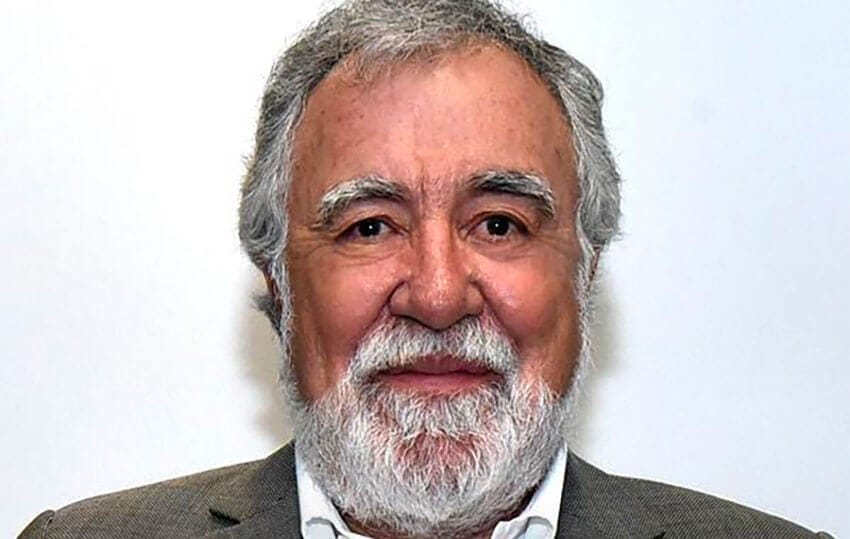
Speaking on Monday at a meeting organized by the United Nations Committee on Enforced Disappearances (CED), the Deputy Interior Minister, Alejandro Encinas, said that despite the 98,885 missing people in the country, there have been just 35 convictions for forced disappearance, demonstrating a failure to deliver justice to the victims.
The deputy minister said the FGR’s evasive attitude had caused friction with the government. “We have unfortunately had tensions that, in my opinion, were unnecessary … [the FGR] must fulfill its responsibility to carry out searches and investigations in cases where there is an allegation of enforced disappearance … we even went so far as to debate whether or not there was a right for people to be searched for in the event of their disappearance,” he said.
Encinas added that resolving impunity was a duty shared by the three powers of the state with the assistance of volunteer search collectives. “It is a structural problem that requires the consistent and comprehensive action of the state. That involves all levels of government, the three powers of the state … and the participation of the families of the victims, the search collectives,” he said.
For Encinas, the crisis is the result of historical negligence by authorities. “By 1982, we’d already registered more than 883 disappearances that the Mexican state did not recognize … The state tried to minimize and hide this very serious problem and it is largely this abdication, this omission of the Mexican state to face the problem which has led us to this very serious humanitarian crisis.”
However, he said that the failed approach had changed with the new administration. “From the first day of this government we considered the issue of disappearance to be part of a humanitarian crisis and the violation of human rights,” he said, before noting progress through the creation of the National Search Commission (CNB), the National Register of Disappeared and Missing People (RNPDNO) and 2.5 billion pesos (about US $120 million) of investment to tackle the crisis.
Encinas’ criticisms ramp up pressure on Attorney General Alejandro Gertz Manero, who has been accused of improperly intervening in a court case related to the 2015 death of his brother after leaked recordings came to light which appeared to imply his collusion with the Supreme Court.

Homicide and impunity aren’t the only mountainous challenges thrown up by the missing persons crisis. The identification of the remains of victims is comparably intractable: the federal government acknowledged in December that Mexico is facing what the head of the UN committee called a “forensic crisis,” with an estimated 52,000 unidentified bodies in common graves and the nation’s morgues.
A UN report on Mexico’s missing persons crisis is due later this week.
With reports from El Universal