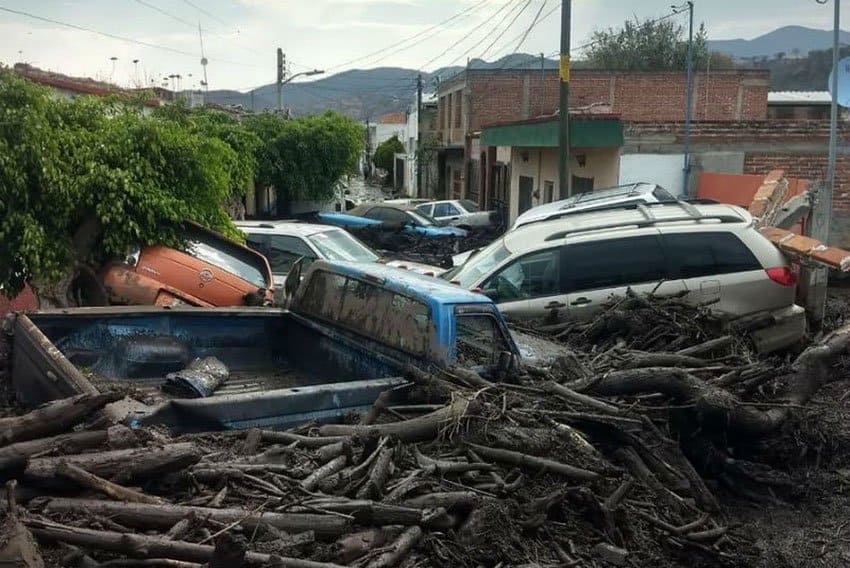
Flooding in San Gabriel, Jalisco, on Sunday could have been the fault of illegal practices by avocado growers, according to local and state authorities.
The Apango river (in previous reports it was called the San Gabriel river) burst its banks on Sunday afternoon, inundating the center of San Gabriel and damaging hundreds of houses and vehicles.
The floodwaters littered the river’s banks with tree trunks, trash and mud for 200 meters on each side. Three people were killed when the current carried them away, including two women, aged 36 and 60, and a man. Two others are still missing.
An emergency force of 593 personnel, 115 vehicles, two helicopters and six rescue dogs has been deployed to San Gabriel, famous for being the birthplace of writer Juan Rulfo and a growing avocado industry.
Now, people are speculating that illegal logging by avocado growers may have precipitated the flooding.
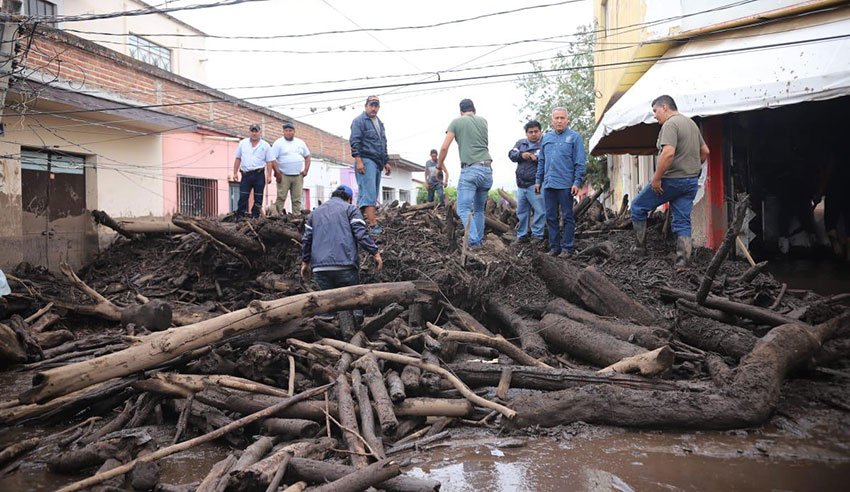
After flying over the area, Jalisco Governor Enrique Alfaro Ramírez said that illegal deforestation could have weakened the ground near the riverbed, allowing the river to flood.
“Surely, as people have said, this has to do with the illegal logging that has been going on for many years here in the mountains,” he said. “The ground got soft, and that explains what happened.”

Alfaro added that the logging started several years ago, and that his government is taking action to end it.
Moisés Nava, a member of San Gabriel’s municipal council, said forest fires that had occurred in the month before the flooding also may have contributed to the disaster.
“All the water that flooded the riverbed was carrying tree trunks, mud and burnt material,” he said.
Nava added that there was no rain in San Gabriel before the flood.
The government of Jalisco will spend 120 million pesos (US $6.1 million) to repair hydraulic infrastructure, strengthen the river banks and repair four bridges that were damaged.
According to a census by the state, 1,000 houses were damaged and 3,000 people were affected. Carlos Lomelí, the federal government’s super-delegate in Jalisco, said that resources from the Natural Disaster Fund will be used for rebuilding.
Classes have been suspended in local schools and temporary shelters have been set up by the army and local government to house people who are not able to return to their homes.
Source: El Economista (sp), El Universal (sp), Infobae (sp)