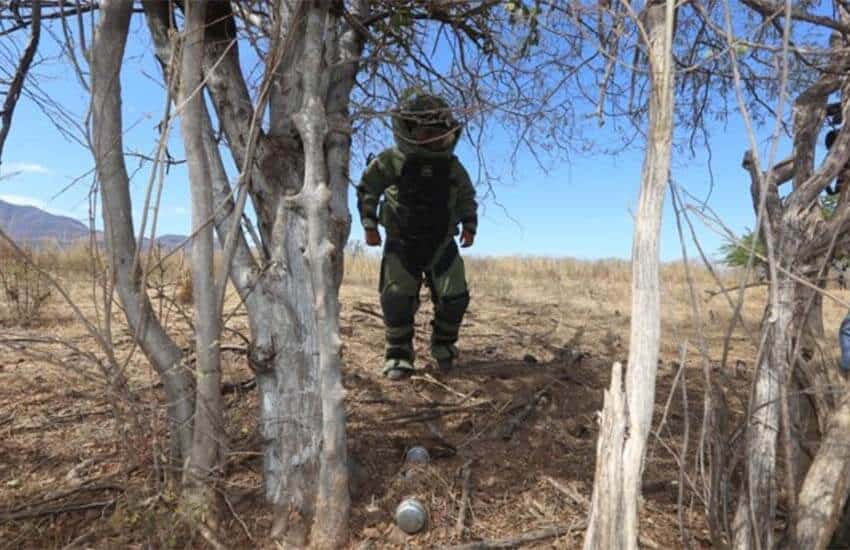
The army has deployed a bomb squad to clear land mines in two Michoacán municipalities after an elderly farmer was killed in an explosion on Saturday.
The Jalisco New Generation Cartel (CJNG) is believed responsible for laying mines, or improvised explosive devices (IEDs), in at least 10 communities in the notoriously violent Tierra Caliente municipalities of Tepalcatepec and Aguililla.
Soldiers are painstakingly searching for mines hidden under dirt or camouflaged among weeds. When one is detected, a bomb squad member wearing a heavy-duty protective suit is called in to deactivate or safely detonate it.
Among the communities where IEDs have been detected or are known to be present are Naranjo de Chila – the birthplace of CJNG leader Nemesio “El Mencho” Oseguera Cervantes, El Bejuco, El Cansangüe and El Aguaje, where 78-year-old Cristóbal N. was killed Saturday afternoon.
Don Cristóbal and his 45-year-old son were on their way to their farm in a pickup truck when a mine they drove over exploded.
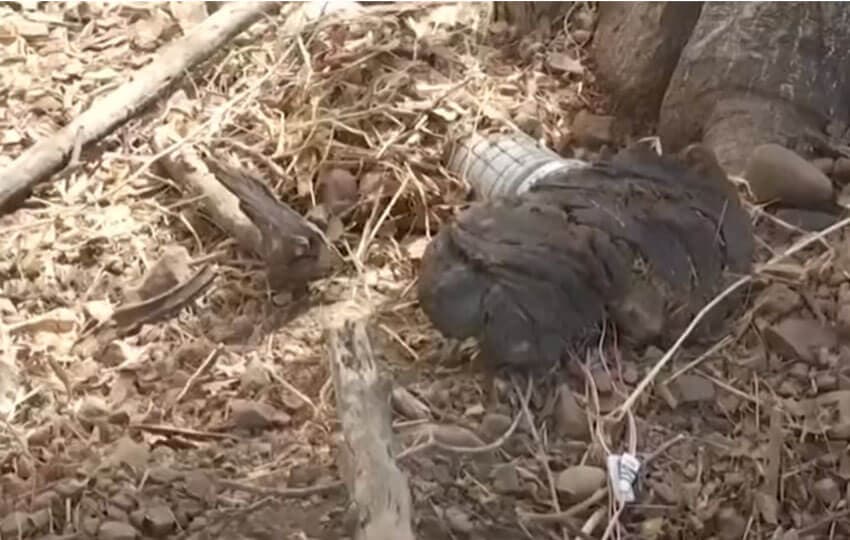
The former was killed instantly while the latter was seriously injured and taken to hospital before being discharged by his family because they were unhappy with the treatment he was receiving.
According to Don Cristóbal’s son-in-law, the deadly IED was located five minutes from the farm, which his father-in-law hadn’t visited for two years due to violence in the area.

“He was hoping to grow limes again,” José told the newspaper Milenio.
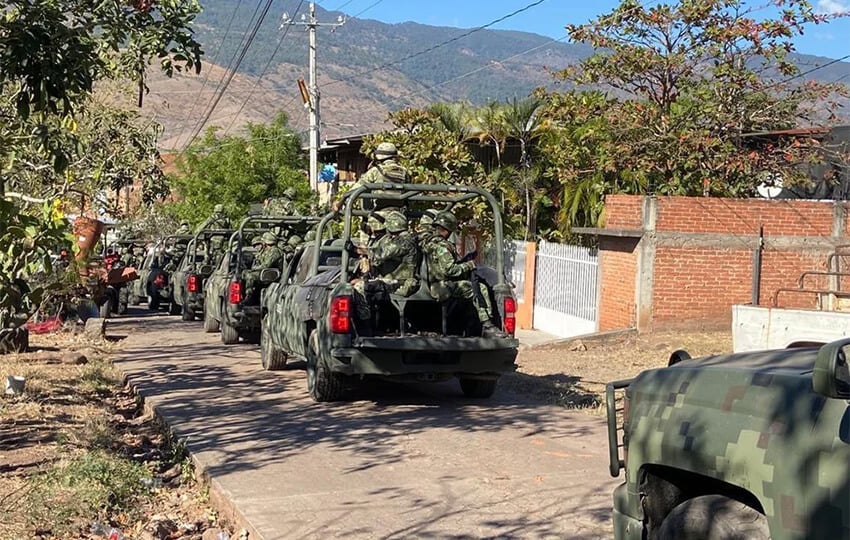
The CJNG fled Aguililla, the municipality where El Aguaje is located, last week after the army retook control of the municipality last Tuesday.
The explosion on Saturday came two weeks after an IED damaged an armored army vehicle and injured 10 soldiers when it exploded in El Cansangüe, Tepalcatepec.
Aguililla residents told Milenio that one has to step carefully in the municipality, where the CJNG has been engaged in a turf war with a rival criminal group known as the Cárteles Unidos.
“There are mines all over the place,” one El Aguaje woman said, adding that people are afraid of working on their land.
Thanks to the presence of the army, life is now much calmer in the small town – where the CJNG has paraded armored vehicles and carried out a drone attack against police – but residents fear that violence will return if the security force leaves.
“The soldiers should stay permanently,” one man said. Another said that the removal of all mines planted by the CJNG is urgent.
“We can’t go out to work like this. The government has to help us,” he said.
After Colombia, Mexico is just the second country in Latin America where land mines have been used by an illicit armed organization, Milenio reported.
With reports from Milenio