Authorities in Nayarit, Sinaloa and some southern Veracruz municipalities have ended the dry laws that halted alcohol sales and led to the proliferation of bootleg liquor that has caused over 100 hospitalizations and deaths across the country.
Nayarit Governor Antonio Echeverría García announced the end of restrictions on alcohol sales in his state on Monday.
“The consumption of alcohol remained practically unaltered, fostered by a broad black market allowed by bad, second-rate public servants all over the state [who are] corrupted by criminal groups,” he said in a speech posted to social media.
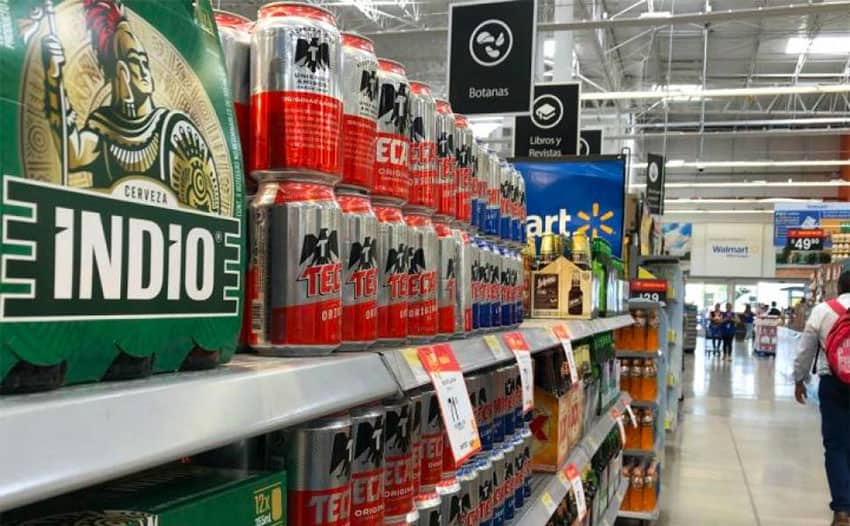
Beer producers stopped brewing after the declaration of beer production as a nonessential activity at the beginning of the quarantine period, an announcement that triggered panic buying in some states.
Some, such as Nayarit and Yucatán, said the move to restrict sales in addition to halting production was made in hopes of reducing domestic violence during the emergency period.
Echeverría said that the trafficking of bootleg alcoholic beverages in Nayarit reached “absurd levels” and he hopes that reactivating legal sales will put an end to “this contraband and source of organized crime.”
Sinaloa Governor Quirino Ordaz Coppel announced the lifting of dry laws on Tuesday, but added a caveat, saying that if citizens don’t continue to observe stay-at-home orders, his administration will take tougher measures to mitigate the spread of the coronavirus.

“I believe in all of you to be responsible and to continue to take care of yourselves at home. … Behave yourselves, please,” he said in a Tweet.
Dry laws also came to an end in a number of southern Veracruz municipalities which had halted liquor sales in the first week of May, just before Mother’s Day.
Alcohol sales resumed on Monday in the municipalities of Ixhuatlán del Sureste, Nanchital, Minatitlán, Agua Dulce, Las Choapas, Oteapan, Tatahuicapan and Pajapan.
But a dry law will remain in effect on the weekends in the state capital Xalapa for the remainder of the quarantine period.
One unfortunate result of restrictions on alcohol sales has been the proliferation of tainted bootleg beverages, as mentioned by Echeverría, but by no means has the problem been limited to Nayarit.
As many as 150 people have died across the country during the quarantine period due to the ingestion of toxic chemicals found in unregulated black market booze.
The state with the most deaths is Puebla, which has seen 70 people die from adulterated alcohol and 11 more hospitalized and in serious condition. The state Attorney General’s Office said on Sunday that it is investigating the deaths in hopes of finding those responsible for producing and selling the contraband.
The state with the second highest number of deaths from adulterated alcohol is Jalisco, where 42 people have died, followed by Morelos, with 29 deaths. At least seven have died in Yucatán, and five in Veracruz.