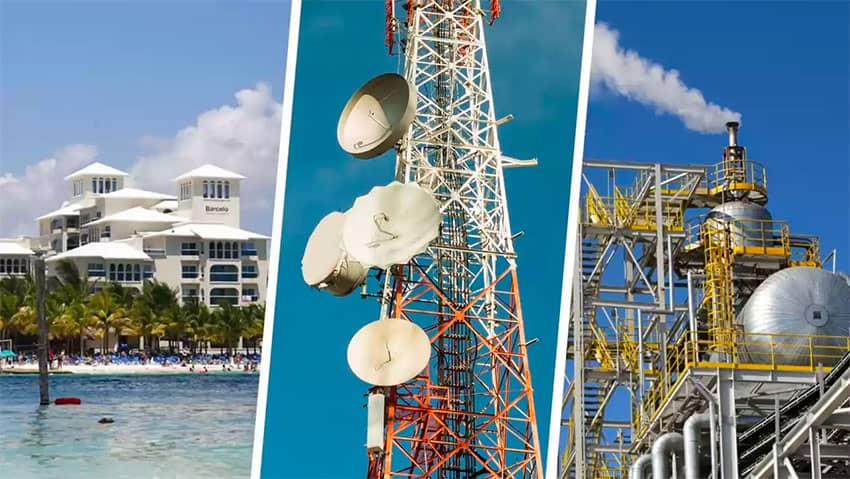
The tourism sector will get a significant investment boost in the next few years, attracting five of the 10 biggest projects presented Tuesday as part of the public-private National Infrastructure Plan (PNI).
The crown jewel of the five-year plan is a commitment by major hotel chains to invest 100 billion pesos (US $5.1 billion) in 17 tourist destinations between 2021 and 2022. The investment will be distributed across coastal resort cities, inland destinations and major cities.
The third, fourth, eighth and 10th largest projects in monetary terms will also be in the tourism sector. However, details about the plans are vague.
A 40-billion-peso (US $2-billion) investment will build three hotels, a golf course and a residential development in 2020 but no announcement was made about where they will be located.
Another 2020 project is the construction of three resorts, a water park, a theme park and a nature park with an investment of 26 billion pesos (US $1.3 billion). It is again unclear where the projects will be built.
Construction of a hotel and residential tower and a tourism university in unspecified locations will also commence next year with an 18-billion-peso (US $920.2 million) investment.
The 10th biggest PNI project intends to build three more resorts and a golf course with 16 billion pesos (US $817.9 million).

The other investments that make the top 10 are:
- An 86.16-billion-peso project in 2020 to improve fixed and mobile telephone services.
- A 20-billion-peso broadcasting and telecommunications project to be carried out in 2021-22.
- Development of an ammonia plant between 2021 and 2022 in Topolobampo, Sinaloa, with 20 billion pesos.
- 20 billion pesos to continue construction of the Mexico City-Toluca railroad in 2020.
- 16.5 billion pesos for an oil terminal system to be built between Tuxpan, Veracruz, and Hidalgo in 2023-24.
Other notable projects among the 147 presented in the US $42.95-billion PNI include:
- Upgrades to airports in 29 cities including Cancún, Mérida, Oaxaca, Guadalajara, Monterrey, Los Cabos, Mazatlán and Puerto Vallarta.
- Upgrades to 42 highways including Guadalajara-Manzanillo, Monterrey-Nuevo Laredo, Pátzcuaro-Uruapan and Coatzacoalcos-Salina Cruz (part of the Isthmus of Tehuantepec trade corridor project).
- A coastal train in Baja California to be built in 2023-24.
- Extension of Line A of the Mexico City Metro to Chalco, México state.
- Extension of the Mexico City suburban rail line to Santa Lucía (site of the new airport).
- Port upgrades in cities including Ensenada, Lázaro Cárdenas, Veracruz and Tampico.
- Establishment of a ferry service in 2021-22 between Veracruz and Progreso, Yucatán.
Source: El Financiero (sp), Forbes México (sp)