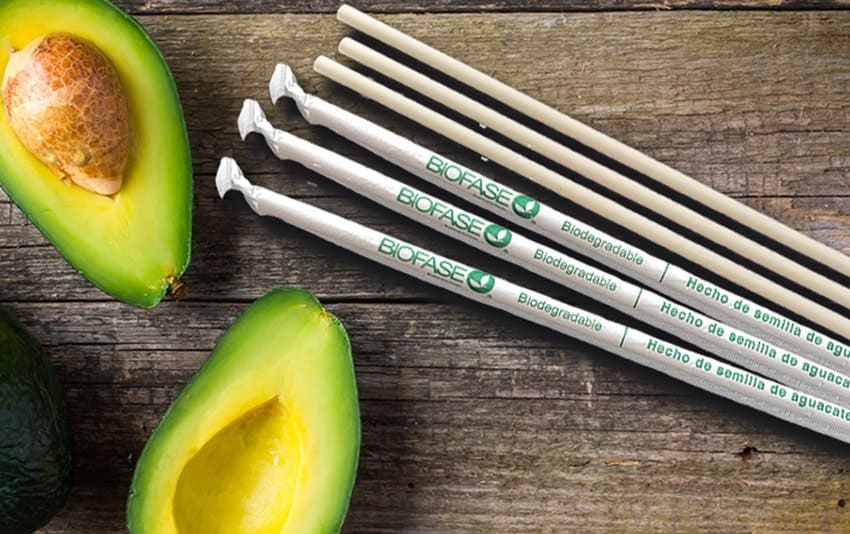
As plastic straws fall out of favor for their potential to inflict environmental damage, a company with an alternative that uses avocado pits is getting more attention.
Morelia, Michoacán-based Biofase is manufacturing biodegradable straws made out avocado seeds using a process whose beginnings date back to 2012.
Scott Mungía was a chemical engineering student at the time and, being motivated to solve pollution problems, was looking for a reliable source for biodegradable plastic.
After a trial-and-error process that tested the properties of raw materials such as mango and mamey sapote seeds, Munguía hit upon avocados.
It took him a year and a half of research to find an effective method to extract a molecular compound from the avocado pit and obtain a biopolymer, which could then be molded into any desirable shape. Munguía’s avocado-based bioplastic was born.
The bioplastic products manufactured using his process biodegrade after 240 days of being exposed to the elements or buried in the ground, while their fossil fuel-based counterparts can take more than 100 years.
By 2013, Munguía had the process patented and founded Biofase. Two years later he installed his first plant in Morelia to manufacture ecofriendly plastics and sell them as raw material.

In 2016, Mungía decided to start manufacturing his own bioplastic-based products in a second plant. He began with plastic cutlery, and in February this year moved into straws.
Four months on, the young entrepreneur has found that changing people’s habits is no easy feat: “people are still reluctant to pay more for [a product] that protects the environment.”
But production continues in the Morelia plant, whose monthly yield of biodegradable plastic products is 130 tonnes, 40% of which are straws. Eighty per cent of the plant’s production is exported to the United States, Canada, Costa Rica, Colombia and Perú.
Its daily consumption amounts to 15 tonnes of avocado seeds, which it gets from the United States-based food company Simplot. It also operates a plant in Mochoacán.
Mexico is the second biggest market for Munguía’s company, but its principal customers are chain restaurants such as Fiesta Americana, P. F. Chang’s China Bistro and Chili’s Grill & Bar rather than consumers.
Source: El Financiero (sp)