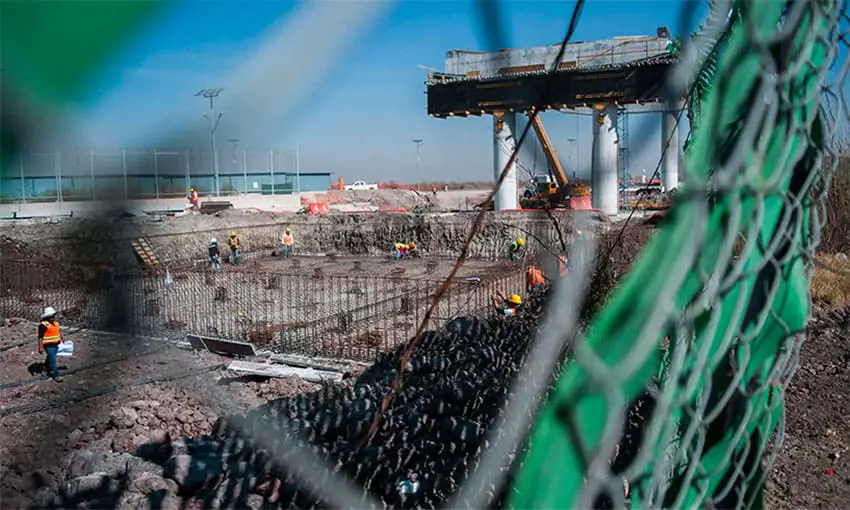
The federal government paid out more than 71 billion pesos (US $3.5 billion) to settle contracts for the canceled Mexico City airport project.
Communications and Transportation Secretary Javier Jiménez Espriú told a press conference yesterday that an analysis determined that 692 contracts had to be settled.
For work already completed at the abandoned airport site in Texcoco, México state, the government paid contractors 60.29 billion pesos, Jiménez said.
An additional 14.93 billion pesos in compensation was paid to contractors to cover the non-recoverable costs they incurred, meaning that the government forked out a total of 75.22 billion pesos to the builders of what was to be the previous government’s signature infrastructure project.
The payout represents 26% of the 285 billion pesos (US $14 billion) that had been allocated to build the airport.
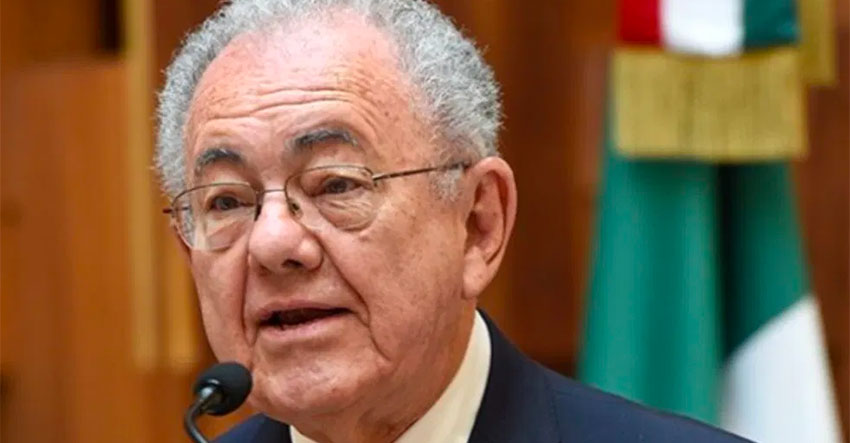
“When we began this analysis, we calculated that the commitments would be about 100 billion pesos. Today we see that it turned out to be 25 billion pesos cheaper, which is good news,” Jiménez said.
He explained that because all the contracts have now been settled, the concession for the construction of the airport has been terminated.

The return of materials purchased – including huge quantities of basalt, tezontle and steel – allows the government to reduce its net loss by 4 billion pesos.
The materials could be used in the construction of the government’s priority infrastructure projects such as the Maya Train, the Dos Bocas oil refinery and the Santa Lucía airport, Jiménez said.
He said the canceled airport site can be converted into an ecological park once the government has resolved 60 injunctions filed against the government’s decision to scrap the project.
To terminate the concession for the Texcoco airport, the government also had to reach a deal with private investors.
To that end, the government in December offered to buy back US $1.8 billion in bonds issued to fund the project, and a majority of bondholders accepted the deal.
Source: El Economista (sp), Noticieros Televisa (sp)