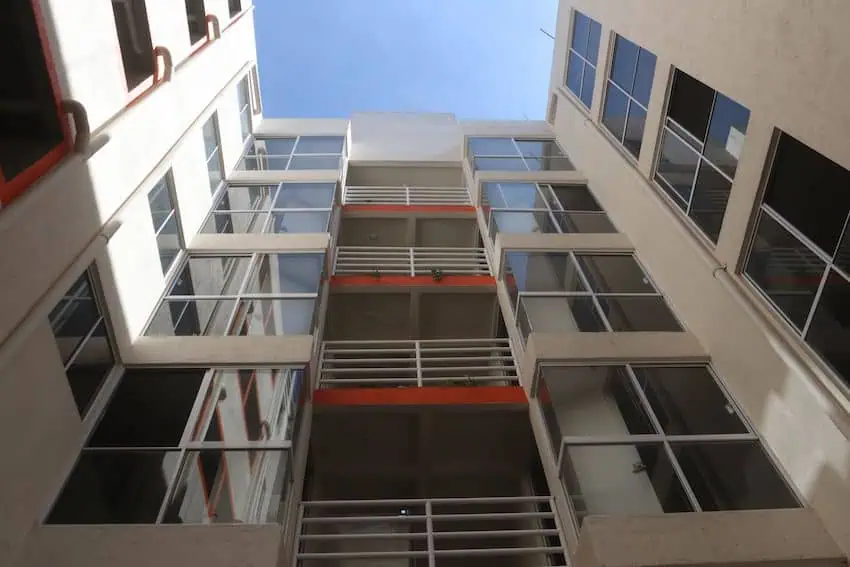
In a bid to assist young adults struggling to find affordable housing in Mexico City, the capital’s interim mayor, Martí Batres, this week introduced a pilot program to provide low-rent apartments in popular neighborhoods that have been impacted by gentrification.
The announcement comes one month after Mayor-elect Clara Brugada unveiled her ambitious social housing program which she described as the broadest in Mexico City history.
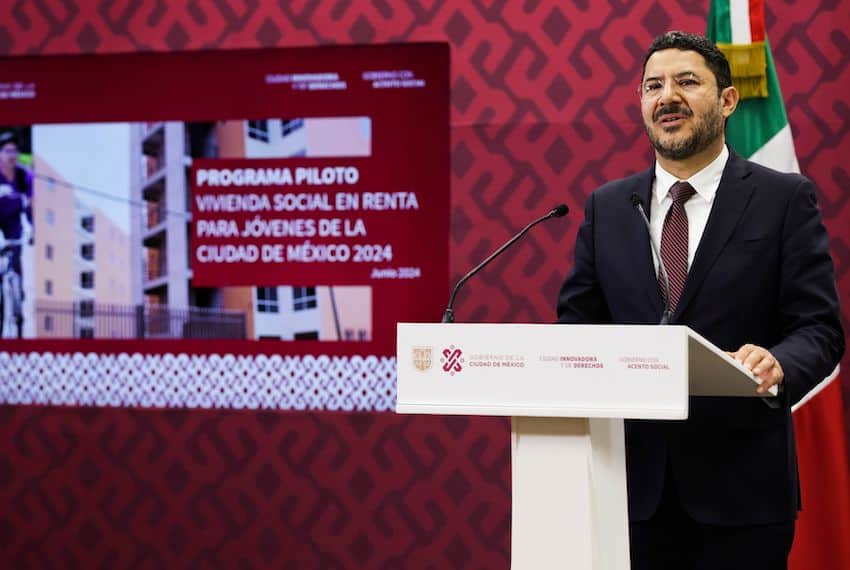
For his part, Batres announced that the pilot program will start with 150 units and will target university students and young professionals. Each apartment will measure at least 40 square meters in size, will feature basic services and will be close to public transportation.
The program will be administered by the city’s Urban Development and Housing Ministry (Seduvi). Ínti Muñoz Santini, Seduvi director, said the initial apartments set aside for the program are located in the Doctores neighborhood, just east of the popular Roma neighborhood and south of the Centro Histórico.
Once approved by Seduvi, recipients of the apartments will receive a five-year lease with the option of a single two-year extension. Rents will range from 2,500 to 5,000 pesos/month (US $136 to $273), considerably lower than the 10,000 to 30,000 pesos (US $545 to $1,636) that rents can reach in the Roma neighborhood.
To participate in the program citizens:
- Must be between 18 and 29 years old
- Must have a job or be attending university
- Earn a salary no more than twice the minimum wage, or 591 pesos/day (US $32)
- Must not own property elsewhere
Batres, whose term ends on Oct. 5, did not say when the program would be launched though he expects it to be under way within a year.

Brugada announced her city-wide plan during the mayoral campaign to formalize and register deeds so as to provide juridical certainty to Mexico City homeowners, especially in low-income neighborhoods.
During a meeting with notaries public on May 20, Brugada said the goal is to regulate informal housing developments that have sprung up over the past several decades. Brugada’s administration will begin by carrying out a survey to evaluate the situation with regard to deeds and the registration of buildings and homes across the entire city.
The Ninth Notary Services Survey found that in 2022, only 51% of Mexico City property owners had a deed to their home.
With reports from El Financiero, Expansión, Via Tres, El Economista and ContraRéplica