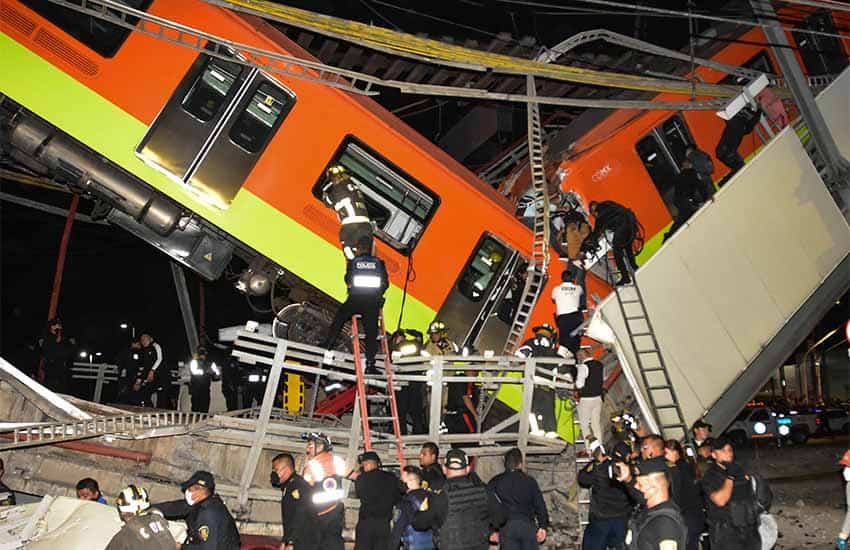
A report into the causes of the Mexico City Metro collapse that killed 26 people last year pointed to failures across the administrations of two mayors who are now presidential hopefuls.
Initial results from an audit by Norwegian consultancy DNV last year said the crash was caused by a series of faults during construction of Line 12 of the Metro, which was built by billionaire Carlos Slim’s Carso Infrastructure and Construction while Marcelo Ebrard, currently Mexico’s foreign minister, was mayor.
In a final report published on Wednesday by the city government, DNV said there was also no evidence that routine maintenance to find potential problems had been performed after its completion, implicating subsequent administrations including that of current Mayor Claudia Sheinbaum.
Last week, Sheinbaum, who commissioned DNV to run the audit, accused the company of conflicts of interest and said there were inconsistencies between their initial and most recent reports. She said she would rescind the company’s contract and has threatened to file a criminal complaint against its representatives.
“We think there is political bias in the last report,” Sheinbaum said this week.
President López Obrador on Wednesday backed Sheinbaum, saying she was an honest woman who was being put under enormous pressure.
Ebrard last year defended the design and building of the line and said all decisions were “based on efficiency and technical aptitude” by experts and officials.

DNV did not immediately respond to a request for comment. In a statement last week, it said that it stood by its methodology and that no experts involved in the report had conflicts of interest.
Ebrard and Sheinbaum are tied in voter preferences among presidential candidates to succeed López Obrador, according to a poll by Reforma newspaper published on Monday.
The rejection of the report and threats of criminal action against the consultants caused alarm in the country’s private sector. They also fueled fears that the technical and criminal investigations will not hold those responsible accountable.
“The Mexico City authorities look more interested in stopping justice being done,” said Marco Fernández, a researcher at think tank México Evalúa and professor at the Tec de Monterrey’s School of Governance.
“Everything points to serious problems of negligence in the construction and the supervision . . . and obviously the negligence that’s very uncomfortable for the current government on the lack of inspections.”
No one has been charged in connection with the collapse more than a year since it happened. Prosecutors have said they may soon bring charges.
Slim’s company Grupo Carso last year reached a deal with the city government to pay to repair the line and fund compensation for victims, although it said at the time that it did not accept responsibility for the crash. A spokesperson did not immediately respond to a request for comment.
© 2022 The Financial Times Ltd. All rights reserved. Please do not copy and paste FT articles and redistribute by email or post to the web.