The families of 10 miners who have been trapped in a Coahuila coal mine since August 3 have rejected a rescue plan that could take 11 months or even longer to execute.
Relatives said Thursday that Civil Protection chief Laura Velázquez informed them that the best option is to build a slanted tunnel into the El Pinabete mine, located in the municipality of Sabinas.
The project, which involves the excavation of an open pit where the tunnel would begin, is slated to take between six and 11 months to complete.
“We don’t want the [open] pit option, we want them to look at other options,” Juani Tijerina, sister of one of the trapped miners, told the newspaper El Universal.
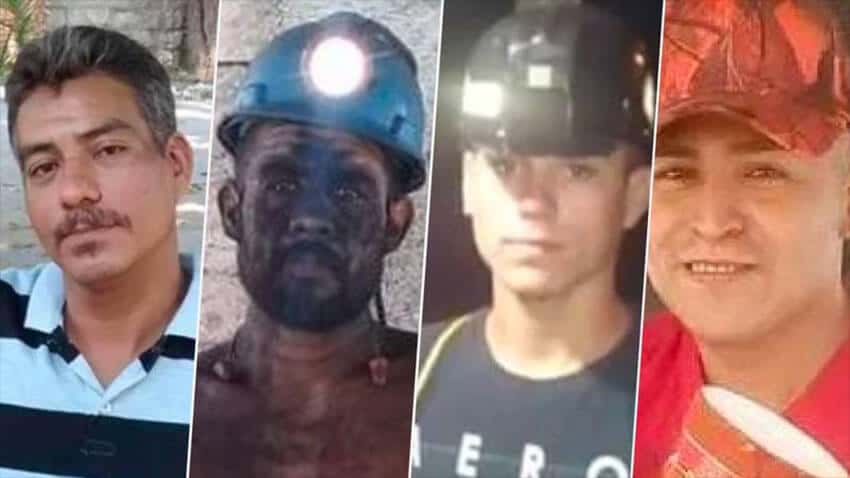
She said that the trapped miners’ families informed the authorities that they don’t support the proposed rescue plan because they want their loved ones to be returned to them without delay. However, Tijerina said they were told that there is no other option to rescue the miners, or – as is more likely – recover their bodies.
Sergio Martínez Valdez, brother of a trapped miner, also told El Universal that the families rejected the proposed rescue plan. He called for foreign mining experts to travel to the mine to offer their opinion.
The federal government asked a United States company and a German firm for advice about how to go about rescuing the miners, but they concluded that Mexican authorities’ approach – which to date has mainly involved pumping water out of the flooded mine – was “the right one,” according to President López Obrador.

Velázquez on Wednesday announced that the authorities involved in the rescue mission were considering the construction of a slanted tunnel into the galerías, or passages, of the mine, which is flooded due to inflows of water from abandoned adjacent mines.
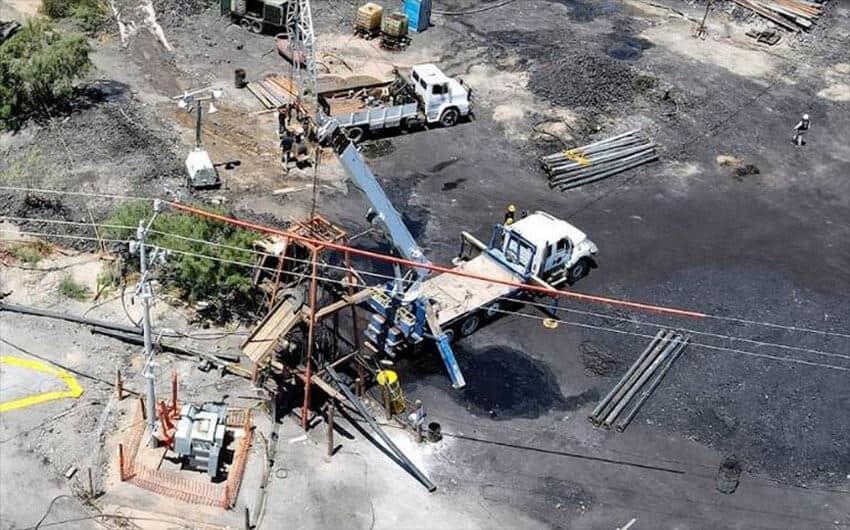
However, the Civil Protection chief said the authorities didn’t want to begin a new rescue strategy without the consent of the families.
For his part, the director of the Center for Research in Applied Geosciences at the Autonomous University of Coahuila said the excavation of an open pit and construction of a sloping tunnel to rescue the miners is a complex project, but a viable one.
Luis Fernando Camacho Ortegón said that a range of studies would be required prior to the commencement of the project, including topographical and electrical tomography ones.
“Pits in that area could be susceptible to problems … because you’d have to break the aquifer, and the aquifer could flood the pit,” he said.
Camacho said the project could take longer than 11 months due to its complexity, the amount of work and the prior planning required, which could take three or four months.
Idalia Morales, another family member, also expressed opposition to the plan to get the miners out of the mine via a tunnel exiting into the open pit. “We don’t know how they are now, let alone [how they’ll be] in six to 11 months,” she said.
Martínez criticized the authorities for achieving nothing in the three weeks since the miners became trapped, while Tijerina noted that family members have already been offered compensation. However, the families won’t accept any money until the miners have been returned to them, she said.
Relatives have also criticized the authorities for removing portable toilets and other amenities from the mine site, where they have camped out since the miners became trapped. Despite that, “we’re not going to leave,” Morales declared.
“We’re going to stay here. What we want is justice and we’re not going to leave them [trapped in the mine],” she said.
With reports from El Universal