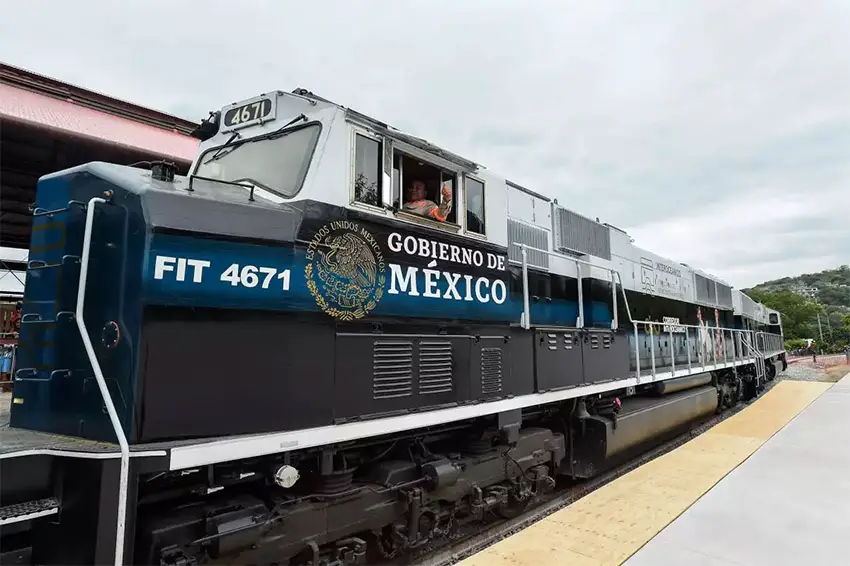
The new Interoceanic Train — a legacy project of President Andrés Manuel López Obrador that already transverses Mexico’s midsection from one ocean to another — is ready to inaugurate a second line.
The new line from the Coatzacoalcos station in the state of Veracruz to the Palenque station in Chiapas is slated to open to the public this weekend, following a ceremonial first ride by López Obrador scheduled for Friday.
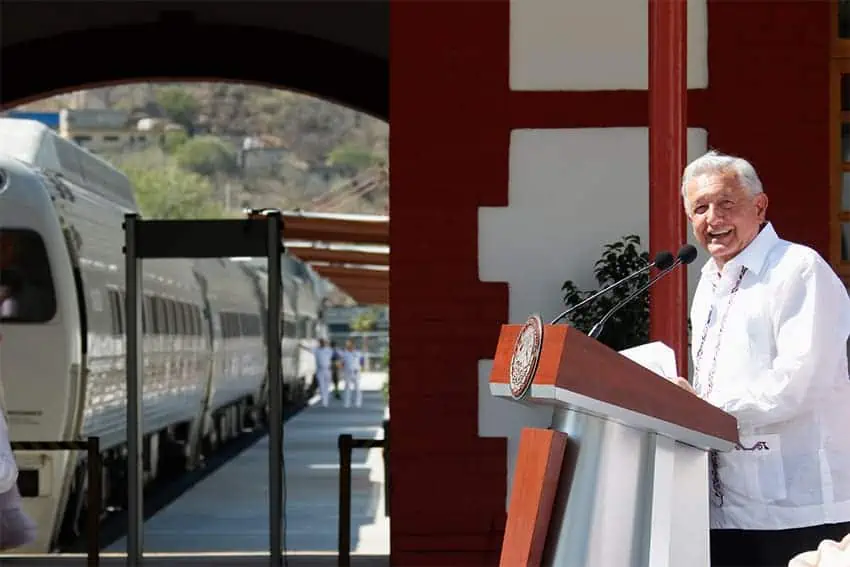
It appears as if the 70-year-old president, whose term will conclude at the end of this month, will board the train at the Teapa station in Tabasco, although some early media reports said he would board in Coatzacoalcos.
Either way, his final destination will be the station in Palenque, which is near the famous archaeological site.
The Palenque station also serves as a connection point with the Maya Train, a 1,554-kilometer railroad project that runs through five southern Mexico states.
Just last weekend, López Obrador rode the Maya Train with President-elect Claudia Sheinbaum and other dignitaries — from Cancún to Bacalar in Quintana Roo to showcase new stations in Playa del Carmen, Tulum and Felipe Carrillo Puerto.
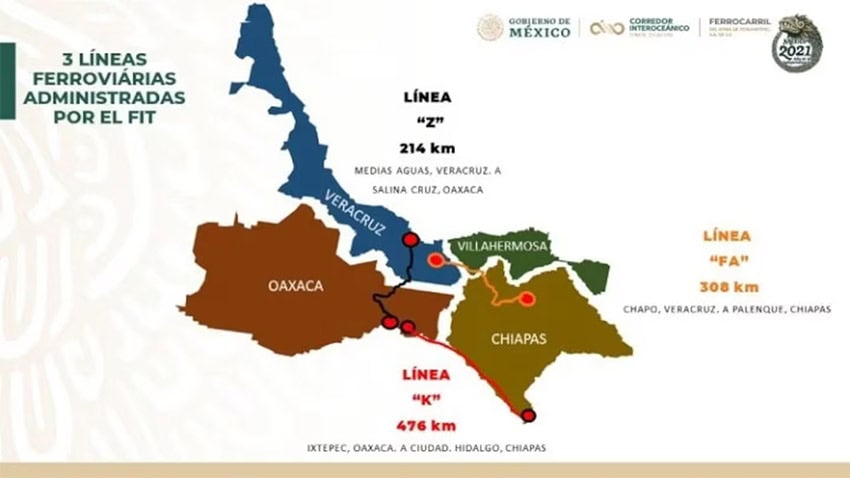
The Interoceanic Train has three lines that include both freight and passenger trains and is part of a larger government infrastructure project called the Interoceanic Corridor of the Isthmus of Tehuantepec (CIIT).

Its signature, 308-kilometer line crosses Mexico’s narrowest stretch between the Gulf of Mexico and the Pacific Ocean — a route that will be able to transport 1.4 million shipping containers annually on journeys of less than 6 hours, according to Mexican officials. Some analysts say the route could be faster and more economical than the Panama Canal.
That section — from Coatzacoalcos, Veracruz, to Salina Cruz, Oaxaca — was inaugurated by López Obrador in December 2023. It is also known as line Z.
According to government officials, as cited by the newspaper Diario del Istmo, 127 freight and passenger trains covered line Z from its December 2023 opening through June 2024, generating income of 8.1 million pesos (US $421,566) and carrying some 33,000 passengers.
The train project includes two other lines, one of which is the 329-kilometer stretch of railway set to open this weekend.
Also known as the FA line, it includes eight stations: Coatzacoalcos, Cuichapa and Las Choapas in Veracruz; Roberto Ayala, Juárez and Teapa in Tabasco; and Pino Suárez and Palenque (also called Pakal Ná) in Chiapas.
According to Raymundo Morales Ángeles, the CIIT general director, the FA line will be fully operational as of Sept. 30.
The third line will cover 472 kilometers from Ixtepec, Oaxaca, to Ciudad Hidalgo, Chiapas, which is adjacent to the Mexico-Guatemala border. Originally projected to be open this summer, line K is now targeted to be completed by the end of the year.
Ticket sales for the FA line — so named for a 1950s train line that was used to transport merchandise over the same tracks — began on Thursday.
Prices range from 36 pesos (US $1.87) to over 600 pesos (US $32.21), depending on destination, class of service (tourist or business) and age. Children under 3 can travel for free, but have to share a seat with their adult; children over 11 must pay adult prices, although they can’t travel alone until age 18.
Tourist class includes air conditioning, bathrooms and luggage space, while business class has reclining leather seats, a retractable table and more space for luggage.
Train construction and travel has been on the rise (and costly) during López Obrador’s administration, and Sheinbaum has pledged it will continue, notably in the north, after she takes office on Oct. 1.
With reports from El Heraldo de Tabasco, Milenio, Diario del Istmo and Diario de Xalapa