Many Colima city residents are staying home after dark due to a surge in violence last week as two criminal groups face off in the capital and nearby areas of the small Pacific coast state.
The Jalisco New Generation Cartel (CJNG) and the the Independent Cartel of Colima are fighting each other after the latter organization, also known as Los Mezcales, switched its allegiance to the Sinaloa Cartel.
At least 22 people have been murdered since the start of last week, according to a report published Tuesday by El Universal.
The newspaper reported that an unofficial, self-imposed curfew is in place in Colima city, home to approximately 150,000 people.
Most businesses are closing early and/or allowing employees to go home before their usual knocking-off time, while few bars and restaurants remain open after 9:00 p.m.
A waiter at a restaurant in the center of Colima told El Universal on Saturday that the greatest risk was the possibility of getting caught in the crossfire of a gunfight between the feuding criminal groups.
“But nothing has happened here yet,” he said before noting that violent incidents had occurred “four or five blocks away.”

The waiter said that the restaurant’s receipts decreased significantly between Monday and Friday. “Today has been a little bit better but normally at this time [3:00 p.m.] half the tables are taken,” he said.
However, the restaurant was only about one-quarter full, El Universal reported, noting that other establishments located around Jardín Libertad, a pretty square in the city’s downtown, were similarly empty.
A battle-scarred state police officer who spoke with the newspaper said that the current wave of violence wasn’t comparable to what he has seen in Mexico’s north, where he used to work, but warned that the situation could deteriorate.
Last week’s spate of armed attacks “is not even a quarter of what I saw in the north, but this is how it starts,” he said.
Hoping to stop a repeat of last week’s violence, or any deterioration of the security situation, are Colima and federal authorities, who are collaborating on a special operation.
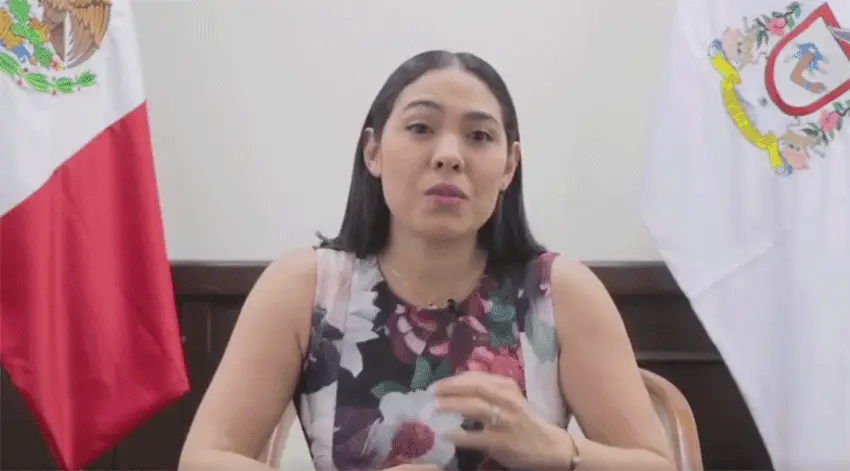
Governor Indira Vizcaíno, who has been the subject of threats by both the CJNG and Los Mezcales, announced Tuesday that more than 600 additional soldiers, marines and National Guard troops were deployed to Colima over the weekend, increasing the total number of federal security elements in the state to over 3,600.
“… The central objective is to protect the safety of all working families in Colima,” she wrote in a Twitter post featuring a slickly-produced video about the joint state and federal security operation.
Vizcaíno took office for the Morena party in November, bringing to an end 72 years of uninterrupted Institutional Revolutionary Party rule in Colima.
She said shortly after she was sworn in that the state became the country’s homicide capital during her predecessor’s term, but noted that murders were down in 2021 compared to the previous year.
Indeed, Colima was Mexico’s most violent state on a per capita basis for five consecutive years between 2016 and 2020, before losing that unenviable title to Zacatecas last year.
The state ranked as the third most violent in 2021 with 65.8 homicides per 100,000 people, according to data compiled by the crime monitoring website elcri.men. For total homicides it ranked 20th out of the 32 states with 518, according to federal data presented last month.
With reports from El Universal and Milenio