The National Human Rights Commission (CNDH) will investigate a confrontation in Guerrero this week that left 14 suspected gangsters and one soldier dead.
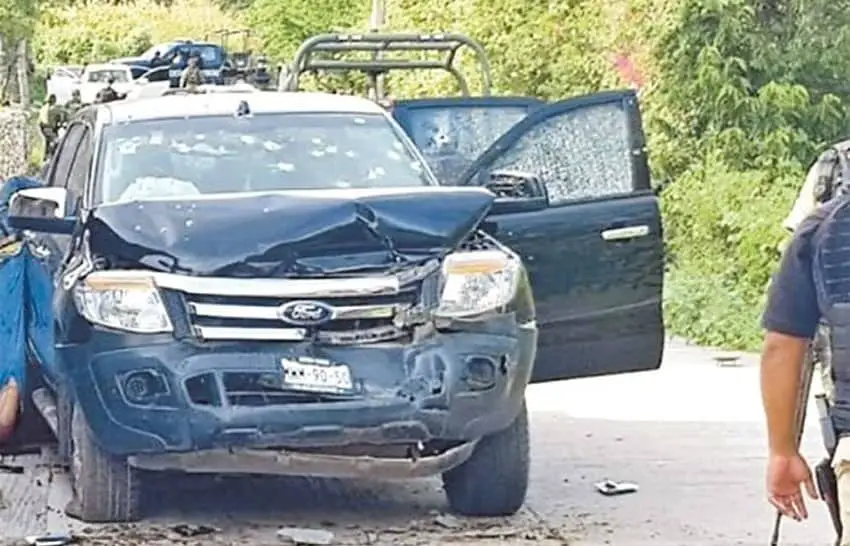
The clash occurred on Tuesday in Tepochica, a community just outside the city of Iguala. A call to the 911 emergency number in the late afternoon alerted authorities to the presence of armed men in the community, triggering a deployment by soldiers. They were attacked upon their arrival.
According to the Secretariat of National Defense (Sedena), the soldier died while acting as a “shooter” in a vehicle that led the army response. Military force was used in accordance with the law, Sedena said in a statement.
President López Obrador said on Wednesday that the slain soldier had fought on after being wounded and killed an unspecified number of gangsters before dying.
However, the president said the government didn’t know whether all of the army’s adversaries were killed during the gunfight or whether there had also been extrajudicial killings.
López Obrador said there would be an investigation to determine exactly what happened.
Accounts of the incident and photographic evidence have raised doubts among security experts and human rights groups that all 14 presumed criminals were killed during the battle.

Photos showed some of the slain men in the back of a pickup truck and two others in the back seat of a vehicle, one with a long gun lying across his body.
“You don’t need to be an expert to see that [from] the position of the bodies, it’s questionable that this was a gunfight,” Erubiel Tirado, a security and intelligence expert at the Ibero university in Mexico City, told the news agency Reuters.
“The fact there’s only one dead soldier is something that needs to be cleared up to establish there wasn’t excessive use of force. I think the National Human Rights Commission and the U.N. high commissioner should be part of this,” he said.
“It’s clear there was excessive use of force,” he added.
The Human Rights Commission said it would send a team of investigators to the scene and called on the government to carry out a prompt and exhaustive investigation.
“The intervention of the CNDH seeks to ensure that the truth is known about what happened . . .” the organization said in a statement, adding that if any wrongdoing on the part of the army is detected, those responsible must be held accountable.
In turn, Amnesty International said in a statement that Mexico should conduct a prompt, independent and impartial investigation “to determine whether the security forces made legal use of lethal force.”
Americas director Erika Guevara-Rosas said “if there is evidence of human rights violations, the authorities should try those suspected of responsibility in a fair trial and guarantee their rights to due process.”
The armed forces have been accused of committing a range of human rights abuses since former president Felipe Calderón launched the so-called war on drugs in late 2006.
In June 2014, soldiers killed 22 suspected gang members in a warehouse in the México state municipality of Tlatlaya.
Seven soldiers were arrested on suspicion of carrying out extrajudicial killings and three were charged with murder. However, all of the suspects had been released by 2016.
Many people believe that the army also played a role in the September 2014 disappearance of 43 teaching students in Iguala. One theory is that the students’ bodies were burned in the incinerators of a Guerrero army base.
The United Nations said last year that there were “strong indications” that federal security forces were responsible for the disappearance of 23 people in Tamaulipas.
Tuesday’s clash left the largest death toll of any incident in which the military has been involved since López Obrador took office last December.
He has given the army a clear mandate to avoid civilian casualties but two incidents last month suggested that soldiers were tiring of responding passively to aggression.
The federal government’s security strategy is currently under intense scrutiny following a failed operation on Thursday to arrest a son of Joaquín “El Chapo” Guzmán in Culiacán, Sinaloa.
The brief detention of Ovidio Guzmán López triggered a wave of cartel attacks that terrorized residents of the northern city and left eight people dead.
Source: Reuters (en), El Economista (sp)