Parents, teachers, states and schools were already divided over the federal government’s plan to reopen schools in 12 days, but now one element of the plan itself has been rejected by the president himself.
At Tuesday’s morning press conference, President López Obrador delivered what one newspaper called “a smack” at his education minister, after asking reporters if they believed he might have had something to do with the ministry’s Letter of Agreement for Corresponsibility.
“Well no, it was a decision made from below. If they had asked me I would have said no, we are free, [and it is] prohibited to prohibit.”
The letter was presented at the press conference last week, but Tuesday was the first time that the president has expressed his disagreement with its contents.
Parents would have been asked to sign off on six points, such as checking their children daily for symptoms of Covid, keeping them at home if they presented any and promoting good hygiene to prevent propagation of the virus.
On Wednesday, the minister of education confirmed that the letter was no longer a part of new protocols guiding a return to classes.
Meanwhile, the president will address opposition to the plan, which he claims is politically driven.

Earlier on Wednesday he told reporters that on Thursday officials will present the results of a study carried out by government officials with UNICEF “to demonstrate the danger being caused to children by not attending school.”
López Obrador said the study is based on “evidence, with arguments to show why [opposition to reopening schools] has no basis” and then proceeded to blame the opposition on a media conspiracy.
He urged the middle class to wake up to having been manipulated by the media with misinformation about the risks of sending children back to school.
“Our adversaries are very irrational, very irresponsible, lacking in ethics. How can they lie about a subject as delicate as health and education?”
The president then declared, “There are no risks,” but offered the assurance that if there are problems, “we shall act.”
He made it clear on Tuesday that returning to school is not obligatory for the nation’s 25 million students but that probably wouldn’t make much difference for the majority of parents.
A survey by the newspaper El Financiero found that 58% are not in agreement with the plan.
At least three state governors feel the same way.
Nuevo León, Michoacán and Hidalgo have rejected a return to in-person classes. The governor of the latter state said it took two days for the delta strain of virus to reach the same infection rates that took the original virus 11 months.
Meanwhile, the governments of Baja California Sur, Colima, Nayarit, San Luis Potosí, Tamaulipas, Oaxaca, Puebla and Quintana Roo have not defined any strategy for reopening schools.
Teachers — or their unions, at least — are also divided. The dominant SNTE union is on side but the militant CNTE, with a strong base in Michoacán, Oaxaca, Guerrero and Chiapas, has said its members will not be in the classrooms on August 30.
A researcher at the National Autonomous University suggested that any reopening plan should be designed with individual schools and their needs in mind.
Gustavo Oláiz told the newspaper Reforma that each school needs specific measures depending on their location, size, ventilation, the number of students in each class and the possibility of complementing classes with distance learning.
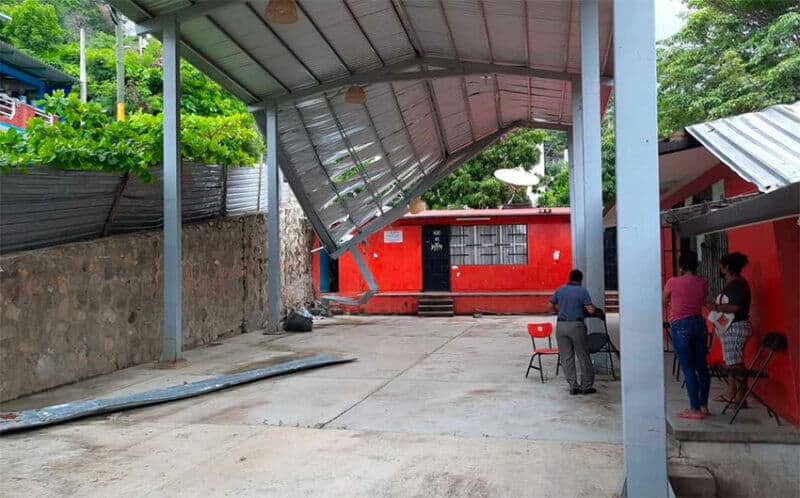
The assessment might also consider the condition of the schools as a factor. At least 11,000 have been robbed or vandalized during the pandemic, according to the education advocacy group Mexicanos Primero, and many others have been reported in a state of abandonment.