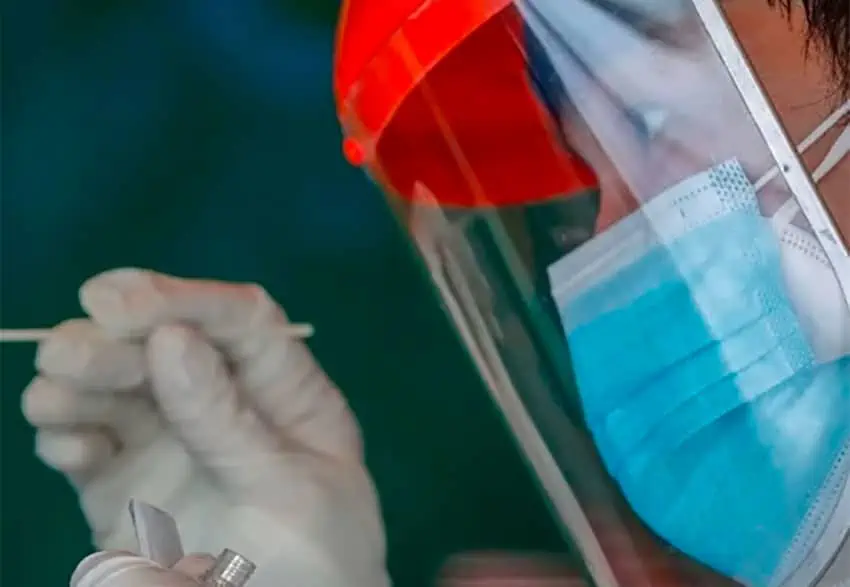
Researchers at the National Polytechnic Institute (IPN) are working on a comprehensive system to monitor coronavirus patients remotely and in real time.
The system, consisting of a smart face shield and gloves, uses non-invasive sensors to monitor a patient’s bioelectric signals, including heart rate, oxygen saturation, respiratory rate, temperature, and carbon dioxide levels which will be sent to doctors for evaluation. The mask will have three sensors, and the gloves two.
“They are very small devices that monitor the patient without inconvenience. When any of the parameters go out of range, an alert is issued to the attending physician’s mobile phone; in a matter of minutes he will be able to make the pertinent decisions for their patient,” said project leader Juan Humberto Sossa Azuela, head of the Robotics and Mechatronics Laboratory of the IPN’s Center for Computer Research.
The project is focused on remote medical assessment, a pressing need in the health sector which will limit the need for in-person visits to medical clinics and health centers, thus reducing the risk of infection.
“With this mask and glove, the patient can be under strict medical surveillance, without the specialist being present, making it possible to keep the person under the required confinement, in addition to avoiding hospital saturation,” Sossa explained.
The technology would also allow patients who are not able or do not choose to leave their homes to be diagnosed remotely, which would help prevent the virus from spreading.
Sossa’s team is also working on developing a robot that can clean hospitals remotely using ultraviolet light. “It has basic autonomy functions that will allow sanitizing toilets, hallways and rooms remotely, in addition to monitoring the patient and serving as a link to the medical staff, through a sensor system and an interface for tablets,” he said.

Sossa is part of a team of Mexican scientists brought together by the Ministry of Foreign Affairs to collaborate with foreign researchers in the development of a vaccine against Covid-19.
Source: Sin Embargo (sp), Milenio (sp), El Universal (sp)