The U.S. Department of State has issued an alert advising citizens not to travel to Mexico this month for spring vacations, citing the high number of Covid-19 cases.
It’s also warning citizens that they will need to prove that they are Covid-free upon returning to the U.S.
“U.S. citizens should reconsider spring break and other nonessential travel to Mexico due to Covid-19,” the U.S. Embassy said on its website. “Cases and hospitalizations remain high in most of Mexico. Consular services, like appointments for emergency passports, are limited in many locations due to the pandemic … For those returning to the United States by air, there is a requirement to present a negative Covid-19 viral test …”
In February, the U.S. Centers for Disease Control issued a level 4 travel health notice for Mexico, suggesting that citizens avoid all travel to the country as well as travel in general, given the difficulty of social distancing in places like airports and other transportation facilities.
Although travel numbers in the U.S. are still a long way from what they were before the pandemic, officials’ concerns about increased travel this month may not be unwarranted: domestic and international airline travel in the United States is creeping back upward: according to the Transportation Security Administration, passenger counts in all U.S. airports exceeded 1 million every four days during February.
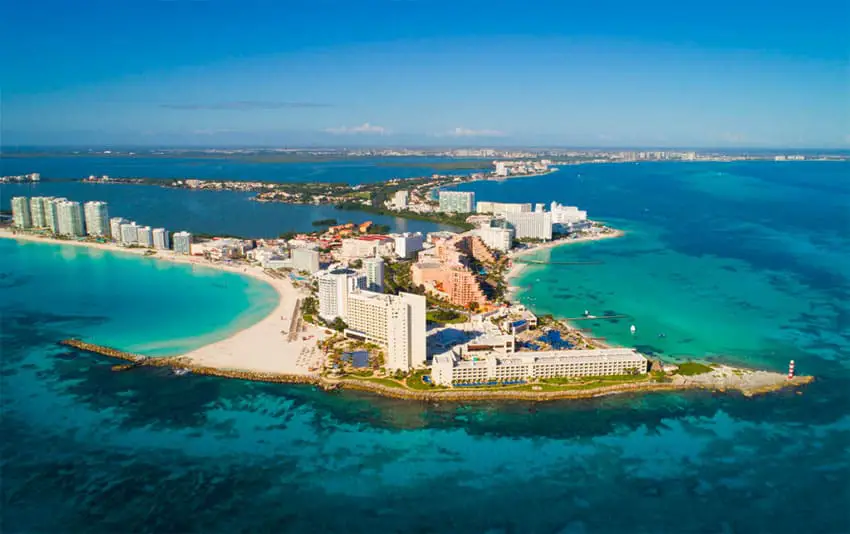
However, given the inconvenience of having to get tested for Covid upon returning to the U.S., many would-be travelers may be choosing to stay closer to home. Mexico’s tourism ministry is predicting that Cancún — a popular vacation destination for U.S. visitors — will have among the lowest hotel occupancy rates of many of Mexico’s major beach destinations this coming weekend, even though the beaches are open and it will be a long weekend for Mexicans in celebration of Benito Juárez’s birthday.
Cancún is expecting to see 49.5% hotel occupancy, compared to Puerto Vallarta, for example, which is expected to see 70.5%. Mazatlán is expecting 68.2% occupancy, while Los Cabos may see 55.9% and Acapulco 55.2%.

Source: Reportur (sp), USA Today (en), Fox Business