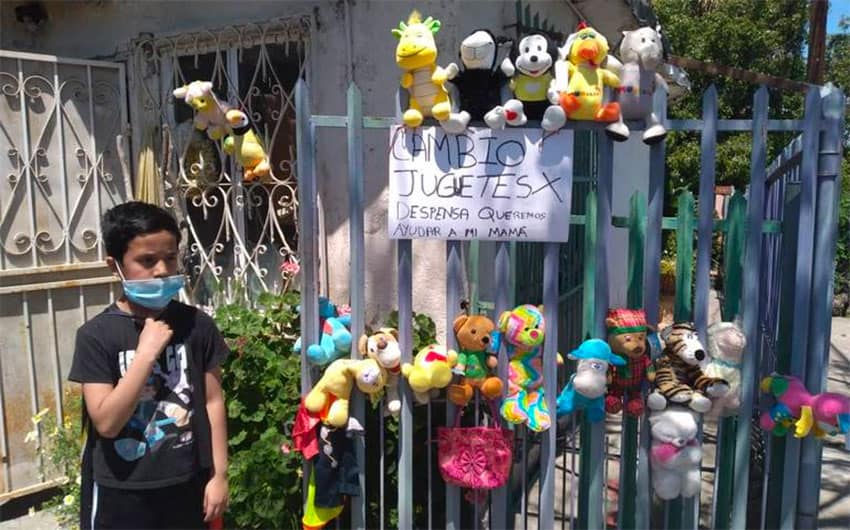
A child in Tijuana has taken to trading his toys for food to help his mother who lost her job due to the Covid-19 pandemic.
Alexis’ mother was let go from her job six weeks ago so he started bartering his favorite playthings on Friday night. He set up his stuffed animals, puzzles and balls on the fence outside his family home with a sign reading, “I’m exchanging toys for food. We want to help my mom.”
“The child said he wanted to give away his toys,” said the enterprising young man’s mother. “He asked me how he could help me and we began today.”
Alexis’ idea worked, and local media published photos of neighbors bartering food for toys.
Five weeks after the first case of Covid-19 was detected in the region, the outlook appears grim for those among the lowest wage earners in the economy, who have had to look for other ways to continue to make a living during the pandemic.
Federal employment data reveal that as much as 37.3% of the Baja California workforce is employed in the informal economy during normal circumstances.
Tijuana’s main intersections are crowded with local merchants who, like street vendors in other parts of the country, have dropped their usual wares to sell face masks, hand sanitizer and other medical care products to in order to meet changing demand.

Like Alexis, some have also taken up bartering in order to get by without their usual clientele. Street vendors in Los Cabos, Baja California Sur, have been seen trading their products directly for food for the lack of tourists.
State Economy Minister Mario Escobedo Carignan said that the number of lost jobs in Baja California is around 11,000, and that the number could rise further. But he expressed hope that things will soon return to normal.
“The job losses are temporary. The businesses consider it better to lay off rather than continue paying. We’re hoping that the companies will later rehire them when the quarantine is over,” he said.
Source: El Sol de Tijuana (sp)