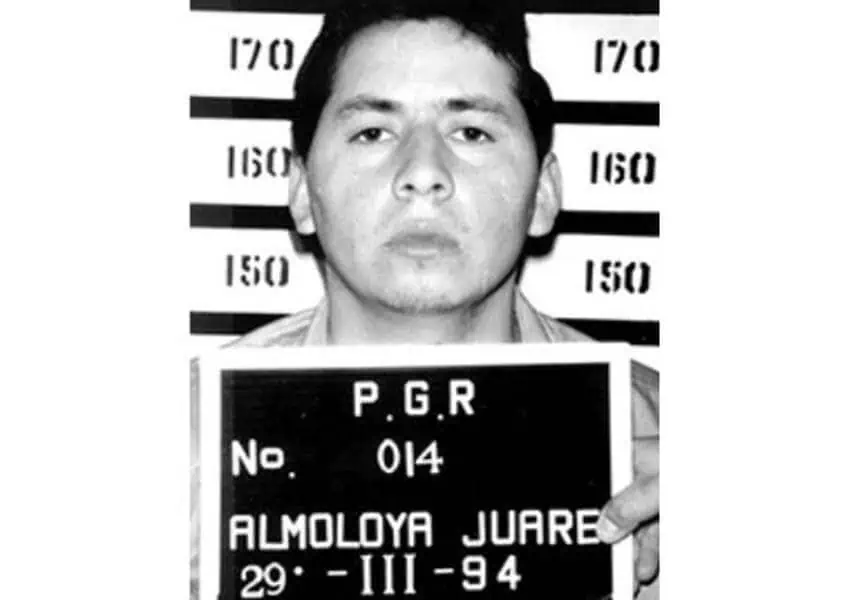
A federal court has annulled the 45-year prison sentence given in December 1994 to Mario Aburto for the assassination of presidential candidate Luis Donaldo Colosio.
The First Court of Criminal Appeals of the Second Circuit, located in México state, ordered the annulment on Thursday after ruling that Aburto’s case should have been tried not under the federal criminal code, but under that of Baja California, where the murder took place.
It also found various irregularities in Aburto’s trial, including that “there was an inadequate defense in its material aspect and the judge neglected to collect several pieces of evidence.”
Baja California’s criminal code sets a maximum sentence of 30 years in prison for the crime of aggravated homicide, whereas the federal code allows up to 50. Aburto will reach 30 years in prison on March 23, 2024, but could be released before that date. The First Collegiate Court of Criminal Appeals was careful to ensure that he will be released regardless of how the investigation into his trial progresses.
“It is considered necessary that this procedural violation be repaired by the responsible authority without the need for a reversal of the criminal procedure, in order not to delay… their right to personal liberty or prompt justice,” the Court of Criminal Appeals ruled.
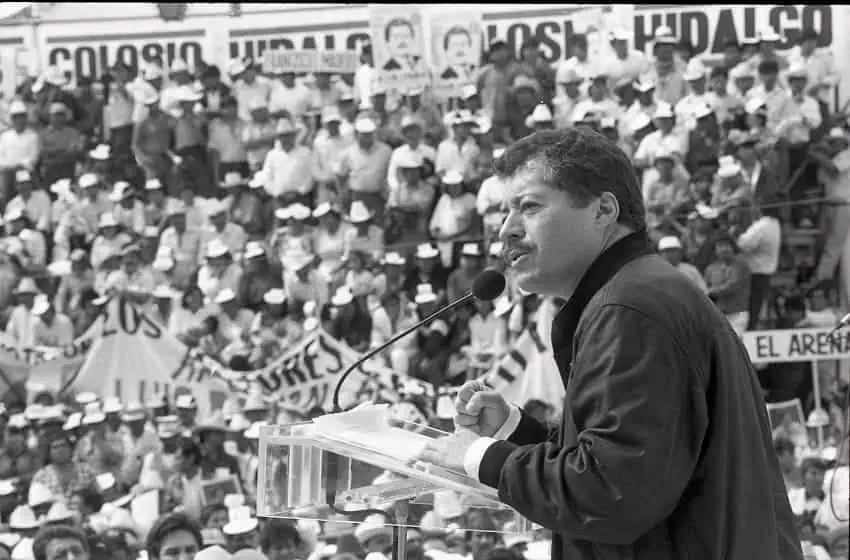
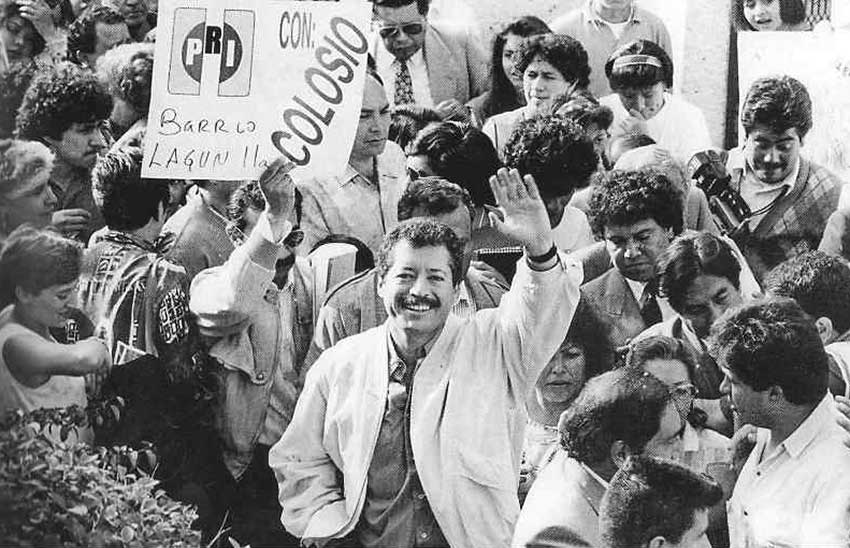
Colosio, a presidential candidate for the then-ruling Institutional Revolutionary Party (PRI), was shot dead during a campaign rally in Tijuana on March 23, 1994. Aburto denies having killed the candidate and claims that agents of the Attorney General’s Office (PGR) tortured him into giving the confession which was used in his conviction nine months later.
In 2021, the Federal Institute of Public Defenders (IFDP) filed an injunction on Aburto’s behalf, arguing that his due process had been denied. On Thursday, the Collegiate Court backed this position, ruling that Aburto’s allegations of torture should be investigated.

The National Human Rights Commission (CNDH) applauded the court’s decision, which it described as “one more step towards achieving truth and justice in a case… plagued by irregularities, omissions and cover-ups and must sooner or later be fully clarified.”
It referred to its own recommendation of October 2021, which stated that “Aburto’s confession had been obtained under torture; countless times since he was arrested, he maintained that he was not responsible and that he had been subjected to torture; and this was never assessed; the process suffered from defects and failures that led to serious violations, including the violation of the right to the truth that all Mexicans deserve.”
The CNDH also criticized its own previous actions, arguing that “even though the CNDH was aware of all this, it never did anything to defend the victims or to guarantee a fair process in accordance with the law.”
After confirming the annulment of Aburto’s sentence this week, a federal court requested 90 days to modify the sentence in accordance with Baja California law. The court that ordered the annulment granted only another ten working days.
The CNDH has requested safeguards for Aburto’s security after his release.
With reports from Proceso, Milenio, CNN and El Economista