Security experts have slammed the government for revealing the name of a defense official in charge of the operation to capture a son of Joaquín “El Chapo” Guzmán in Culiacán, Sinaloa, last month, claiming that the official’s life has been placed at risk.
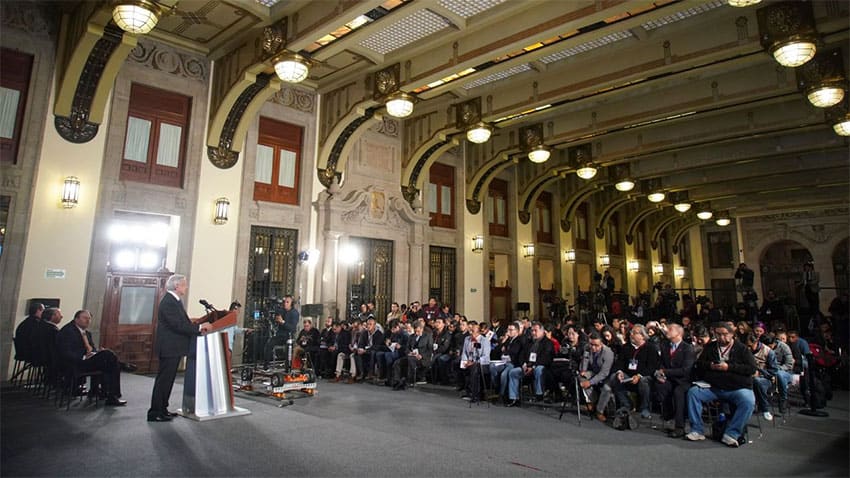
Acting on an instruction from President López Obrador, Defense Secretary Luis Cresencio Sandoval told reporters at the presidential press conference on Thursday that Juan José Verde Montes, director of the Drug Trafficking Information Analysis Group (GAIN), led the operation to arrest Ovidio Guzmán López on October 17.
However, López Obrador said on Friday that a different military leader was actually in charge of the security forces that arrested the 28-year-old suspected Sinaloa Cartel leader. He said that Verde Montes was in charge of the operation at “a national level.”
Sandoval said that Verde Montes was in fact leading a team in Mexico City that coordinated the Culiacán operation. The name of the commander who led the operation in the Sinaloa capital can’t be revealed because an investigation into the events in Culiacán is currently taking place, he said.
The decision to disclose the name of the GAIN director was heavily criticized by experts on national security and the Mexican military.
“It’s regrettable that they’ve provided the name of the colonel . . . because apart from ruining his military career, they’re placing his life in real risk,” said César Gutiérrez Priego, a lawyer who represents members of the military.
He said that Cresencio should have assumed operation for the failed operation in Culiacán but had instead “sacrificed one of his soldiers.”

The defense secretary and López Obrador “washed their hands” of responsibility, Gutiérrez said.
“This is unprecedented. I’d never heard a defense secretary blame one of his subordinates in order to excuse himself,” he added.
Jorge Luis Sierra, an expert on Mexico’s armed forces, said it was “not common” for the Secretariat of National Defense to reveal the names of the chiefs of military operations.
He pointed out that soldiers, military commanders and government officials have been murdered in the past after participating in operations against drug cartels, asserting that the life of Verde Montes has been placed at risk.
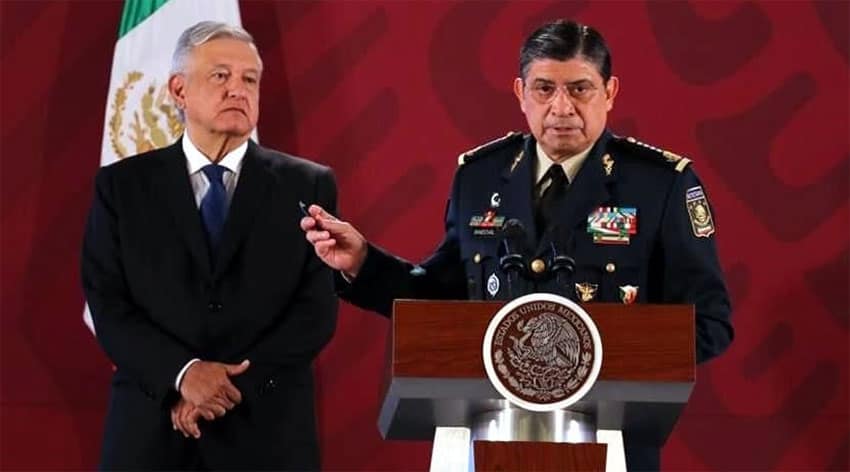
National security expert Javier Oliva Posada said that López Obrador’s lack of familiarity with the armed forces and its protocols was a factor in his instruction to Cresencio to reveal the GAIN chief’s name.
“The president made a mistake. He doesn’t know the armed forces, he doesn’t know the protocols and he’s the commander. He’s obliged to look after the integrity of his subordinates. This could diminish the morale of military personnel and affect the operating capacity and effectiveness of GAIN,” he said.
“. . . If something happens to [Verde Montes] or his family, the president will be responsible, he’s his boss and he’s the commander [of the armed forces].”
Security analyst Alejandro Hope claimed on Twitter that Verde Montes had been “crucified” by the government.
“If an official of the armed forces or police makes a mistake or commits a crime, he deserves a sanction after a process that adheres to the law. What he doesn’t deserve is it be crucified and to have his life placed at risk by an unprecedented revelation at a morning press conference,” he wrote.
In addition to asserting that Verde Montes was not in fact leading the Culiacán operation on the ground, López Obrador said today that the GAIN director will continue to have the same protection already afforded to him as a senior government official.
“He will have the protection that we all have,” the president said in response to a question asking whether he would be given special protection.
López Obrador said that all public servants face risks before adding, “he who owes nothing fears nothing.”
Verde Montes is “not alone, we’re a team and we all act with responsibility,” he said.
Source: El Universal (sp), El Financiero (sp), Reforma (sp)