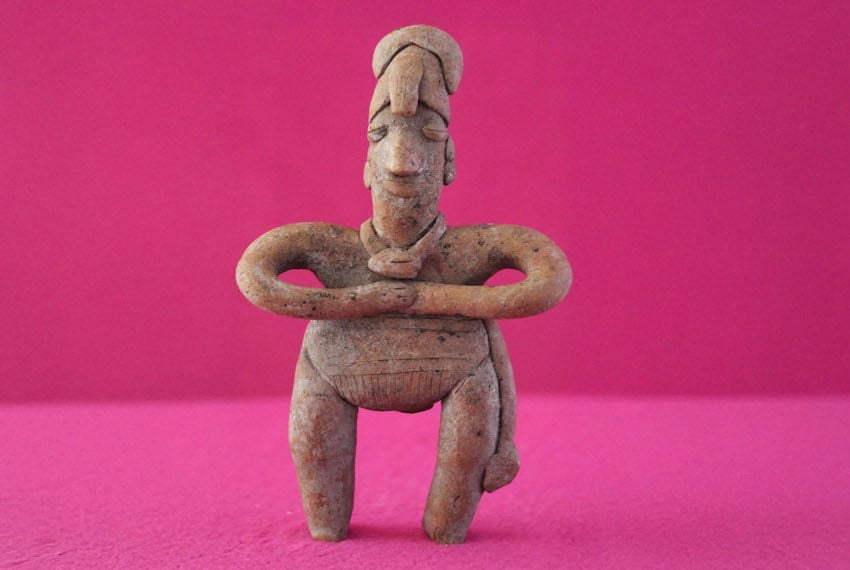
Mexico has once again intervened in an attempted sale of valuable artifacts from its pre-Columbian past, and demanded the return of the objects.
The Culture Ministry denounced the sale planned to take place on the online platform eBay of 195 archaeological pieces and demanded that the auction by an eBay user in Orlando, Florida, identified as “Coins Artifacts,” be withdrawn.
Tras la revisión de anuncios en la plataforma @eBay, especialistas del @INAHmx determinaron que 195 piezas ofertadas por un usuario en Orlando, Florida, son piezas de origen prehispánico de nuestra nación.
Exhortamos a la suspensión inmediata de su venta y a la devolución de… pic.twitter.com/Iu4QJLsHK2
— Claudia Curiel de Icaza (@ccurieldeicaza) February 27, 2026
“After reviewing listings on the eBay platform, specialists from the National Institute of Anthropology and History (INAH) determined that the 195 pieces offered by a user in Orlando, Florida, are pre-Hispanic artifacts from our nation,” Culture Minister Claudia Curiel de Icaza said in a post on X.
INAH’s statement says bluntly that the artifacts belong to Mexico. It points out that the export of such artifacts has been prohibited since 1827, meaning that their presence abroad derives from an illicit extraction.

Curiel stated that the Mexican government “appeals to ethics and respect” for cultural heritage and calls for the removal of the advertisements from the platform and for the adoption of the necessary measures to prevent their offering and eventual commercialization.
She added that all corresponding legal proceedings have been initiated with the aim of having the pieces repatriated to Mexican territory through official diplomatic and legal channels, in order to protect the cultural heritage of the country.
Just last week, the Culture Ministry also demanded the suspension of an in-person auction of 40 archaeological pieces by the Millon Auction House scheduled for Feb. 27 in Paris, France.
In a statement pertaining to that case, Curiel urged the auction house to “reflect on the ethical and moral codes that should govern the marketing of looted cultural property, a practice that contributes to cultural dispossession and threatens the memory of peoples.”
Earlier this year, Mexico successfully recovered archaeological artifacts from Portugal, consisting of a female figure from western Mexico associated with fertility rituals, a polychrome Maya vessel from the Classic period and a Zapotec urn representing the god Cocijo, deity of rain and fertility.
Illicitly traded cultural property is often sold either in illegal markets around the world or through legal avenues such as public auctions, including online. Many of the artifacts that Mexico has recovered are the result of a federal government task force created in 2023 that works with local authorities abroad to seek judicial redress and halt auctions in several countries.
Mexico News Daily