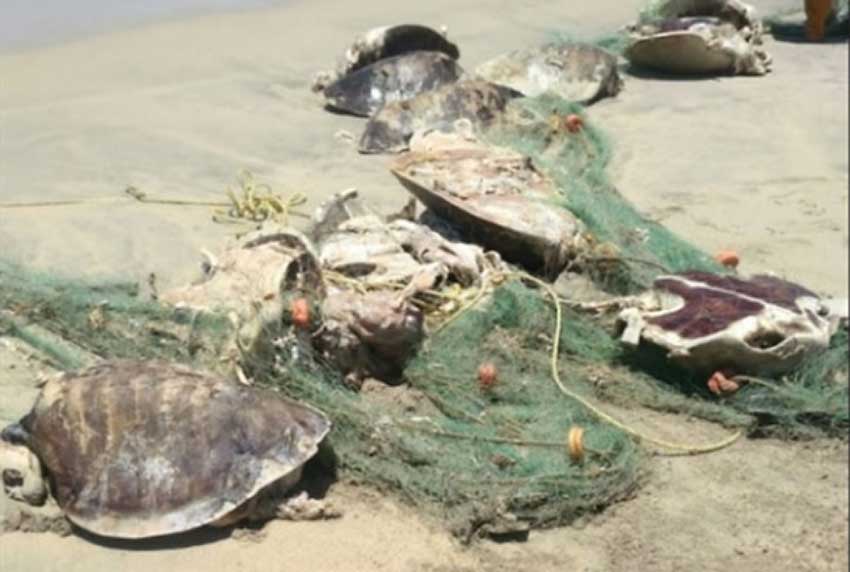
More than 300 olive ridley sea turtles that were found dead last week off the coast of Oaxaca after they became trapped in fishing nets were deliberately targeted by fishermen, a conservationist alleges.
Ivonne Chacón Romo, coordinator of the Mexican Turtle Center in Mazunte, Oaxaca, said the investigation into the turtles’ deaths showed that they had been captured a week before they were found but rough sea conditions at the same time prevented the turtle hunters from retrieving their illegal catch.
“The fishing was targeted at getting the meat, skin and eggs. However, the mar de fondo [large swells] reported a week ago caused those responsible to abandon them because they couldn’t get them out,” she told the newspaper Excélsior.
The Environmental Protection Agency (Profepa) said in a statement Wednesday that the fishing nets that killed the turtles belonged to coastal fishermen, not a tuna or shrimp boat as initially thought.
It didn’t explicitly apportion blame to illegal turtle hunters but said “the presence of this net in sea waters might be due to an irresponsible fishing practice or an incident that forced fishermen to abandon it.”
Profepa also said that it would file a criminal complaint with the federal Attorney General’s office and maintain permanent patrols of the area to avoid the repeat of any similar incident.
Those responsible for the turtles’ deaths could face up to nine years’ imprisonment in addition to a fine.

Chacón said that a similar event occurred on the same stretch of coastline in 2012, when another bale of female turtles was swimming towards Oaxaca’s Escobilla Beach, one of the world’s major nesting grounds for the olive ridley turtle.
However, that incident didn’t garner the same attention because “communications and social networks weren’t as developed as they are today,” she added.
Chacón said that such incidents pose a considerable threat to the olive ridley turtle, known in Mexico as tortuga golfina, as well as other species such as the leatherback and the Pacific green, which also nest on the coastline of the Mexican Pacific.
Source: Excélsior (sp)