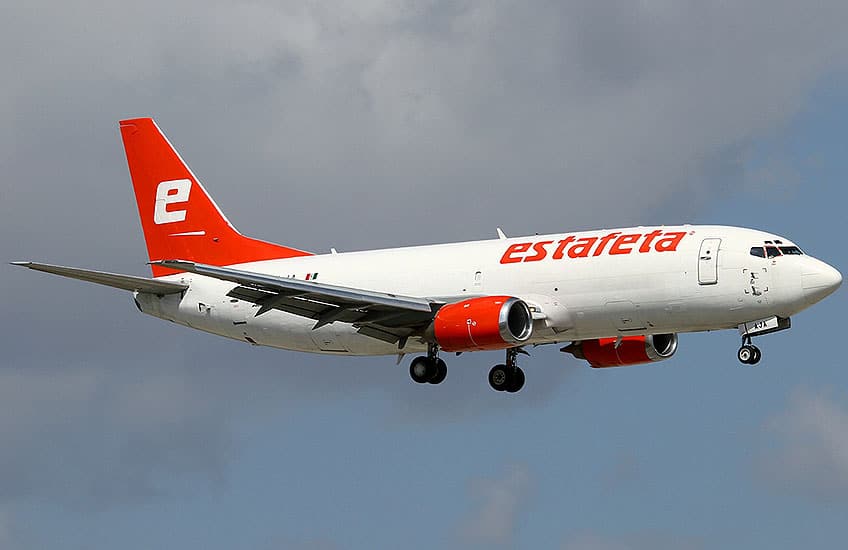
The federal government on Thursday published a decree that suspends cargo airline operations at the Mexico City International Airport (AICM).
Air freight carriers will have 108 business days to cease flights to and from the airport, according to the presidential decree published in the government’s official gazette.

That means they will have until July to move their operations away from Mexico’s busiest airport.
The decree doesn’t force cargo airlines to shift operations to the Felipe Ángeles International Airport (AIFA) north of Mexico City, but that facility would be the most logical alternative.
President López Obrador has said that the new airport – one of his pet infrastructure projects — has the space and security conditions required by cargo airlines. Built by the army on an Air Force base, AIFA is located about 50 kilometers north of downtown Mexico City.
The decision to ban freight carriers from AICM was taken primarily to ease pressure on the facility, which the federal government last year declared had reached saturation point.
However, only about 3% of AICM flights in 2022 were for cargo, data shows.

The period the government has given cargo airlines to move operations away from the airport is significantly less than they were asking for.
Freight carriers requested a minimum of 180 business days to complete the move, although the Mexican company Estafeta specified 16 months as an ideal period of time.
Flights carrying both passengers and cargo will be allowed to continue using AICM, which was used by over 46 million passengers last year.
The federal government is eager to increase usage of AIFA, which has been in operation for 10 months but only serves a small number of airlines operating a limited number of flights.
There are currently no flights between the United States and AIFA, but that will change in May when Aeroméxico will commence a service to Houston.
The airline obtained authorizations from Mexico and the United States to operate the route, despite Mexico’s loss of its Category 1 air safety rating with the U.S. Federal Aviation Administration in May 2021. A consequence of being downgraded to Category 2 status was a prohibition against Mexican airlines adding new routes to the United States until Category 1 status is restored.
With reports from El Financiero, El Universal and Reuters