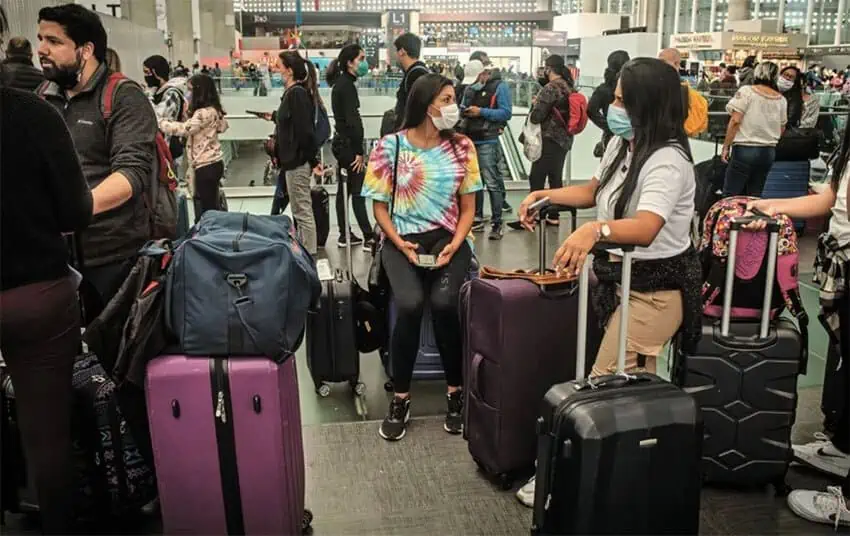
The federal government has declared that both terminals at the Mexico City International Airport (AICM) have reached saturation point, a move that could compel more airlines to use the Felipe Ángeles International Airport (AIFA), which will open north of the capital later this month.
In a declaration published in the government’s official gazette (DOF) on Thursday, the Federal Civil Aviation Agency (AFAC) said that Terminal 1 has reached saturation point between the hours of 5:00 a.m. and 10:59 p.m. and Terminal 2 has reached the same point between 6:00 a.m and 7:59 p.m., and 9:00 p.m. and 10:59 p.m.
The AFAC declared on two previous occasions that passengers had overwhelmed the airport’s terminals, once in 2008 and again in 2014. The latest declaration comes before the full recovery of passenger numbers to pre-pandemic levels.
In its DOF declaration, the AFAC noted that passenger numbers at the AICM increased 47% between 2014 and 2019, reaching 50.3 million in the latter year.
It also said that plane sizes have increased during the past 10 years, transporting more passengers to and from the airport and taking up more space at the facility.
“The AICM represents 50% of air operations at a national level, and consequently delays … affect the rest of the country’s airports, … Establishing actions that allow the services at that airport to be provided with better quality standards is a priority,” the aviation agency said.
“The saturation of the air field as well as the exceeding of capacity of the AICM terminal buildings could constitute threats … that place national security and aviation operations at risk,” it said.

The airport has been instructed to take the necessary measures to guarantee its optimal operation, including a revision of landing and take-off schedules and modifying them if necessary.
The saturation declaration opens the door to a new cap being imposed on flight numbers at the airport, although it is unclear when that might occur.
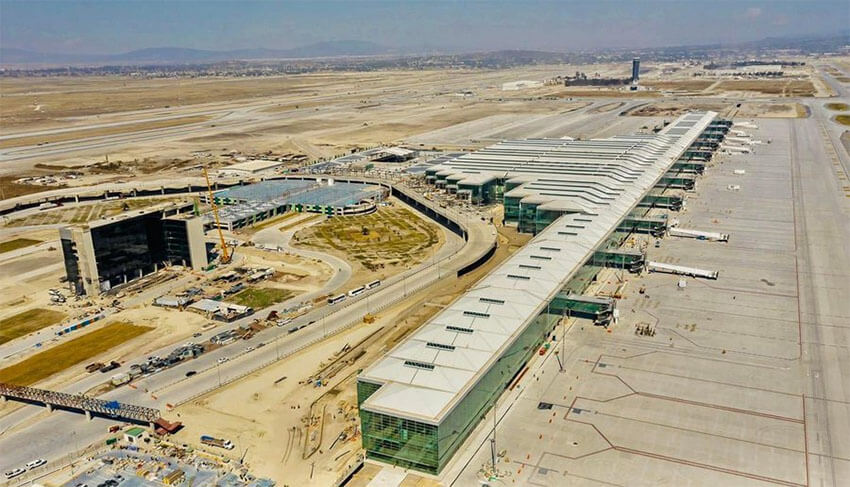
Such a move would send a message to airlines that they will have to use the AIFA in order to continue growing in the greater Mexico City market. Only three airlines – Aeroméxico, Volaris and VivaAerobús – have so far said they will use the AIFA after it opens on March 21, and all flights announced to date are domestic.
Built by the army on an air force base, the new airport is located about 50 kilometers north of downtown Mexico City in México state.
With reports from El Universal and El Economista