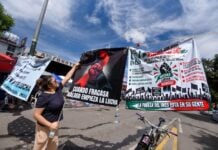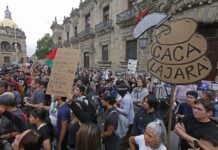
Protests were held across Mexico on Tuesday to demand justice for three journalists murdered this year.
Journalists, members of civil society organizations and other citizens took to the streets in at least 35 cities including Tijuana, Mexico City, Ciudad Juárez and Acapulco, according to a report by the newspaper Reforma.
The protests came after the murders of news website director José Luis Gamboa in Veracruz city on January 10, photojournalist Margarito Martínez in Tijuana on January 17 and reporter Lourdes Maldonado in Tijuana last Sunday.
Dozens of journalists, photographers and supporters participated in a protest march in Tijuana, while demonstrators gathered in front of the federal Interior Ministry in Mexico City.
“We are emotionally devastated” by the murders, Sonia de Anda, a member of a journalists’ group in Tijuana told the Associated Press. “We go out and work, because we have to” but there is “a lot of fear,” she said.
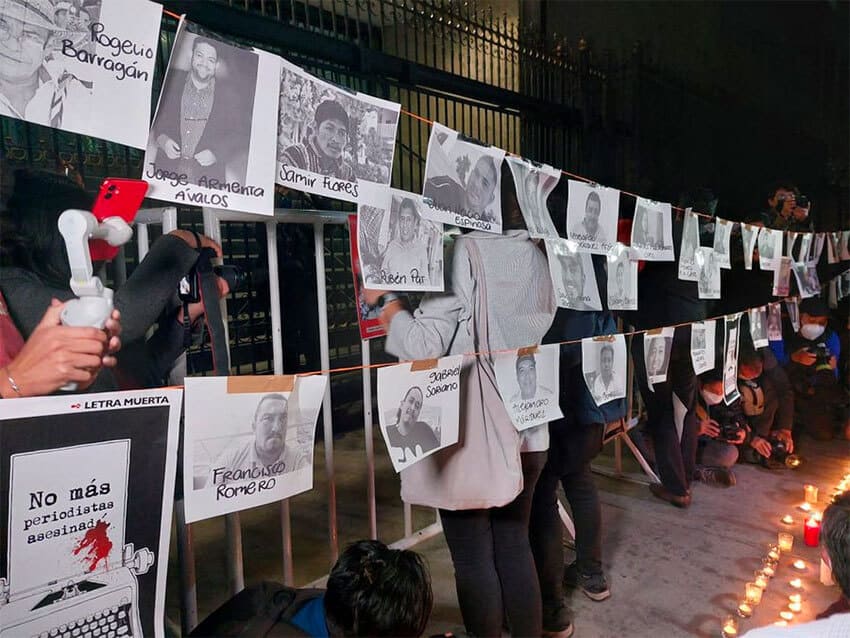
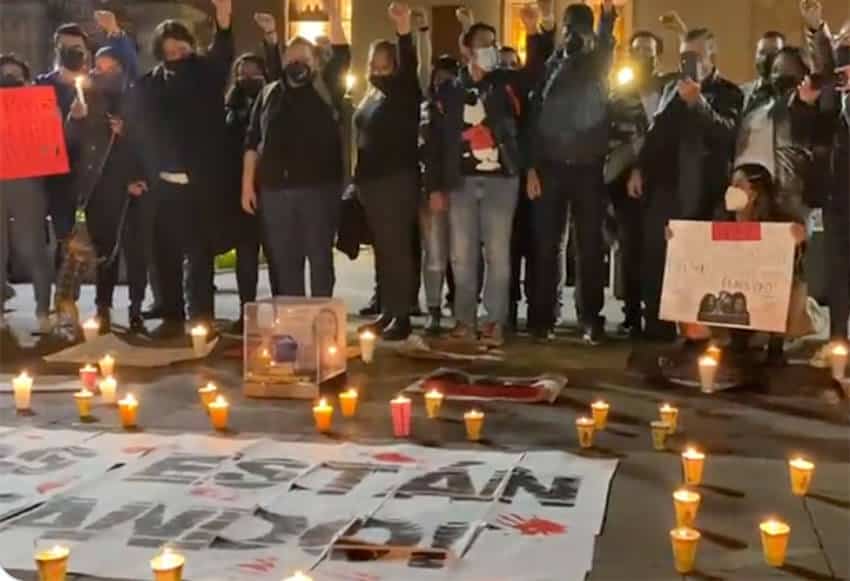
AP reported that approximately 200 journalists attended the Mexico City protest. Some held candles in silent vigil while others held signs demanding an end to the murders of journalists, the news agency said.
Images of slain journalists were projected onto the facade of the Interior Ministry and protesters chanted “Justice!” and “You are not alone!”

Laura Sánchez, a journalist from Baja California who now lives in Mexico City, was critical of the federal program designed to protect journalists at risk of becoming victims of violence.
“What they give us is a damned panic button, and you know what that button is? It is the number of the municipal police supervisor who is corrupt and sold out,” she told AP.
In Chilpancingo, Guerrero, journalist Alina Fernández told Reforma that reporters are not only under siege by criminal groups but also the government.
The federal government, and President López Obrador in particular, make frequent attacks on the media, generating what the Mexico representative for the New York-based Committee to Protect Journalists (CPJ) has described as “a climate of significant polarization” and “a division between good press and bad press.”
Jan-Albert Hootsen said in late 2020 that attacks on the media can have serious repercussions for journalists, explaining that reporters who have been criticized by the president at his weekday news conferences have received thousands of adverse and hostile messages on social media and even death threats.
Press freedom advocacy group Article 19 said in 2019 that López Obrador’s “stigmatizing discourse” against the media “has a direct impact in terms of the … risk it can generate for the work of the press because [his remarks] permeate in the discourse of the rest of society and can even generate attacks.”
Mexico is the most dangerous country in the world to practice journalism, according to Reporters Without Borders. Almost 50 journalists have been killed since López Obrador took office in December 2018.
Resolution for the murder of any journalist or activist in Mexico remains unlikely: impunity reigns in more than 90% of such murder cases, Deputy Human Rights Minister Alejandro Encinas said in December. The impunity rate is in fact 95%, according to the CPJ.