Mexico’s southern border is as porous and fluid as ever even though it is officially closed to traffic from Guatemala, which lies just across the Suchiate River from Chiapas, due to the coronavirus.
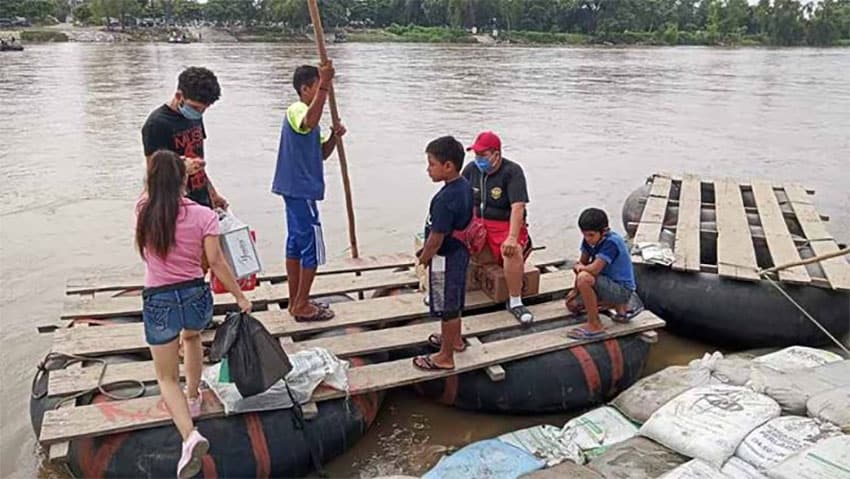
Unknown quantities of people and goods continue to flow into the country illegally despite the closure of the international bridge by simply loading onto rafts at a pace that observers say has amped up in recent days.
Merchants such as Miguel told the newspaper El Orbe that he travels regularly from the Guatemalan city of Tecun Umán to Ciudad Hidalgo in Chiapas to make purchases, floating his way across on rafts typically made by lashing scraps of wood to inner tubes.
In Talisman, Guatemala, people have opted to simply wade across the river’s shallow waters, hauling their goods in plastic bags held above their heads after authorities confiscated rafts.
Miguel says cross border traffic was not overly affected by the coronavirus, and he reports that life on the Guatemalan side is virtually back to normal. “It is almost normal because the curfew is only from 9 at night to 4 in the morning, nothing more. The only thing they have not opened is the bridge,” he said.
The price of admission to Mexico? About 27 pesos (US $1.20) each way for a raft trip that El Orbe reports happens thousands of times each day without oversight from immigration, public safety or health authorities.
Currently, Guatemala has 52,365 cases of the coronavirus and has seen 2,037 deaths. Mexico has 449,961 confirmed cases and 48,859 have died from the disease.

Source: El Orbe (sp)