Despite a federal government pledge that there would be complete transparency in the new investigation into the 2014 disappearance of 43 students in Guerrero, the federal Attorney General’s Office (FGR) has heavily redacted a 239-page document containing testimony from soldiers.
The FGR was forced to release the document in order to comply with the federal transparency law but the version it disclosed is so heavily expurgated that it is illegible, according to the newspaper El Universal.
The document censors statements from soldiers who may have information about the whereabouts of the 43 students who disappeared in Iguala on September 26, 2014, or who may have even participated in the young men’s abduction and presumed murder.
The army has long been suspected of involvement in the students’ disappearance, and leaked (non-military) testimony obtained by the newspaper Reforma earlier this year supported that theory. According to a protected witness identified only as Juan, one group of students was taken to a military base in Guerrero and some of them were killed there.
El Universal, which has examined the redacted document, said that some pages contain only two words that haven’t been blacked out.
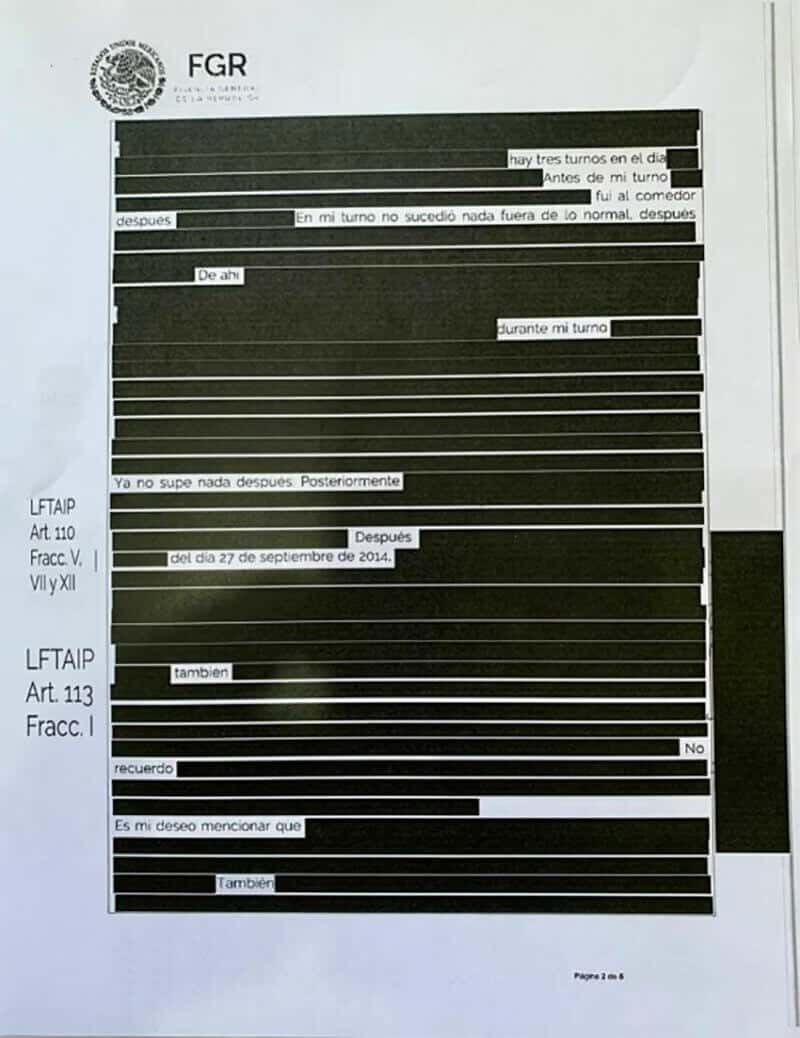
“… On other pages complete paragraphs can be seen [but] they don’t contain substantive information that helps to know the facts of September 26 and 27, 2014,” the newspaper said.
When he took office in late 2018, President López Obrador committed to finding out what happened to the 43 students without protecting anyone. Forty-four soldiers were consequently summoned by a special unit of the FGR that was tasked with conducting a new investigation into the case. Thirty have provided testimony so far, but what they told prosecutors is a mystery due to the FGR’s redaction of their statements.

The FGR’s position contrasts with that of its predecessor, known as the PGR, which did provide public access to its files without redacting them first after being ordered to do so by the National Transparency Institute.
However, the previous government’s official version of events – the so-called “historical” truth – has been rejected by the López Obrador administration. It was concocted by federal officials and corroborated by suspects who were tortured, according to the FGR’s Special Investigation and Litigation Unit for the Ayotzinapa case.
El Universal said it was the first media outlet to gain access to the previous government’s declassified documents, which helped to identify flaws in the historical truth proffered by the 2012-18 government led by former president Enrique Peña Nieto.
“Unlike then, the current FGR is not prepared to reveal the declarations of the soldiers who might have participated in the disappearance of the 43 Ayotzinapa students,” the newspaper said.
Estafanía Medina, co-director of anti-impunity organization Tojil, said the FGR is seeking to avoid having its work subjected to the scrutiny of citizens.
“There’s no interest in revealing these [evidence-collecting] processes,” she told El Universal.
Medina described the FGR’s decision as a backward step in Mexico’s system of transparency and access to justice.
Santiago Aguirre, director of the Prodh human rights center, said that whether the FGR has an obligation to provide public versions of documents related to ongoing investigations that haven’t been redacted is debatable. However, in a case in which there have been grave violations of human rights authorities should avoid blacking out text to such an extent that witness declarations become unintelligible, he said.
Aguirre said the FGR is failing to fulfill its commitment to shed light on what happened on September 26 and 27, 2014. A new investigation was launched shortly after López Obrador took office but almost three years later the government has not divulged its own definitive version of events.
“The progress has been very poor,” said Aguirre, whose organization has provided assistance to the students’ families over the past seven years.
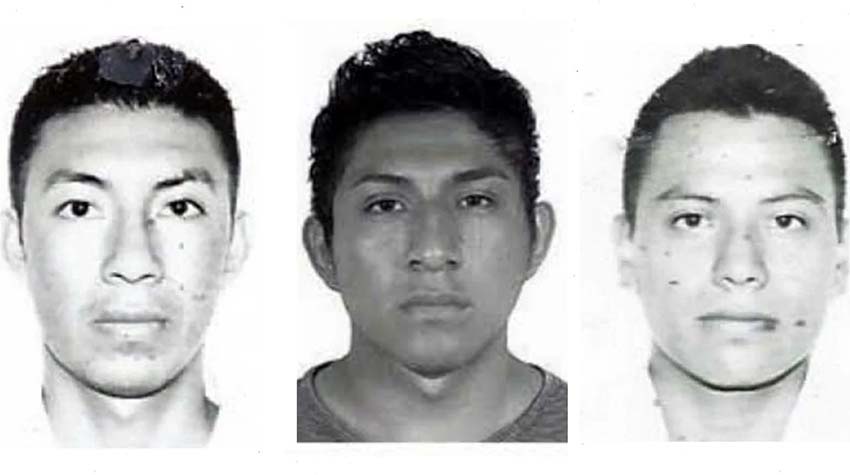
He also said that the army – which López Obrador has depended on for a wide range of tasks during his government – has not shown that it is truly willing to cooperate in the investigation into what happened to the 43 students, the remains of whom just three have been found.
With reports from El Universal