Bees in the northern state of Durango now have something most insects never get: a place to check in, rest and ride out the weather.
In the city of Gómez Palacio, researchers from the Juárez University of the State of Durango (UJED) and city officials have so far installed about 10 wooden “insect hotels” in parks and schools to shelter bees and other pollinators from heat, cold and rain while they nest and hibernate.
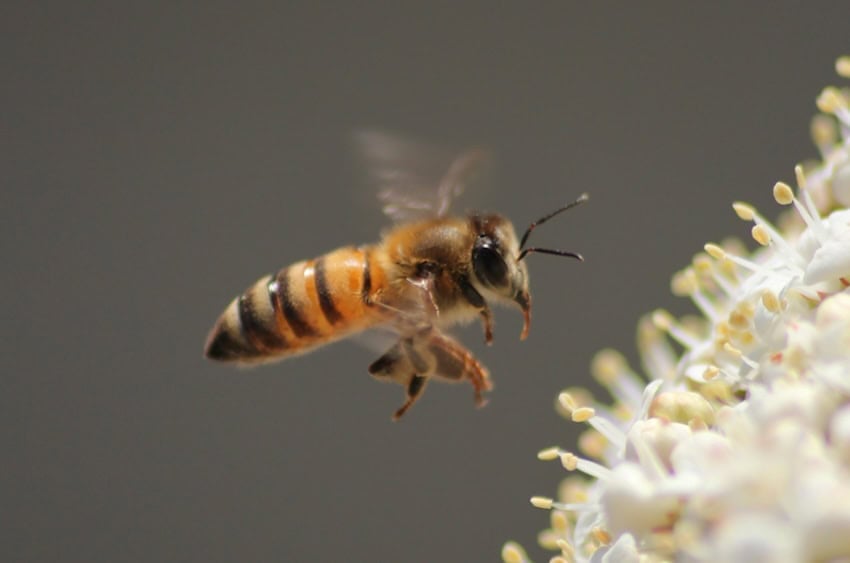
With plans to set up even more, the program is responding to what scientists describe as an alarming disappearance of pollinators in northern Mexico, threatening crops and the wider ecosystem.
The structures are built from recycled wood, pallets, reeds and sticks to create crevices where insects can take refuge and reproduce. They can be as small as shoebox-sized to as large as a stack of pallets.
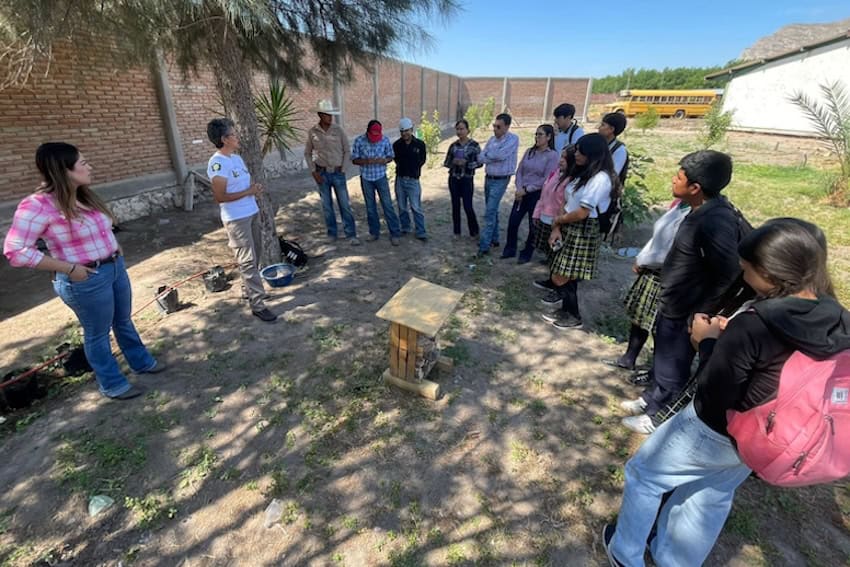
This month, students at one school in the area joined the effort by building the “Pollinator Garden with a Hotel for Insects” for World Bee Day.
The agricultural-technical school CBTa 47 received training and support from three workshops led by biologists from UJED. Their small garden and shelter aims to attract and support bees and other pollinators, the school said on Facebook.
The overall UJED project began about five years ago at the university’s Faculty of Biological Sciences, where researchers placed the first shelter adjacent to an ethnobotanical garden planted with insect‑attracting species.

Their large “hotel” protects its garden “guests” from extreme weather and doubles as a teaching tool.
Ilse Estefanía Segura Zarzosa, Gómez Palacio’s ecology and environmental protection director, has overseen construction of the “hotels” in La Esperanza Park and nearby schools — with students designing and installing many of them.
She recounted with glee how the project’s “first tenant” was a stick insect, sometimes called a walking stick, a 12-centimeter herbivore that had not been seen locally for years.
“There we had live evidence that insects use these spaces and that the project really works,” she said.
Mexico hosts some 1,740 wild bee species, according to the National Biodiversity Information System, and more than 80% of its flowering plants depend on animal pollinators, the international coalition Promote Pollinators reports.
Researchers warn that habitat loss, pesticides, monoculture farming and drought are putting many bee populations at risk — even urban bees in Mexico City.
Officials in Gómez Palacio — a city of 301,500 in the La Laguna metro area of 1.5 million, which includes Torreón, Coahuila — say the next step is to pair every park hotel with a pollinator garden, creating pocket habitats where weary bees can find both shelter and food.
The program also wants to continue expanding into schools.
“What is known is valued, and what is valued is cared for,” said UJED professor Mauricio López, explaining that when a child understands the benefit provided by an insect, a leaf, or a plant, it generates a positive long-term impact.
With reports from Milenio and El Sol de Laguna