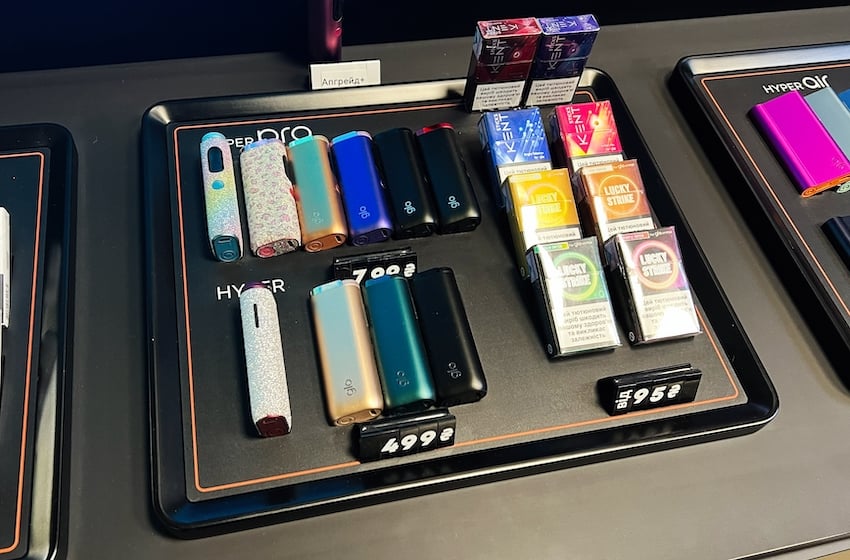
Mexico’s lower house of Congress has approved a sweeping ban on the vape trade that targets suppliers with prison time and heavy fines while leaving users free from criminal penalties.
The Chamber of Deputies voted 292-163 on Tuesday to reform the General Health Law and prohibit the commercialization, manufacture, import, export, distribution and sale of electronic cigarettes, vapes and “other analogous systems or devices” across Mexico.
🗳📌 MORENA LE DA SU NAVIDAD AL NARCO
La diputada Iraís Reyes advirtió que la reforma que prohíbe los vapeadores tiene serios riesgos.
Y es que criminaliza toda la cadena (comprar, guardar, transportar o vender) con penas de hasta ocho años, algo que ningún país democrático… pic.twitter.com/0yUZXshzei
— Juan Ortiz 🗳️👁🗨 (@Juan_OrtizMX) December 9, 2025

The bill marks a new stage of legislation following significant action taken last December by the Morena deputies, whose alliance with the Green Party (PVEM) and the Labor Party (PT) gives them a more than two-thirds majority in that chamber.
The bill will now head to the Senate, where it is expected to easily pass by simple majority, as the Morena bloc holds more than 80 of 128 seats.
In December 2024, the lower house approved a constitutional reform to ban e‑cigarettes, vapes and some synthetic drugs, including fentanyl, but left enforcement details to follow-up laws.
The newly approved reform — passed largely in the name of public health, and specifically the health of young people, according to legislators — supplies those details.
The changes set prison sentences of one to eight years and fines of up to approximately 226,280 pesos (US $12,429) for those who produce or market the devices. The fine can be up to 2,000 times the daily value of the UMA (Unidad de Medida y Actualización), a legal and economic reference unit for calculating fines and other obligations.
During nearly 10 hours of debate, Morena and its allies pushed through a last-minute change to an article in the General Health Law “to clarify the sanctioning regime and that it is strictly limited to those who participate in the vaping business and not to the users.”
They also added a final paragraph stating that “consumption and possession are excepted,” so a person with one or two electronic cigarettes will not be sanctioned.
Opposition lawmakers said the move will push consumers toward the black market and benefit organized crime.
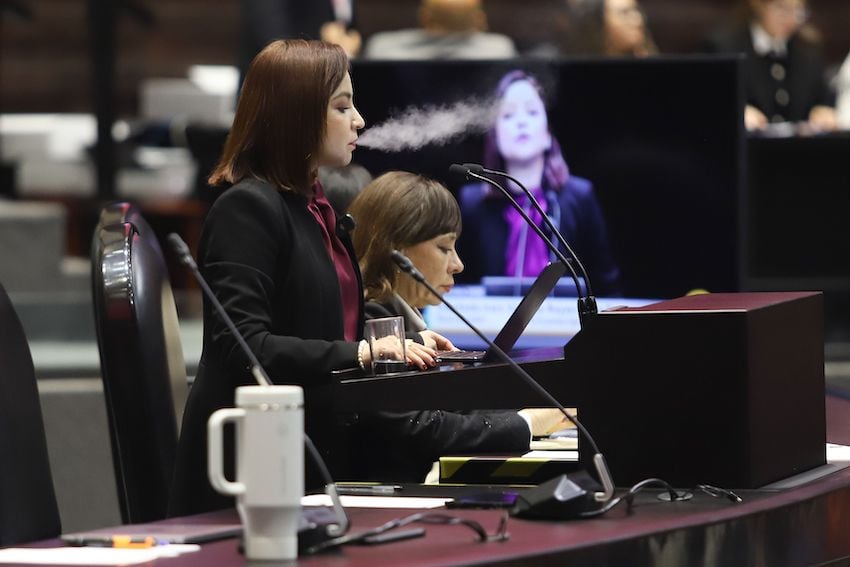
Citizens’ Movement (MC) party Deputy Iraís Reyes was quoted by López-Dóriga Digital as saying, “Not regulating a product that people already consume equals more black market and more money for drug traffickers, who this December, thanks to Morena, will receive their Christmas bonus.”
She also called legislators in favor of the bill “hypocrites” if they are vapers.
“You vape. We’ve seen you,” she was quoted as saying. “I don’t know how you can come here and propose a ban when you’re vaping users yourselves.”
With reports from López-Dóriga Digital and El Financiero