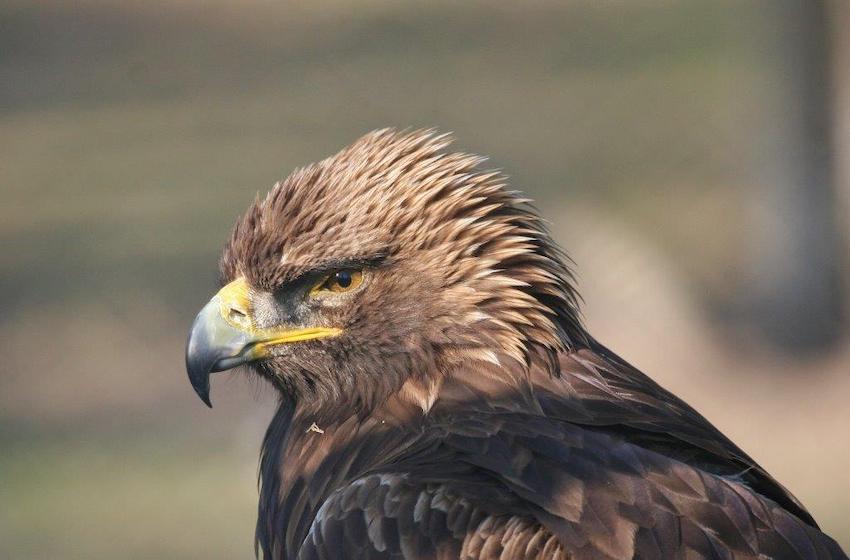
Mexico’s National Commission of Natural Protected Areas (Conanp) has confirmed the discovery of a golden eagle nest in the northern state of Coahuila, marking what officials called a major advance for the conservation of the country’s national symbol.
The nest was located in the northern part of the state following reports from local monitor Juan Carrasco Reyna, a member of the community group Alas del Desierto (Wings of the Desert).
Last year, a similar community monitoring group in the southern state of Chiapas helped discover the elusive harpy eagle — a striking, almost mythical-looking species thought to perhaps be extinct in Mexico.
Carrasco originally spotted signs of golden eagle activity in the Ocampo Flora and Fauna Protection Area near the Piedritas ejido, land collectively owned and worked by a rural community.
After a fruitless first visit, Conanp technicians returned April 4 and documented a female perched on a nest, soon joined by the male — confirming an established breeding pair.
“The establishment of this new territory is a positive indicator of the health of the ecosystem and a fundamental step forward in the protection of this emblematic species,” Conanp said in a press release last week.

The Ocampo protected area serves as a critical conservation zone and wildlife corridor for animals such as black bears and mountain lions. It anchors a larger Chihuahuan Desert region that connects with Big Bend National Park across the Rio Grande in Texas.
While the area has been recognized as a golden eagle habitat, Conanp didn’t mention any previously documented nests — let alone an active nest with a confirmed breeding pair — inside Ocampo.
In Mexico, each confirmed nest is a big deal because the golden eagle (Aquila chrysaetos) is listed as threatened under Mexico’s NOM-059 environmental regulation.
Habitat loss, illegal trafficking, hunting and electrocution are among the main dangers to the raptor, which is also considered a bioindicator of ecosystem health, according to UNAM Global.
The birds are monogamous and require vast territories to hunt, making the appearance of the Coahuila breeding pair a sign of improving conditions for the species.
Mexico’s golden eagle population is both small and thinly spread. A recent summary drawing on government and academic data estimated “fewer than 150 active breeding pairs across the country.”
The golden eagle is formally recognized as Mexico’s national bird. The emblem on the flag shows a golden eagle perched on a prickly pear cactus devouring a snake, an image rooted in an Aztec legend that said the gods would reveal the site of their capital when they saw such a bird on an island in Lake Texcoco.
Today the eagle is widely described by Mexican institutions as a symbol of strength, courage and resilience, much as the bald eagle functions in the United States.
With reports from La Jornada, El Siglo de Torreón and UNAM Global