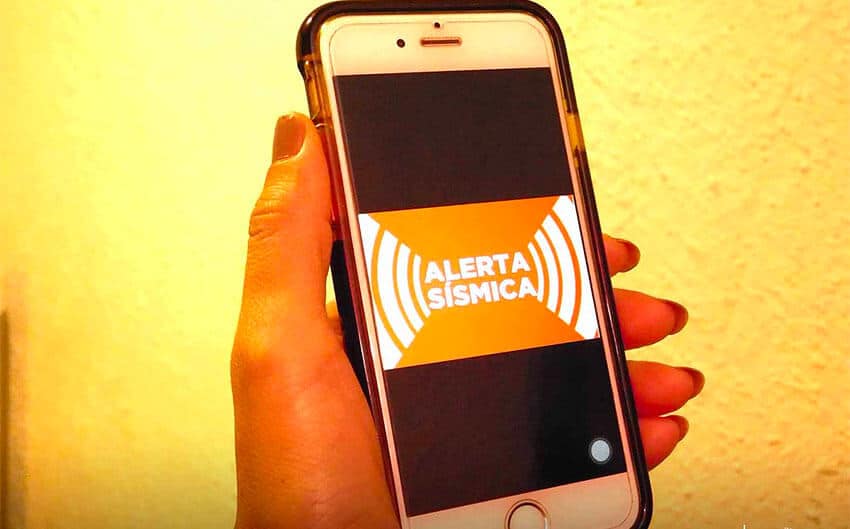
System to send earthquake warnings in the form of cell phone alerts

Earthquake alerts in Mexico could soon go direct to citizens’ cellphones, giving them more time to evacuate buildings and seek safety.

The federal organization that tracks earthquakes and runs the country’s early warning system, CIRES, announced that it plans to introduce cell phone alerts and said the warnings would reach citizens regardless of network operators, the quality of their internet connections and without the need for them to download an application.

The improved early warnings would be transmitted through the technology Cell Broadcast, which enables CIRES to send out bulk messages to cell phone users in a defined area.

Cell Broadcast technology is not affected by external factors such as saturation of telephone lines or natural disasters.

Cell Broadcast is already being used by at least 18 countries and members of the European Union.

CIRES said that other more well known modes of communication were too unreliable, and could endanger citizens if used to provide earthquake alerts. “Social networks … like other means of information on the internet, eventually suffer interruptions, delays and suspension in their services. This makes them unreliable for early seismic alerts,” it said in a statement.

CIRES revealed its intention to use Cell Broadcast on social media. “CIRES’ telecommunications capacity could be used to broadcast seismic warning through Cell Broadcast technology … Mexico is already working on it. It could put it into operation in the medium term,” a post read.

Mexico City and other states have reacted to warning sirens at least twice this month, but no major damage was reported from either event.

With reports from Reporte Indigo and Milenio 

Have something to say? Paid Subscribers get all access to make & read comments.
Manzanillo, Colima, México, 13 de marzo de 2026. La doctora Claudia Sheinbaum Pardo, presidenta Constitucional de los Estados Unidos Mexicanos en conferencia de prensa matutina, “Conferencia del Pueblo” desde Colima. La acompañan Indira Vizcaíno Silva, gobernadora Constitucional del Estado de Colima; Omar García Harfuch, secretario de Seguridad y Protección Ciudadana (SSPC); Raymundo Pedro Morales Ángeles, secretario de Marina (Semar); Bulmaro Juárez Pérez, divulgador de lenguas originarias, presentador de la sección “Suave Patria”; Ricardo Trevilla Trejo, secretario de la Defensa Nacional (Sedena); Jesús Antonio Esteva Medina, secretario de Infraestructura, Comunicaciones y Transportes; Bryant Alejandro García Ramírez, fiscal general del Estado de Colima; Fabián Ricardo Gómez Calcáneo; Rocío Bárcena Molina, subsecretaria de Desarrollo Democrático, Participación Social y Asuntos Religiosos de la Secretaría de Gobernación; Efraín Morales López, director general de la Comisión Nacional del Agua (Conagua); Marcela Figueroa Franco, secretaria ejecutiva del Sistema Nacional de Seguridad Pública (SESNSP) y Guillermo Briseño Lobera, comandante de la Guardia Nacional (GN). Foto: Saúl López / Presidencia

Mexico’s week in review: Congress deals Sheinbaum her first legislative defeat

0
The week of March 9 in Mexico was marked by standoffs between allies in Congress and adversaries at the airport. Here's what you missed.
A soldier displays seized handguns

The US and Mexico, growing together and growing apart: A perspective from our CEO

0
From a historic drop in homicides to opposite bets on electric vehicles, Mexico News Daily's CEO breaks down where the U.S. and Mexico are converging — and where they're not.
Veracruz Gov.

Veracruz governor blames private vessel for 200-kilometer Gulf Coast oil spill

1
The spill, which has spread to over 200 kilometers of Mexico's Gulf Coast beaches, has been traced to a private oil tanker off the coast of Tabasco.
BETA Version - Powered by Perplexity