President-elect Andrés Manuel López Obrador’s plan to cut the value-added tax (IVA) rate from 16% to 8% near the Mexico-United States border could lead to an economic resurgence in the region, according to experts.
Carlos Urzúa, the prospective finance secretary in Mexico’s next government, said Friday that the free zone would extend around 30 kilometers south from the border between the two countries, taking in cities such as Tijuana, Mexicali, Ciudad Juárez and Reynosa.
The free zone is one of a series of measures López Obrador proposed during the election campaign that are aimed at boosting the economy in the north of the country and consequently slowing down migration to the United States.
Domingo Ramos Medina, president of the Baja California State College of Economists, said that after the current federal government raised the IVA in the border region from 11% to 16% at the start of 2014 — bringing it into line with the rest of the country — economic growth initially slowed because production costs went up and residents’ purchasing power went down.
He added that the introduction of a lower tax rate would have a positive effect on factors of production, although he also said that growth in the border region is already generally higher than the national average,
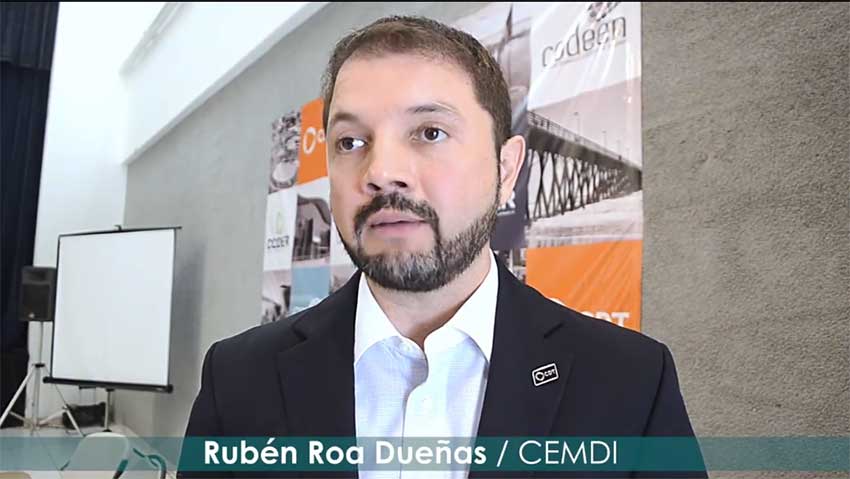
The general director of the Metropolitan Center for Economic and Business Information (Cemdi) said that adoption of the reduced tax rate would translate into families in the area having more money to spend on consumer goods, adding that lower prices would encourage residents to shop at home rather than across the border.
“It would benefit the competitiveness of our region in terms of avoiding the mass exodus of consumers to the United States and it would improve the competitive position of our companies in . . . the export of goods and services,” Rubén Roa Dueñas said.

According to the College of the Northern Border, a university and think tank, Mexicans who live near the border spend US $7 billion annually in the United States, meaning that even if a fraction of that amount is spent in Mexico instead, the benefit to the local economy would be significant.
However, the plan to cut the tax rate doesn’t come without risks for the incoming government, which has been eager to show that it will be a prudent economic manager.
Cemdi data shows that halving the IVA in the border region would lead to an annual reduction of tax revenue of 30.3 billion pesos (just under US $1.6 billion) if overall economic growth of 2.2% is maintained.
Roa Dueñas said that the government would consequently have to make a choice between three different options: finding additional income from other sources, cutting the federal budget or taking on more debt.
He warned that the government would have to pay close attention to the macroeconomic environment to avoid being placed in a vulnerable situation because experience has shown that a reduction in tax revenues can be particularly harmful during an economic contraction.
According to the document Nation Project 2018-2024, in addition to establishing a duty-free zone, the López Obrador-led administration will seek to drive economic growth in the northern border region by promoting infrastructure security, the establishment of industrial parks and freedom of movement “in an environment of deregulation.”
Within one to three years, the goals of the project are to capture between $5 billion and $10 billion of the services and retail market in the border region of the United States, regain part of the revenue lost to consumption in the U.S., increase investment as a percentage of the regional GDP by 18% to 24% and attract $5 billion to $10 billion in foreign direct investment.
Source: El Economista (sp)