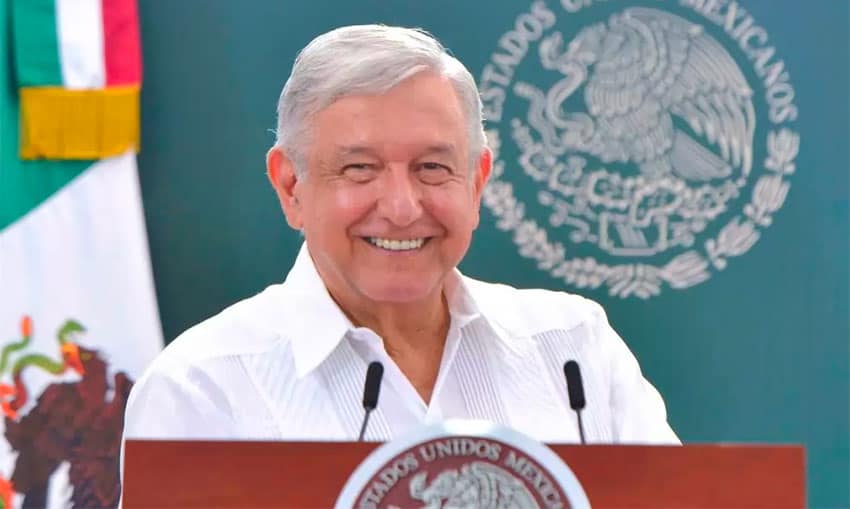
President López Obrador declared Monday that the worst of the country’s economic hardships are behind it and that the hemorrhaging of jobs largely due to Covid-19 shutdowns would begin to stabilize in July.
He predicted that June’s job losses in the formal sector would come to about 100,000, down from a drop of 344,000 in May and a staggering loss in April of 555,247 jobs.
That would bring the three-month total to just under one million jobs lost out of a total formal sector work force, as registered with the Mexican Social Services Institute, of 20.5 million before the pandemic began.
“Everything indicates that we have hit bottom and are heading toward the surface. We are going to emerge,” he said in his daily morning press conference. “We are going to grow economically. We have the indications that the worst has passed in economic terms.”
He also stressed the importance of the United States-Mexico-Canada Agreement, the new trade deal that goes into effect on Wednesday. It will help reactivate Mexico’s economy by encouraging foreign investment and the generation of jobs, he said.
However, in terms of gross domestic product, a measurement which the president holds in some scorn, the economic malaise had begun to set in well before the effects of the coronavirus were felt.
The economy contracted 2.4% in the first quarter, the worst showing since 2009.

Sources: El Universal (sp), El Financiero (sp)