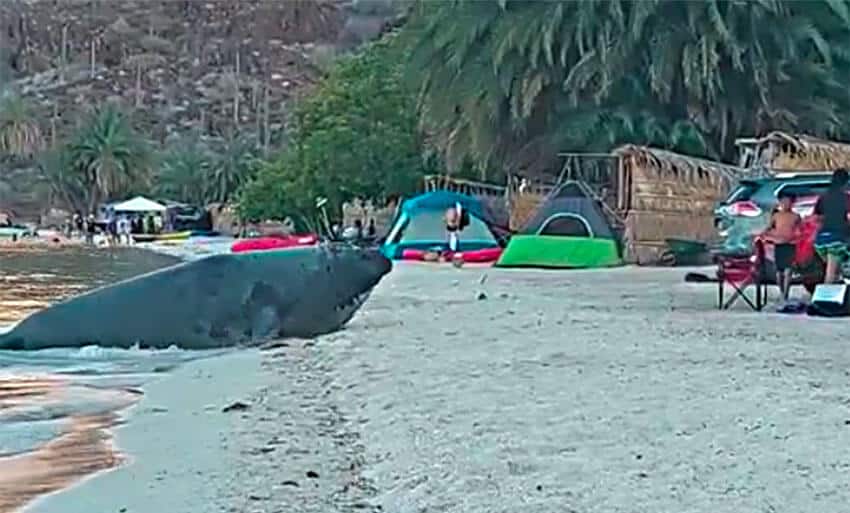
Beach goers on the east coast of the Baja California peninsula have had some unusual company in the past few weeks as a massive female elephant seal has been enjoying the beaches near Mulegé, Baja California Sur.
An unaccustomed sight in this part of the world, it is believed that a combination of the effects of climate change, the search for food and possibly getting lost on its migration route have led this elephant seal to the Baja shores.
While local authorities are asking residents and visitors to keep a polite distance from the animal, the sentiment has not exactly been reciprocated: on Monday, the seal came up onto the El Coyote beach to sunbathe just meters from a family of humans who were there to do the same.
Videos have been circulating all over social media of “encounters” with the new local celebrity in which unaware beach goers have been sent running at the sight of it. Officials believe this was the same elephant seal seen in March on a beach in a nearby part of the Gulf of California.
In the northern hemisphere, elephant seals are generally found along the United States and Canadian coast where the waters are cooler. They are almost never found as far south as Baja California. In the southern hemisphere, they are found in Argentina, New Zealand and South Africa.
The animals can weigh up to 11,000 pounds and — if this particular seal is any example — spend the majority of their time eating and sunning on the beach without much fear of human beings.
With reports from El SudCaliforniano and BCS Noticias