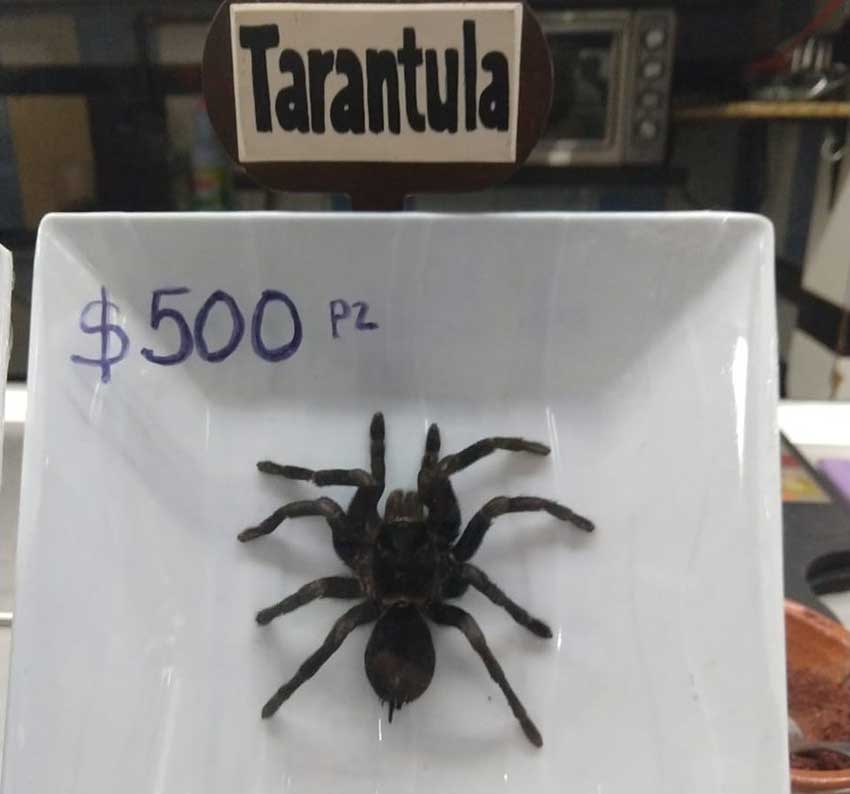
Officials from the federal environmental agency Profepa seized tarantulas in Mexico City yesterday just as they were about to become taco filling.
The red rump tarantulas, a protected species, had been roasted to a crisp and were ready to be served in tarantula tacos for a cool 500 pesos (US $26) each.
Profepa inspectors became aware of the offerings at México en el Paladar through a post it made on Facebook, in which the chef could be seen flambéing (see video below) one of the spiders. Brave and hungry foodies were advised that it was just one of many tarantula preparation methods offered to its customers.
Yesterday, environmental officials visited the restaurant, located in the San Juan Market, and seized four cooked tarantulas after staff failed to produce a document proving their legal origin.
The restaurant has been popular among foodies over the last few months since it began to offer scorpions, escamoles (ant larvae) and chapulines (grasshoppers) on its menu.
The Mexican government currently approves and supports the breeding of tarantulas in captivity, with a yearly production of between 11,000 and 14,000 insects for the lucrative pet market, where a single arachnid can sell for up to 8,000 pesos (just over $415).
Source: El Financiero (sp)