The arrest of former president Enrique Peña Nieto’s defense minister in the United States last week could be linked to the U.S. Drug Enforcement Administration’s desire for revenge for the murder of one of its agents in Mexico, according to a former attorney general.
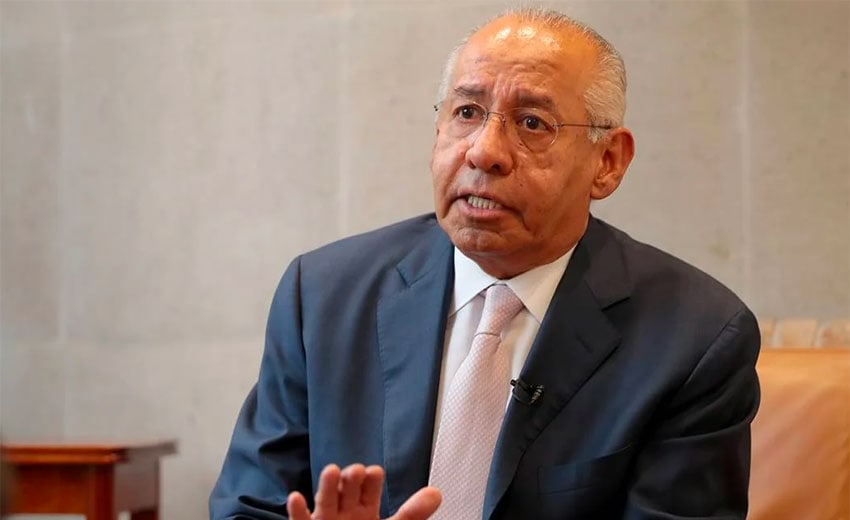
Speaking Tuesday at a virtual conference on the drug trafficking case against former army chief Salvador Cienfuegos, Ignacio Morales Lechuga, attorney general during the latter half of the 1988-94 government of former president Carlos Salinas, claimed that since the death of Enrique “Kiki” Camarena in 1985, the DEA has wanted revenge against the Mexican armed forces, especially the army.
His murder by the Guadalajara Cartel came after the army, acting on information from the DEA, destroyed a 1,000-hectare marijuana plantation in Chihuahua known as Rancho Bufálo.
Camarena, who was suspected of providing the information, was abducted in February 1985 before being tortured and killed at a Guadalajara property owned by the plantation’s owner, Rafael Caro Quintero, a drug lord and one of the DEA’s most wanted fugitives.
Morales said the DEA believed that the Mexican army was protecting Rancho Bufálo before its destruction. The agency consequently decided to partner with the navy rather than the army in operations in Mexico, he said.
The former attorney general said the relationship between the DEA and the army has remained tense as a result.
He also suggested that Cienfuegos, who was taken into custody at Los Angeles airport last Thursday, might have been arrested because United States authorities found “signs” that he was complicit with drug traffickers rather than having overwhelming evidence against him.

Morales charged that United States Attorney General William Barr, who served in the same position in the early 1990s, has a tendency to launch investigations based on less than conclusive “signs” of guilt.
“When I was attorney general, I met with the United States Attorney General, William Barr, the boss of the FBI, William Sessions, and the administrator of the DEA, Robert Bonner, and they asked me to extradite Manuel Bartlett, Enrique Álvarez del Castillo and Juan Arévalo, who they accused of being the intellectual authors of the murder of Camarena,” he said.
Bartlett, currently director of the Federal Electricity Commission, was federal interior minister at the time of Camarena’s death, Álvarez (now deceased) was the governor of Jalisco and Arévalo (also deceased) was federal defense minister.
Eyewitness accounts compiled by United States journalist Charles Bowden described Bartlett’s involvement in the decision to kidnap, torture and murder Camarena in order to put an end to his operation against the Guadalajara Cartel, with whom the then interior minister was allegedly in cahoots.
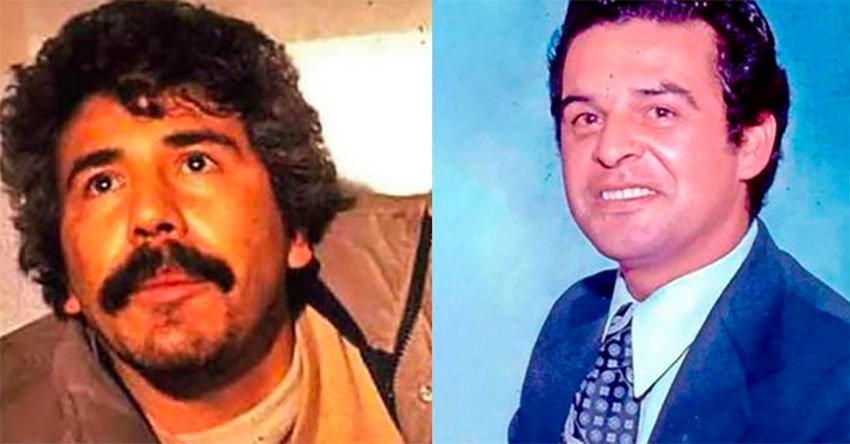
There have even been claims that Bartlett and Arévalo, as well as other politicians and law enforcement officials, were present when Camarena was tortured and killed.
However, when the U.S. officials asked him to extradite the officials in connection with the DEA agent’s death, “they had no proof,” Morales said yesterday.
Barr, who became President Donald Trump’s attorney general in February 2019, “is very given to putting together investigations with signs [of guilt], not with proof or evidence,” he said.
Blackberry messages intercepted by U.S. authorities that incriminate Cienfuegos, who is accused of colluding with the H-2 Cartel, are signs of guilt and not conclusive evidence, Morales charged. Such “signs” are often not supported, he added.
The former attorney general also noted that Humberto Álvarez Machain, a medical doctor who allegedly worked with the Guadalajara Cartel, was accused by U.S. prosecutors of involvement in the murder of Camarena but a judge determined that the prosecutors were lying and exonerated him.
“It was a paradigmatic case, I’m recounting it because everything – the character of the Attorney General William Barr, the attorney general of New York [where Cienfuegos was indicted], who is an ambitious attorney general, the DEA with all its accumulated historical grievances – … [is part of] the atmosphere that surrounds the trial of General Cienfuegos,” Morales said.
He charged that Cienfuegos was an “exceptional” defense minister, who among other achievements recruited a lot of women to the armed forces.
Morales also said the Mexican government should lodge a complaint with its United States counterpart over its interception of Cienfuegos’ telephone communications, which he said violated a 1992 bilateral agreement.
“In the Cienfuegos case, it has been said and repeated that the DEA has been spying on Mexican telephones, it’s been spying on everyone and the Mexican government cannot allow espionage in national territory because it’s an invasion of sovereignty.”
Meanwhile, a judge in Los Angeles refused to grant bail to the former defense minister at a hearing on Tuesday, ruling that Cienfuegos is a flight risk even though his lawyer said that he was willing to post a surety of US $750,000.
Source: El Universal (sp)