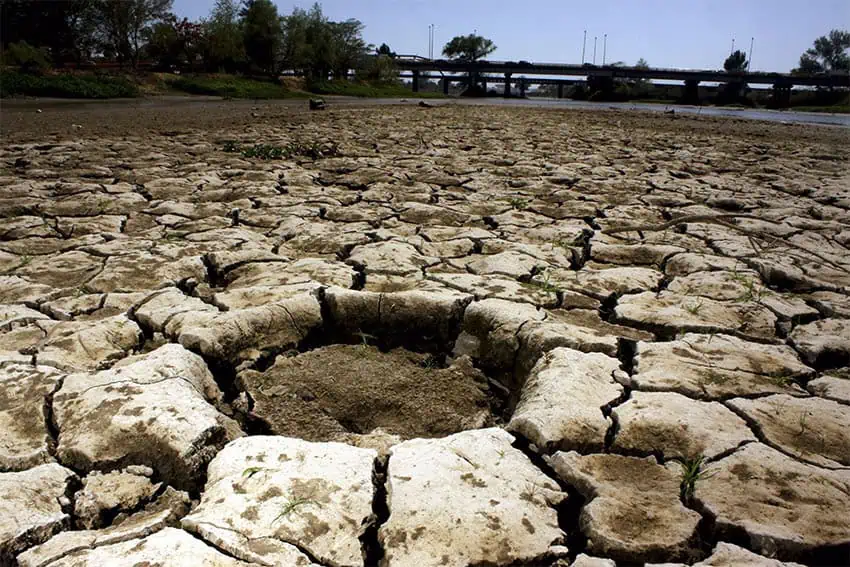
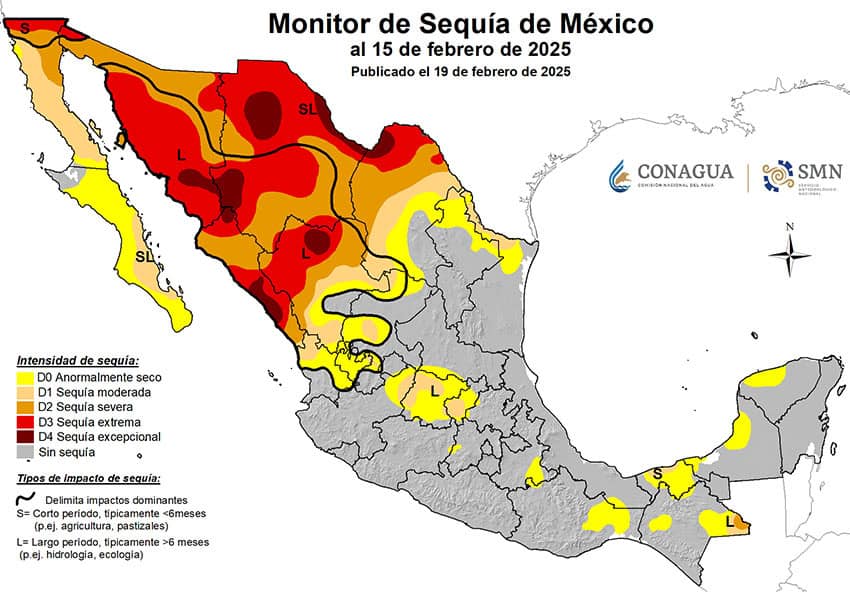
Mexico’s northwest region is experiencing widespread drought, according to the National Water Commission (Conagua). Drought levels in the parts of Sinaloa, Sonora, Chihuahua, Durango and Coahuila states are classified as “exceptional,” the most highest drought severity classification.
There has been a shortage of rain in the region due to the La Niña climate phenomenon, with little to no precipitation expected until the rainy season commences around July.
“We will get to May with severe limitations of water services in general, which we will see reflected in intermittent cuts [and] rationing,” Juan Espinosa Luna, an expert in applied geophysics, told the newspaper La Jornada.
Espinosa called on the Federal Electricity Commission to guarantee Sinaloa’s energy supply, which relies heavily on hydroelectric and thermoelectric plants.
Due to the lack of rain, the drought is expected to intensify in Sinaloa, Sonora and Baja California Sur over the coming months, leading to more severe water shortages.
The average storage level in Sinaloa’s dams fell to 11.8% on Feb. 23 — the lowest in 30 years, according to Conagua.
🚱 Deja Conagua prácticamente seca la presa Huites, se queda al 1% de almacenamiento 💧 pic.twitter.com/BwGJD3O5tI
— Luis Alberto Díaz y Los Noticieristas (@noticieristas) November 21, 2024

The water level of Sinaloa’s largest dam, Adolfo López Mateos, stands at just 7.6%, while the Luis Donaldo Colosio, known as Huites, has a water level of 3%.
Agriculture affected by drought
According to Conagua’s Drought Monitor, Sinaloa is one of the four states in the country that has drought across all municipalities. The drought is having a knock-on effect on the region’s agricultural activities and output.
In Sinaloa, almost 50% of the cultivated land has not been planted due to water scarcity.
The government has responded to the climate challenges by announcing a cloud seeding program, a weather modification technique aimed at improving a cloud’s ability to produce rain.
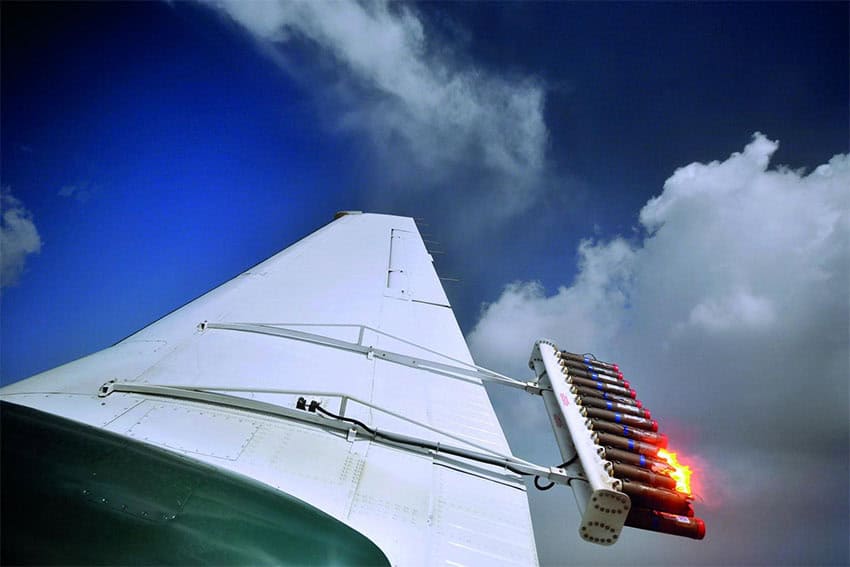
Sinaloa’s Governor Ruben Rocha said the 2025 program will be financed with federal funding of 13 billion pesos (US $636 million).
“We have had a drought, that drought is being reflected, you producers are planting less because there is not enough water. There is not enough water. We have to find ways,” Rocha said during his speech at the assembly of the Association of Farmers of the Western Sinaloa River (AARSP).
“We are going to start the rain stimulation program.” the governor added.
Rocha referred to the town of Guasave in Sinaloa, which is widely known for its agricultural activities, as “Mexico’s granary” during his speech.
He reassured farmers that they will continue to receive support for fertilizers, seeds, marketing, storage and price support for corn crops. However, he also emphasized the need to reduce the cost of agricultural inputs.
The government hopes that the cloud seeding program and financial support for farmers will help communities tackle the climate crisis being faced in the region and overcome economic challenges.
With reports from La Jornada, Debate, Noroeste and Linea Directa