Exports soared 76% in June after 2 months of historic declines

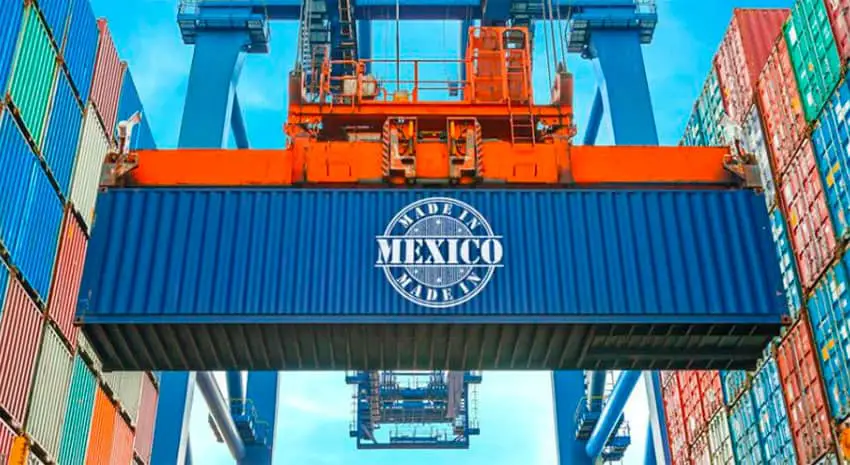
Mexico’s exports surged 75.6% in June compared to the previous month, the national statistics agency Inegi reported.

Buoyed by the reopening of the United States economy, especially its industrial sector, Mexico’s exports totaled US $31.68 billion last month.

The 75.6% seasonally adjusted increase, a month-over-month record, came after historic declines in exports were recorded in both April and May.

Automotive industry exports soared 534% in June compared to May as the sector resumed activities following the nationwide coronavirus lockdown. Exports of manufactured goods more broadly rose 40.9% while agricultural exports increased 32%.

However, the value of oil exports fell 36% in June compared to May, Ingei said.

The overall strong growth in exports, and a 22% annual decline in imports due to a weak, coronavirus-battered domestic economy, allowed Mexico to post its biggest ever trade surplus in June.

Mexico’s exports were worth $5.55 billion more than its imports in June, Inegi reported. The surplus represents a $9-billion turnaround compared to May when Mexico recorded a $3.52-billion trade deficit.

The May surplus was higher than that predicted by all 11 analysts surveyed by Bloomberg. Their median forecast was a surplus of $1.55 billion.

James Salazar, an analyst at CI Banco, said the June recovery in exports was expected but noted that their value was still below pre-pandemic levels. The value of exports last month was 12.8% lower than in June 2019.

Salazar said the month-over-month increase was largely driven by increased demand in the United States.

Alberto Ramos, chief Latin America economist at Goldman Sachs, predicted that the recovery of demand in the United States will continue to boost Mexican exports, while “imports are expected to remain subdued given the weak domestic demand.”

Andrés Abadía, senior economist at Pantheon Macroeconomics, said the combination of a competitive peso – currently 22 to the US dollar – and growing demand for imports from the United States industrial sector “will support exports in the short term.”

Source: El Financiero (sp) 

Have something to say? Paid Subscribers get all access to make & read comments.
Manzanillo, Colima, México, 13 de marzo de 2026. La doctora Claudia Sheinbaum Pardo, presidenta Constitucional de los Estados Unidos Mexicanos en conferencia de prensa matutina, “Conferencia del Pueblo” desde Colima. La acompañan Indira Vizcaíno Silva, gobernadora Constitucional del Estado de Colima; Omar García Harfuch, secretario de Seguridad y Protección Ciudadana (SSPC); Raymundo Pedro Morales Ángeles, secretario de Marina (Semar); Bulmaro Juárez Pérez, divulgador de lenguas originarias, presentador de la sección “Suave Patria”; Ricardo Trevilla Trejo, secretario de la Defensa Nacional (Sedena); Jesús Antonio Esteva Medina, secretario de Infraestructura, Comunicaciones y Transportes; Bryant Alejandro García Ramírez, fiscal general del Estado de Colima; Fabián Ricardo Gómez Calcáneo; Rocío Bárcena Molina, subsecretaria de Desarrollo Democrático, Participación Social y Asuntos Religiosos de la Secretaría de Gobernación; Efraín Morales López, director general de la Comisión Nacional del Agua (Conagua); Marcela Figueroa Franco, secretaria ejecutiva del Sistema Nacional de Seguridad Pública (SESNSP) y Guillermo Briseño Lobera, comandante de la Guardia Nacional (GN). Foto: Saúl López / Presidencia

Mexico’s week in review: Congress deals Sheinbaum her first legislative defeat

1
The week of March 9 in Mexico was marked by standoffs between allies in Congress and adversaries at the airport. Here's what you missed.
A soldier displays seized handguns

The US and Mexico, growing together and growing apart: A perspective from our CEO

1
From a historic drop in homicides to opposite bets on electric vehicles, Mexico News Daily's CEO breaks down where the U.S. and Mexico are converging — and where they're not.
Veracruz Gov.

Veracruz governor blames private vessel for 200-kilometer Gulf Coast oil spill

1
The spill, which has spread to over 200 kilometers of Mexico's Gulf Coast beaches, has been traced to a private oil tanker off the coast of Tabasco.
BETA Version - Powered by Perplexity