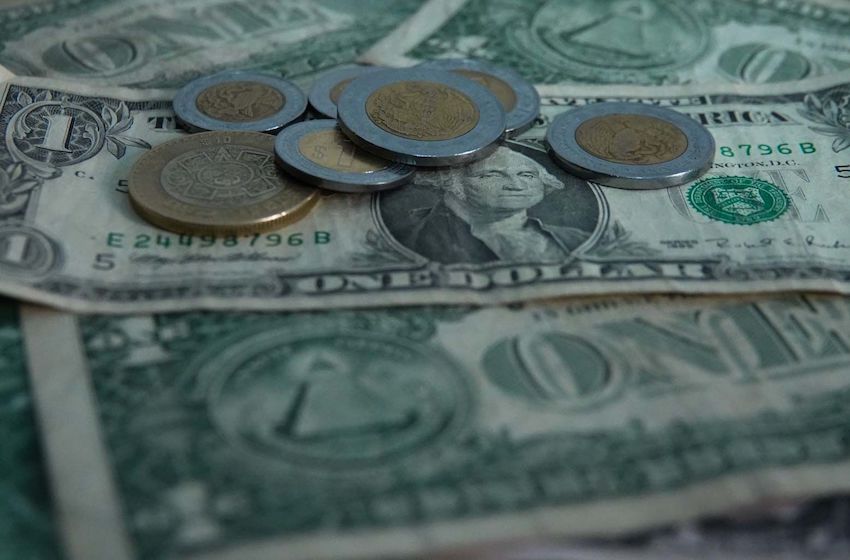
The Mexican peso reached its strongest position against the US dollar in more than a year on Wednesday, appreciating to 18.20 to the greenback before weakening slightly.
The appreciation of the peso coincided with the U.S. Federal Reserve’s decision to cut its benchmark interest rate by a quarter of a percentage point to a range of 4%-4.25%.
The Fed’s cut — its first in 2025 — widens the gap between its interest rate and that of the Bank of Mexico, which is currently set at 7.75%.
The peso generally performs better when the Bank of Mexico’s interest rate is significantly higher than that of the Fed because higher rates in Mexico offer investors greater returns, encouraging foreign capital inflows and increasing demand for the peso.
Peso has now appreciated on 8 consecutive trading days
The Bank of Mexico’s end-of-day USD:MXN exchange rate on Wednesday was 18.32, an appreciation of 0.2% compared to the closing rate on Monday. (Tuesday was a federal holiday in Mexico).
The last time the peso was stronger was on July 23, 2024, when the Bank of Mexico’s closing USD:MXN rate was 18.17.
What to expect for the Mexican peso in 2025, according to analysts

The appreciation of the peso on Wednesday extended the currency’s winning streak to eight trading days. In that period, the peso went from 18.74 to the dollar to 18.32, an appreciation of 2.3% against the greenback.
In 2025, the peso has appreciated 14% against the US dollar. The currency could benefit later in the year from additional interest rate cuts in the United States, although the Bank of Mexico will likely ease its monetary policy as well.
The backdrop of the ‘super peso’
In a column published on Wednesday, the editor-in-chief of the newspaper El Financiero, Enrique Quintana, wrote that the peso “is supported by a still-wide interest rate differential compared to the United States, which sustains the ‘carry’ [trade] and attracts flows into local bonds and peso-denominated hedges.”
“A narrative of macroeconomic stability is also at play: strong reserves, prudent management of public debt, and a current account backed by manufacturing exports, remittances, and projects linked to nearshoring. For global capital seeking returns with limited risks, Mexico appears relatively solid,” he wrote.
Quintana also wrote that “as long as doubts linger over Washington’s fiscal policy and the independence of the U.S. central bank, confidence in the dollar will continue to erode.”
“That is the backdrop of the so-called ‘super peso’: more than a triumph for Mexico, it reflects the weakness of the hegemonic currency,” he wrote.
With reports from El Economista