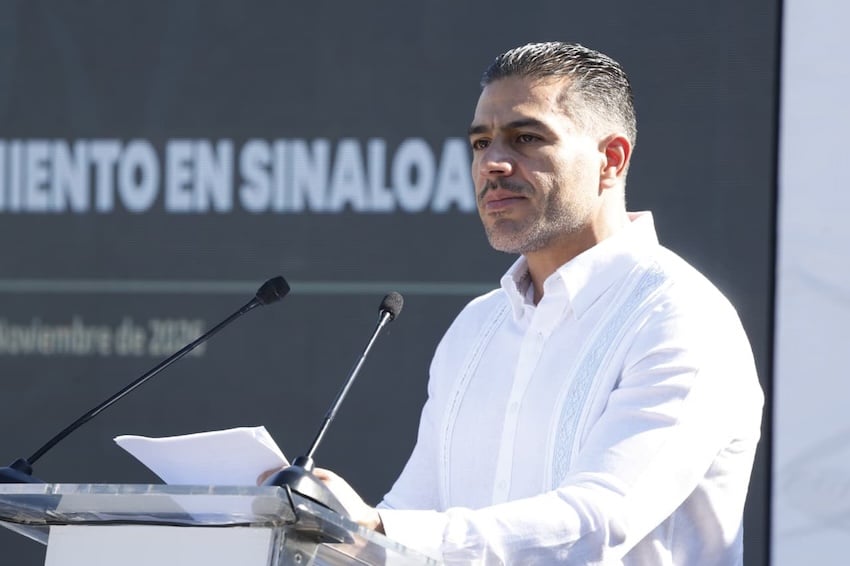
Federal Security Minister Omar García Harfuch announced on Monday a 900-million-peso (US $48.2 million) security investment in Sinaloa, a state plagued by cartel violence.
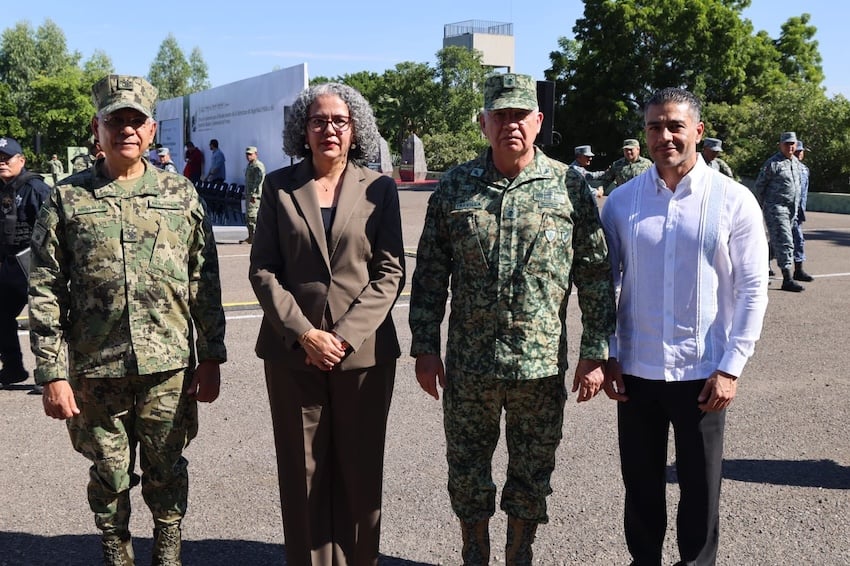
García Harfuch announced the investment at an event in Mazatlán, where National Defense Minister Ricardo Trevilla Trejo pledged that the military won’t withdraw from Sinaloa until “conditions of peace” are reestablished in the state.
Part of the 900 million pesos will be used to purchase new vehicles and equipment for Sinaloa state police as well as municipal forces in Culiacán and Mazatlán. Money will also be used to bring a new highway surveillance center into operation.
In a social media post, García Harfuch said that the federal Security Ministry (SSPC) will supply 200 vehicles to police forces in Sinaloa. Among the vehicles will be armored pickup trucks, armored tactical vehicles and motorcycles. The Sinaloa government said in a statement that the vehicles are in addition to 100 police cars previously given to state police by federal authorities. The National Defense Ministry delivered an additional 80 vehicles to Sinaloa police on Monday.
In addition to 200 vehicles, the SSPC will supply three surveillance drones and radio equipment to state police and the municipal forces in Culiacán, the state capital, and Mazatlán, Sinaloa’s top tourism destination.
García Harfuch said that the vehicles and equipment will be delivered to the police forces on Dec. 15. He said that the C4 Carretero, as the new highway surveillance center is called, will begin operations the same day.
On X, García Harfuch wrote that the C4 Carretero will strengthen surveillance along 250 kilometers of highway in the “Culiacán-Mazatlán-Durango corridor.”

The surveillance center will operate with 240 “intelligent monitoring points“, 720 cameras and 30 license plate readers, the security minister said.
Speaking at a military facility in Mazatlán, García Harfuch also said that the federal government was signing new security collaboration agreements with Sinaloa Governor Graciela Domínguez Nava. On X, he pledged that federal forces would “continue to work together [with local authorities] to make progress in the pacification of the state and provide greater security for Sinaloa families.”
García Harfuch also wrote that “with the support of the National Intelligence Center, intelligence and investigative capabilities will be expanded through the addition of new specialized units in the state.”
More than 2 years after cartel violence escalated, Sinaloa remains one of Mexico’s most violent states
Much of the violence in Sinaloa since late 2024 has been related to fighting between the “Los Chapitos” and “Los Mayos” factions of the Sinaloa Cartel. A long-running dispute between the two factions escalated in September 2024, around six weeks after Joaquín Guzmán López, one of the sons of convicted drug lord Joaquín “El Chapo” Guzmán, kidnapped Sinaloa Cartel kingpin Ismael “El Mayo” Zambada and forced him onto a private plane that flew both men to New Mexico, where they were arrested by U.S. authorities.
While homicides have declined in Sinaloa this year, the state remains among the most violent in Mexico.
Data presented by the federal government at President Claudia Sheinbaum’s Tuesday morning press conference showed that there were 1,156 homicides in Sinaloa in the first 10 months of 2026, a reduction of 18.8% compared to the same period of last year. Despite the decline, Sinaloa ranked as the fourth most violent state in Mexico in terms of total homicides between January and October. Almost 8% of all homicides in Mexico this year were perpetrated in the state.
Domínguez, the Sinaloa state governor, acknowledged on Monday that efforts to achieve peace have not yet succeeded.
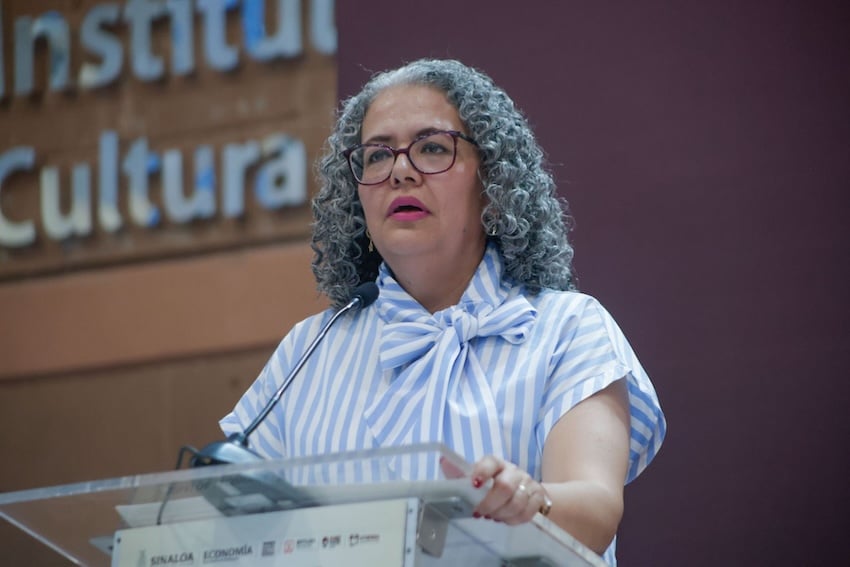
“We haven’t achieved what we all want — to restore peace — but we are working tirelessly and with total dedication,” she said at the event in Mazatlán.
Domínguez became interim governor of Sinaloa in August after Governor Rubén Rocha Moya stepped down for a second time. In April, U.S. prosecutors formally accused Rocha Moya and nine other current and former Mexican officials of drug trafficking and related weapons offenses, alleging that they colluded with the Sinaloa Cartel. Mexican officials have said that U.S. authorities haven’t provided sufficient evidence to warrant the arrest of the 77-year-old ex-governor, who denies any wrongdoing.
More than 22,000 federal troops are deployed in Sinaloa
Trevilla Trejo said on Monday that 22,667 Defense Ministry (Defensa) personnel are currently deployed in Sinaloa. Both the Mexican Army and the National Guard fall under the ministry’s authority. Military planes, helicopters, drones and over 1,700 vehicles are part of Defensa’s deployment in Sinaloa.
More than 12,000 of the federal troops are deployed in Mazatlán while almost 6,500 are based in Culiacán, according to information presented by Trevilla Trejo. Just over 4,000 troops are deployed in other parts of Sinaloa.
For his part, García Harfuch reported that more than 3,000 people were arrested in Sinaloa between Oct. 1, 2024 — the date Sheinbaum was sworn in as president — and Oct. 31, 2026. He said that authorities seized 7,200 firearms and 145 tonnes of drugs in the state in the same period, while 2,600 clandestine drug laboratories were dismantled.
Business group proposes reducing taxes in Sinaloa
Insecurity in Sinaloa has taken a toll on the state’s economy this year, although there were signs of recovery in the second quarter, during which there was 5% year-over-year growth.
Still, according to the Mexican Employers Federation (Coparmex), 44,000 jobs have been lost in the state over the past year. The business group also says that the state’s employment informality and labor poverty rates have risen, while families’ incomes have declined.
In that context, Coparmex released a statement on Monday under the title “Sinaloa demands security, employment and an urgent economic recovery strategy.”
The business group proposed an “agenda of action” made up of “six priorities” aimed at restoring Sinaloa’s “economic dynamism.” Among the priorities are “strengthening security to restore investment and jobs” and boosting “governance and public-private coordination for the recovery of Sinaloa.”
In the statement’s section on the latter priority, Coparmex calls on the Sinaloa and federal governments to “analyze extraordinary economic and fiscal support measures that help preserve jobs, avoid closures of businesses and maintain productive activities in the regions that have been most affected by the insecurity crisis.”
“In this context, we have proposed the implementation of a temporary fiscal stimulus scheme that includes a reduction in the IVA [value-added] rate from 16% to 8%, under conditions similar to those in the border region, as well as a 50% reduction in income tax for companies and productive activities that are currently facing a particularly adverse environment,” Coparmex said.
IVA is 8% in Mexico’s northern and southern border regions. It remains to be seen how authorities will respond to Coparmex’s call for taxes to be cut in Sinaloa as well.
With reports from El Economista, Animal Político, Río Doce, López-Dóriga Digital and Línea Directa Portal