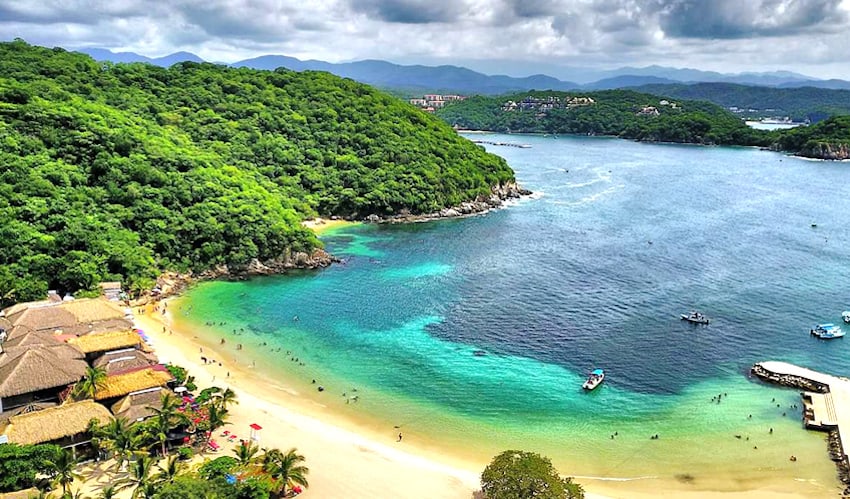
Although Mexico has more than 70 national parks, the federal government hadn’t bestowed the title “national park” on any new entities in nearly six years — until last week, when the Ministry of Environment and Natural Resources (Semarnat) announced the establishment of 13 new Protected Natural Areas (ANP).
Six of the 13 have been designated as national parks, including three on the Baja California peninsula. The other seven are classified as Flora and Fauna Protection Areas. Altogether, the new areas cover 17,918 hectares (44,276 acres), according to a press release from Semarnat.
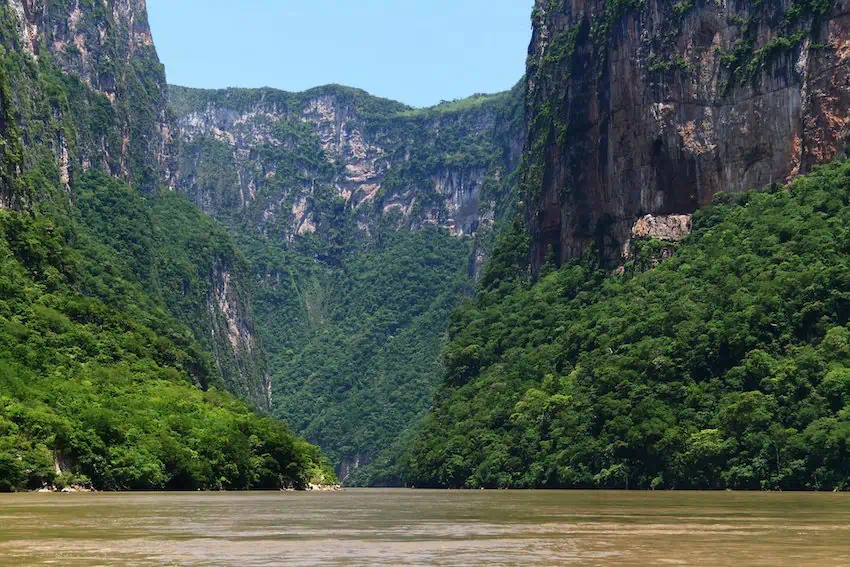
The country now has 200 ANPs areas under federal protection.
Of those, 73 are national parks, although the last one created with that designation had been back on Nov. 27, 2017: Revillagigedo National Park, a group of four islands 400 kilometers south of the southern tip of the Baja California peninsula. The area is North America’s largest fully protected underwater park, offering the continent’s greatest concentration of large marine life, and a trip there was chosen as one of National Geographic’s “5 adrenaline-pumping adventures in 2023.”
These are the new parques nacionales in Mexico:
Baja California: San Quintín (85 hectares)
Baja California Sur: Nopoló (2,076 hectares), Loreto II (6,217 hectares)

Guerrero: Vicente Guerrero (723 hectares)
Oaxaca: Huatulco II (2,237 hectares), Ricardo Flores Magón (1,812 hectares)
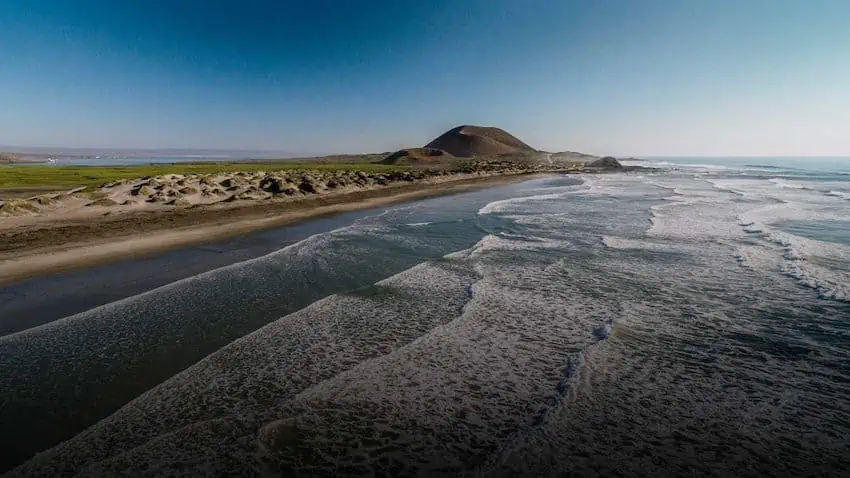
These are the new Flora and Fauna Protection Areas:
Sinaloa: Juan M. Banderas (2,489 hectares)
Guerrero: Hermenegildo Galeana (282 hectares)
Oaxaca: Bajos de Coyula (1,923 hectares)
Quintana Roo: Playa Delfines (4 hectares), Jacinto Pat (16 hectares), San Buenaventura (37 hectares), Cenote Aerolito (10 hectares)
Noteworthy selections include the four Flora and Fauna Protection Areas in Quintana Roo: the iconic Playa Delfines, which has been extended by 4 hectares in Cancún’s hotel zone; Jacinto Pat, a swath of jungle with 42 endangered species named after Jacinto Pat, a Mayan leader and initiator of the so-called Caste War that lasted from 1848 to 1901; San Buenaventura, which includes a mangrove swamp and hosts more than 100 species of birds; and Cenote Aerolito, one of 18 cenotes in Cozumel.
Among the ecosystems that make up Mexico’s 200 ANPs are beaches, mangroves, coastal vegetation areas, nesting areas for sea turtles, biological corridors for jaguars, and migratory routes for birds and pollinating species (such as hummingbirds, bats, bees and moths).

The aim of Mexico’s Protected Natural Areas is to create conditions that allow for the adaptation of flora and fauna typical of the region, and to provide areas for scientific research. In part, this is accomplished by not allowing any outside interference or construction.
The protection of the 13 new ANPs will be administered by the National Commission of Protected Natural Areas (Conanp), according to Semarnat. The president has highlighted that the agreement between Fonatur and Semarnat converts properties with high environmental value into ANPs “for the benefit of all Mexicans.”
With reports from El Economista and Expansión Política