As part of the Plan Michoacán for Peace and Justice, the National Water Commission is investing 1.1 billion pesos (US $60 million) in the Lake Pátzcuaro Sanitation Plan, in order to restore the environmental health of one of the most emblematic bodies of water in Mexico.
Lake Pátzcuaro — a popular vacation region and an international landmark — is home to a rich biodiversity, including endemic species of birds, fish and other aquatic organisms.
Visitamos la obra de rehabilitación de la Planta de Tratamiento de Aguas Residuales en Quiroga, Michoacán. https://t.co/0yz5XQzAzJ
— Claudia Sheinbaum Pardo (@Claudiashein) October 25, 2026
It is a central part of a region in western Mexico comprising archaeological, historical, recreational and cultural sites linked to the heritage of the Indigenous Purépecha peoples, lending identity, sustenance and life to the communities that surround it.
However, agricultural, industrial and domestic activities — especially the excessive use of fertilizers and pesticides and the discharge of untreated wastewater — have seriously degraded the water quality in the lake.
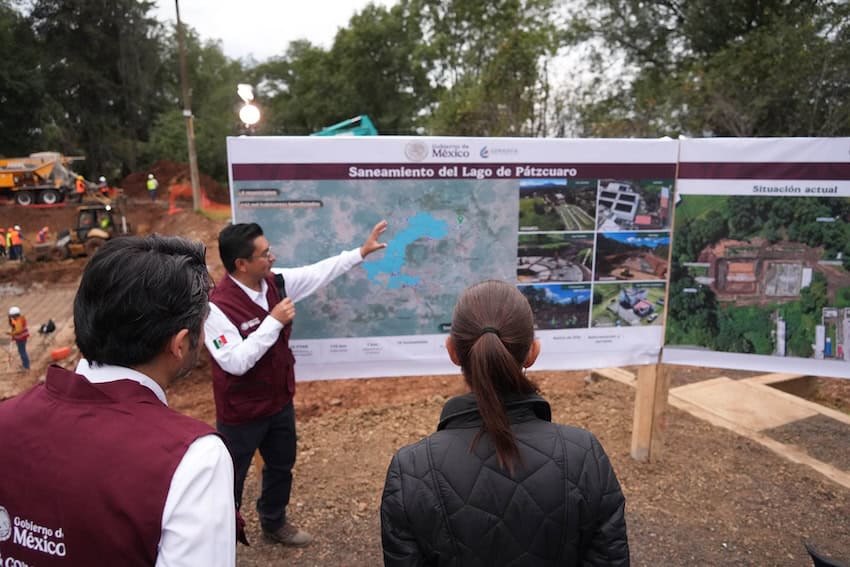
Six wastewater treatment plants are being renovated — in Las Garzas, Janitzio, San Pedrito, Quiroga, Tzintzuntzan and San Andrés Ziróndaro — and four new plants are being built — in San Juan Tumbio, Ihuatzio, Tzurumutaro and Quiroga.

More than 116 kilometers of sanitary sewer lines are being reconditioned and 10 area wetlands will be rehabilitated. Conagua will also oversee dredging and hydrological restoration to help reduce pollution in Lake Pátzcuaro.
These actions will be complemented by the removal of water hyacinth and a reforestation project, as well as the construction of terraces in the surrounding hills to contribute to the environmental recovery of the basin.

President Claudia Sheinbaum, who spearheaded the clean-up plan, toured the Quiroga Wastewater Treatment Plant on Saturday, thanking the workers involved in the rehabilitation projects. She also praised the Michoacán government for its effort to recover the springs that supply water to the ecosystem.
“The conservation of this ecosystem is fundamental for the communities of the region,” she said, adding that her administration will continue to support projects aimed at recovering Michoacán’s natural resources.
Luis Roberto Arias Reyes, the director of Conagua’s Michoacán office, said the Sanitation Plan will directly benefit more than 142,000 residents of the municipalities of Pátzcuaro, Tzintzuntzan, Quiroga and Erongarícuaro by providing more efficient hydraulic and sanitary infrastructure for wastewater management.
In a press release, the Michoacán government said the Lake Pátzcuaro clean-up project will generate economic growth for the Indigenous communities of the islands of Janitzio, Tecuena, La Pacanda and Yunuén, as well as for lakeshore towns such as Urandén and Huecorio, which depend on fishing and tourism as pillars of their economy.
With reports from ContraRéplica, El Sol de Morelia, La Jornada and Cambio de Michoacán