The federal government will announce a plan on Wednesday outlining how “the new normal” will look as Mexico takes steps to reopen the economy and get back to work amid the coronavirus pandemic, President López Obrador said on Tuesday.
“Tomorrow we’ll announce the plan to return to the new normal,” the president told reporters at his regular news conference.
López Obrador said authorities are looking at which parts of the country are coronavirus-free and which parts are most affected.
“It’s not a return to normal, it’s a return to the new normal because there have already been changes, reality changed … and we have to begin a stage with other procedures, other methods, other attitudes, other behaviors,” López Obrador said.
A national social distancing initiative has been in place since March 23 and the government declared a health emergency at the end of March that suspended all nonessential economic activities.
The restrictions are currently scheduled to be lifted on May 30 but authorities have said that municipalities with no or very low transmission of Covid-19 could see them eased on May 17.
“Of the 2,500 municipalities, there are about 1,000 with cases, about 1,000 or 1,100 that don’t have cases but their neighbors do, and about 300 or 400 that are completely clean, … their neighbors don’t even have cases,” López Obrador said.

The coronavirus-free municipalities, he added, are home to communities of indigenous people.
“For example, … the majority of these 300 or 400 municipalities are in Oaxaca. I can tell you that the whole Sierra Norte and Sierra Juárez are practically free of infections … and it’s that way in other regions [as well],” López Obrador said.
However, not all parts of the country can look forward to the beginning of the “new normal” either next week or at the end of the month.
In Mexico City, the epicenter of the country’s coronavirus outbreak with almost 10,000 confirmed cases and more than 800 deaths, there is no certainty that restrictions on businesses will be lifted and that schools will reopen on June 1.
Mexico City Health Minister Oliva López Arellano said Monday that authorities are currently analyzing that possibility along with their counterparts in México state municipalities that are part of the greater metropolitan area of the capital.
“Nothing is defined; there is a general proposal from the [federal] Health Ministry [to lift restrictions on May 30] but we’re working day by day,” she said.
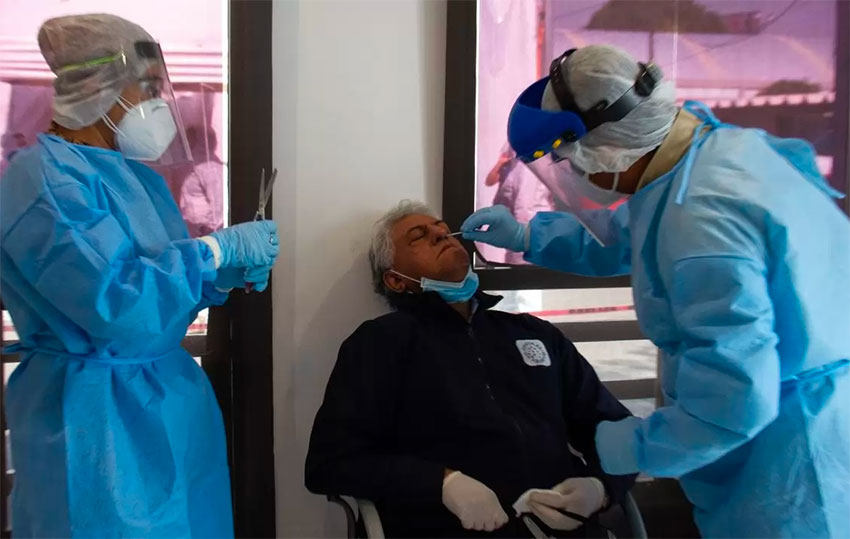
Meanwhile, the president of a powerful business group said that more coronavirus tests need to be made available so that businesses in the manufacturing sector can be certain that Covid-19 won’t spread among employees.
Testing workers widely is essential to avoiding a severe second wave of infections, said Carlos Salazar Lomelín, chief of the Business Coordinating Council.
“We’re a country that has performed a very, very small quantity of tests. … We need the tests so that we have certainty that the workers entering workplaces are not infected,” he said.
The president of the Confederation of Industrial Chambers, Francisco Cervantes, said the private sector is waiting anxiously to find out which businesses can reopen and when.
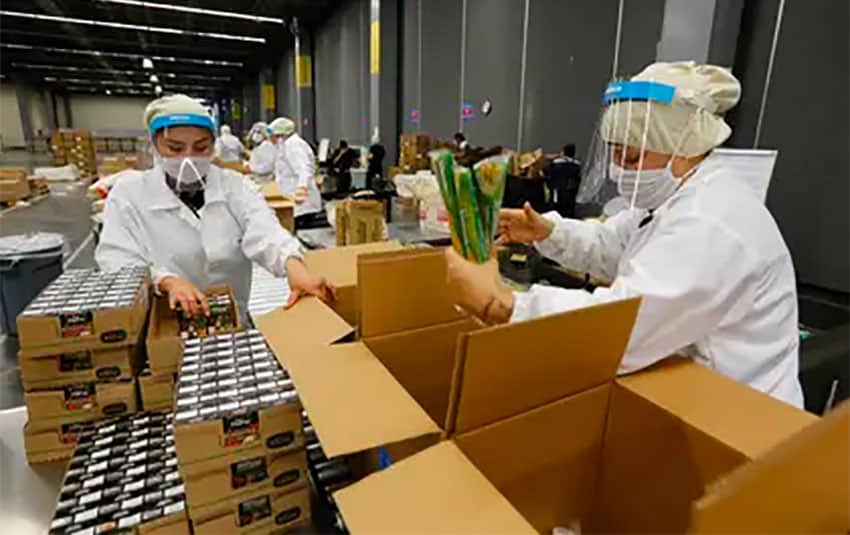
The government said in late April that it would allow the reopening of automotive plants after facing pressure from manufacturers in both Mexico and the United States but that has still not happened. Breweries are among other businesses in the economy’s secondary sector that are eager to get back to work.
Approximately 45% of factories that export products are currently closed because they are considered nonessential, the newspaper El Financiero reported, while the other 55% are operating with protocols to prevent the spread of Covid-19.
Some manufacturers, including a significant number that operate in northern border cities such as Ciudad Juárez, defied the government order to suspend operations, triggering protests by workers who said that their employers were forcing them to keep working and thus exposing them to the risk of infection.
Source: Reforma (sp), El Universal (sp), El Financiero (sp)