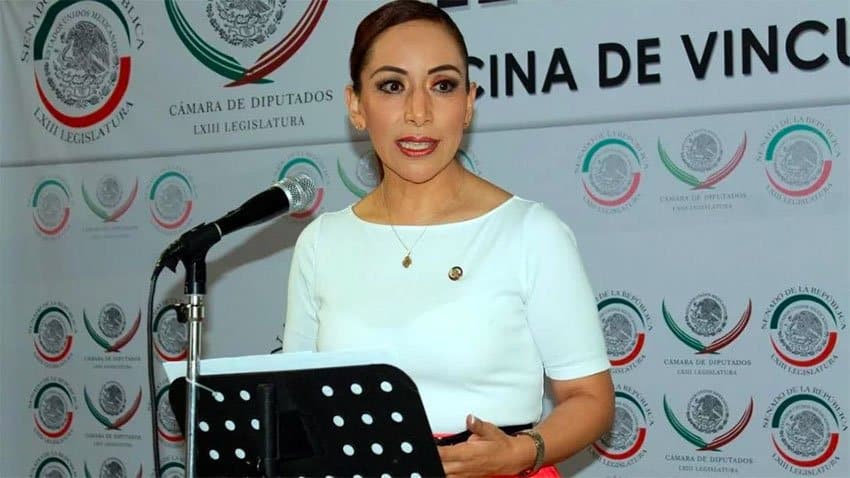
The name Rosi Orozco resurfaced yesterday as the owner of one of the confiscated properties that the government will sell at an auction next month.
For more than a decade, Orozco has been a prominent activist against human trafficking. But accusations of corruption and misuse of government resources have been following her for much of that time.
In an interview with Reforma yesterday, Deputy Adriana Dávila said that Orozco has been using the issue of human trafficking for her own benefit, receiving privileges from the government without delivering any results.
In 2005, Orozco and her husband, Alejandro Orozco, founded the Camino a Casa Foundation, a nonprofit dedicated to fighting human trafficking. Her work with the foundation helped her win a seat in the Chamber of Deputies, which she held from 2009 to 2012.
During the presidency of Felipe Calderón (2006-2012), the federal government assigned four properties to the Orozco couple; one to Alejandro Orozco and three to the foundation.

Dávila, who has served as president of the Senate human trafficking commission, also said the federal government has given Orozco’s foundation over 13 million pesos (US $685,000) in directly awarded contracts where no bidding process took place.
Orozco’s foundation also presented prizes to several state governors in recognition of their efforts against human trafficking, which Dávila says the governors paid back to the foundation with more directly awarded contracts.

“It was a process of complicity,” said Dávila. “She signed agreements with PRI candidates during election campaigns, which implied million-peso contracts.”
According to the news magazine Proceso, one of the properties given to the foundation had previously been confiscated by the federal government from Vicente Zambada Niebla, a high-ranking Sinaloa Cartel member currently in prison in the United States. The property is not one of the two that will be auctioned next month.
Dávila hopes that Orozco will face criminal consequences that go beyond the confiscation of her properties.
“The law applies to everyone, and anyone who commits a crime needs to be punished,” she said. “This is a deeper issue than just confiscating properties.”
Yesterday, information about those properties was listed on a government website. However, today the website indicates the auction has been suspended and the information has been removed.
Source: Reforma (sp), Proceso (sp), Nación 321 (sp)