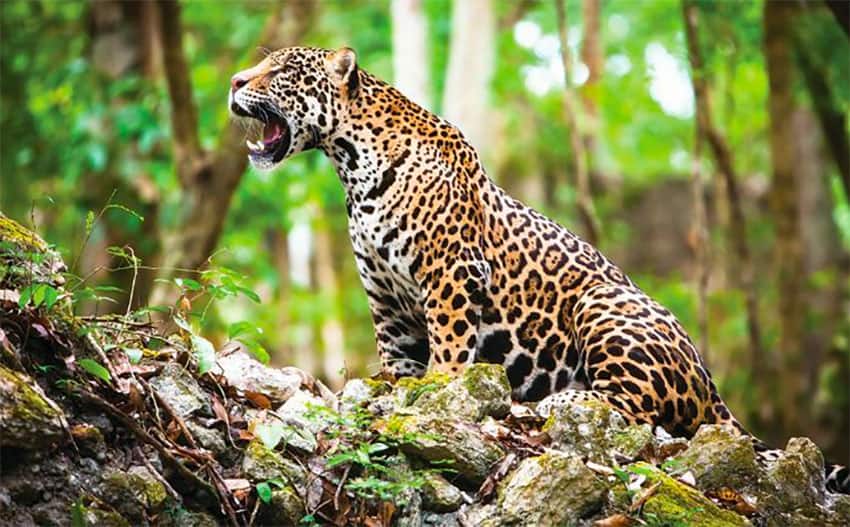
The black market is the biggest threat facing jaguars in Mexico and elsewhere in Latin America, according to the National Jaguar Conservation Alliance (ANCJ).
ANCJ biologist Rodrigo Medellín Legorreta said that in recent years the illegal Chinese market for jaguar parts has taken its toll on the animal’s populations in Latin America.
“This year . . . one of my groups that monitors jaguar activity informed me of a regrettable act: a jaguar we were tracking . . . was found without its head or claws, which indicates that illegal trade has unfortunately reached us,” he said.
He said jaguar teeth are used to make jewelry, the bones are employed in Chinese medicine and the pelts are used to make clothing or rugs.
During a press conference ANCJ members said that although Mexico has made advances in jaguar conservation efforts, the country still needs to take actions to protect the endangered animal.
They asked the federal government not to reduce the budget for environmental funds and requested that Finance Secretary Arturo Herrera assess the application for the funds, which help with species conservation and habitat protection.
They also said that increased awareness among the public and private businesses is needed to generate change and remove the jaguar from the endangered species list.

The ANCJ is a group of 60 specialists from over 40 institutions that have dedicated themselves to the conservation of the big cats in the last 15 years. The organization will publish a study in 2020 that cites Mexico as a leader in jaguar research and conservation in Latin America.
There are some 4,800 wild jaguars in Mexico according to a study published last year. The number was up 20% compared to estimates made eight years earlier.
Source: El Universal (sp)