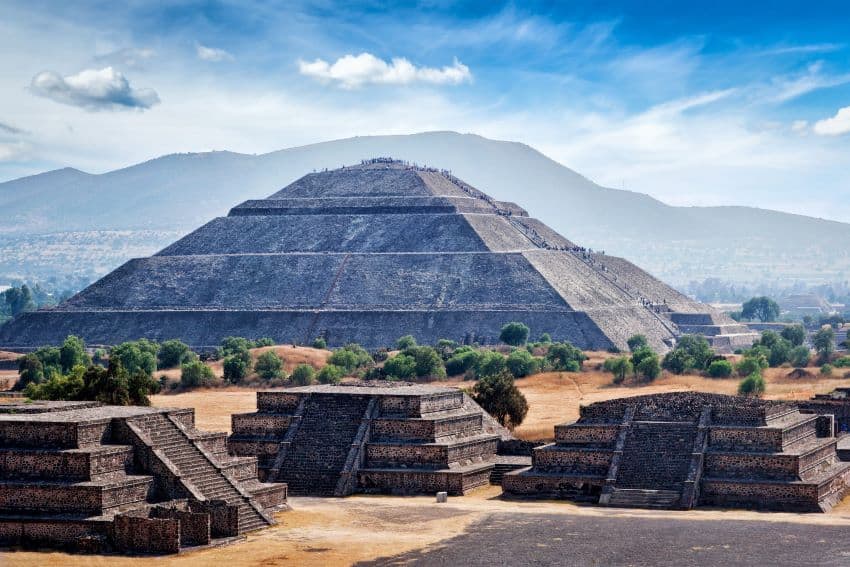
The National Institute of Anthropology and History (INAH) filed a complaint on Tuesday against an illegal construction project on land that is part of the Teotihuacán archaeological site in México state.
Work on a construction project believed to be an amusement park has been suspended twice by Teotihuacán Archaeological Zone (ZAT) authorities, but builders have returned, according to site director Rogelio Rivera Chong.
The project is being built on private land in Oztoyahualco, an area that is known as the “old city” because it is believed that the Teotihuacán settlement began there.
Rivera told the newspaper Reforma that there are bases of some 24 pre-Hispanic structures on the site that haven’t been excavated.
Sergio Gómez, an INAH archaeologist, said that renowned researchers have “acknowledged the … importance of the place [Oztoyahualco] to explain the origins of Teotihuacán,” which is now a popular tourism site with two large pyramids.
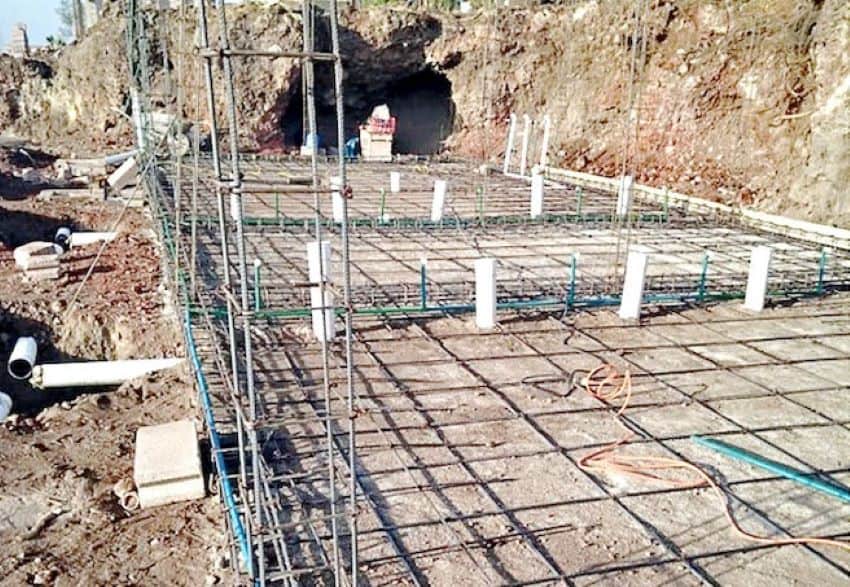
“In several parts of this area, there are openings that are mistakenly thought of as caves. However, it is known with complete certainty that they are old mines where the Teotihuacán people extracted the tezontle [a kind of volcanic rock] with which they built the great city,” he said.
According to Rivera, illegal construction is underway on at least three privately-owned lots in Oztoyahualco, which is part of zone B of the Teotihuacán site. The largest project — that which is believed to be an amusement park — is being built on a 7-hectare parcel owned by former Mexico City police chief René Monterrubio, who was also mayor of San Juan Teotihuacán between 2013 and 2015.

Rivera said that Monterrubio has failed to file the required paperwork to regularize the project — even though all construction in zone B is ostensibly prohibited — after it was suspended by ZAT authorities on two separate occasions in March. Asked about speculation that Monterrubio intends to build an amusement park on the Oztoyahualco land, the Teotihuacán site director responded:
“Some businesspeople in the region believe that the visitor comes [to Teotihaucán] to have fun and needs an amusement park. I don’t know if the intention is to build a recreational park; Mr. Monterrubio didn’t say that, the people say that.”
Rivera noted that INAH has previously rejected a proposal to build a Ferris wheel at Teotihuacán because it is a UNESCO World Heritage site and the existing landscape must be preserved.
As a result of INAH’s complaint, which was filed with the México state Attorney General’s Office, it is expected that state police will investigate and request further documentation from the institute to support its grievance. The filing of the complaint came after Teotihuacán researchers wrote to INAH to ask it to intervene to stop the destruction and alteration of pre-Hispanic heritage at Oztoyahualco.
The researchers implored INAH to act urgently to offer all its legal support to the ZAT authorities in order to stop the construction.
“We know that since approximately a month ago, several projects and constructions began at this place … [due to] the scant supervision by INAH,” said the March 29 letter sent to INAH director Diego Prieto and other high-ranking officials.
INAH also owns property in the area, but according to the researchers it, too, has been subjected to “destruction and looting.”
“… In recent years clandestine and illegal construction has increased exponentially [at Teotihuacán], even on the immediate boundaries of zone A, damaging the archaeological heritage …” the letter said.
A petition calling for an end to destruction of the Teotihuacán archeological zone was launched on the website change.org and attracted more than 12,000 signatures of support before it closed.
Source: Reforma (sp), El Universal (sp)