For the second consecutive month, international tourism to Mexico slowed in May, with the decline in international air travel impacting the valuation of Mexican airlines.
The flow of international tourists to Mexico contracted in a month which air travel to and from abroad showed reductions of up to 10%.
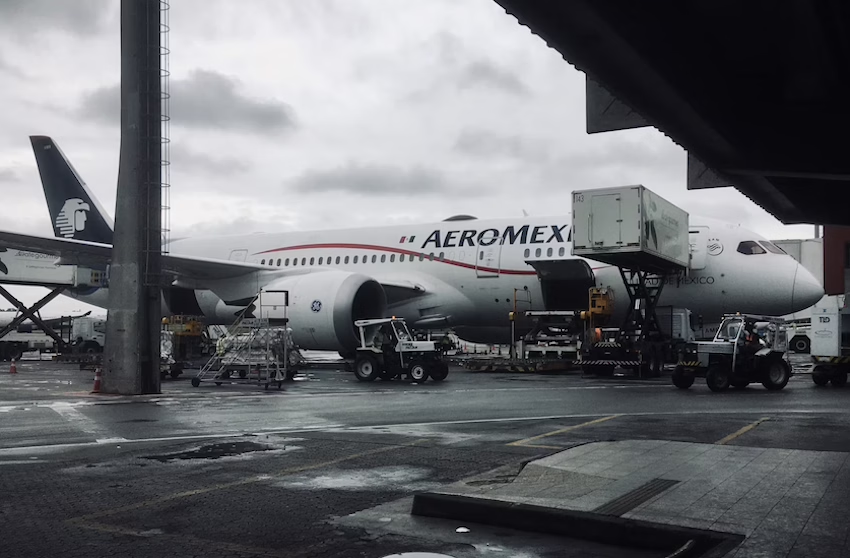
(Kevin Ramos / Unsplash)
Hit especially hard in May were airport operators such as Grupo Aeroportuario del Sureste (ASUR), which manages the Cancún terminal, and airlines such as Viva Aerobus, whose traffic plummeted 20.1%,
A review conducted by the newspaper El Financiero found that the three airport groups listed on the Mexican Stock Exchange (BMV) had an average drop of 7% in international passenger traffic through May. This represents the most pronounced drop since the COVID epidemic.
ASUR reported a 10% year-on-year decrease in international passenger traffic at its Mexican terminals, while Grupo Aeropuertuario del Pacífico (GAP) registered an 8.2% decline in the international segment and Grupo Aeroportuario del Centro Norte (OMA) reported the most moderate year-on-year decrease in May: –2.8%.
GAP — which features leisure traffic in terminals like Los Cabos and business-oriented terminals like Guadalajara — experienced its most severe blow in Puerto Vallarta, where international passenger traffic plummeted 26.5% in May. El Financiero attributed the downturn to the violence recorded in February after the killing of drug kingpin Nemesio Oseguera.
Meanwhile, ASUR suffered from the deterioration of international traffic at the Cancún airport (–11.1%).

“International traffic is working against the three airport groups, and we have seen this reflected in the stock prices of these companies,” Alik García, deputy director of stock market analysis at VALMEX Casa de Bolsa.
García said issues also stem from the high price of jet fuel and problems related to Pratt & Whitney engines (e.g., severe supply-chain constraints, manufacturing defects and prolonged maintenance groundings).
These factors are compounded by a slowdown in U.S. demand, driven in part by President Donald Trump’s anti-immigration policies, El Financiero said.
As for airline stock market valuations, El Economista reported that Volaris has declined 2.3% (despite a recent 23.3% rally over the past six trading days). Aeroméxico has fallen 23.2% on the BMV and is down 19.7% on the New York Stock Exchange.
The newspaper said these valuations “reflect operational and financial performance, as well as energy price fluctuations related to the conflict between the U.S. and Iran.”
On the other hand, Volaris experienced a 15% increase in passenger volume on international routes.
With reports from El Financiero, El Economista and Mexico Business News