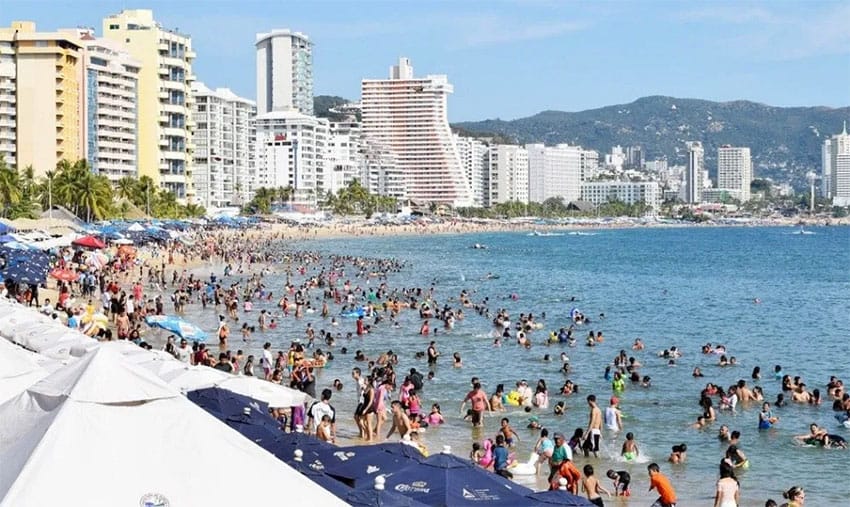
Is Mexico safe? After an attack Monday that left nine dual Mexican-American citizens dead and with the country on track to record its most violent year in recent history, more and more people are asking the question.
With that in mind, Forbes news magazine asked experts whether traveling to Mexico is a good idea, while Mexico-based journalists with The New York Times responded to readers’ questions about the security situation in the country.
“Millions of Americans go to Mexico on vacation every year, so if we play the numbers game, the number of incidents is very small,” said Carlos Barron, a 25-year veteran of the FBI and founder of US Traveler Assist, a security and safety company that provides advice and services to American travelers.
According to the United States Department of State, 196 U.S. citizens died in Mexico in 2018 of whom 67 were murdered. The remainder died as the result of accidents.
The figures don’t dissuade Barron from recommending Mexico as a tourism destination.
“When I’m asked if Mexico is a safe place to go travel on vacation, my response is yes,” he told Forbes. Barron said that staying safe in Mexico largely comes down to common sense.
“Be smart about where you go. How are you going to get from the airport to your resort? When you check into a hotel, did you lock your door and use the top lock? What if something happens? Do I have the number of the embassy?

“Have I filled out a form for the Department of State so they know that I am traveling? Always think of safety and security as something that’s part of your trip,” he said.
Elisabeth Malkin of The Times pointed out that the security situation “varies drastically across the country,” and that drug cartels are most active in the northern border region and along the Pacific coast.
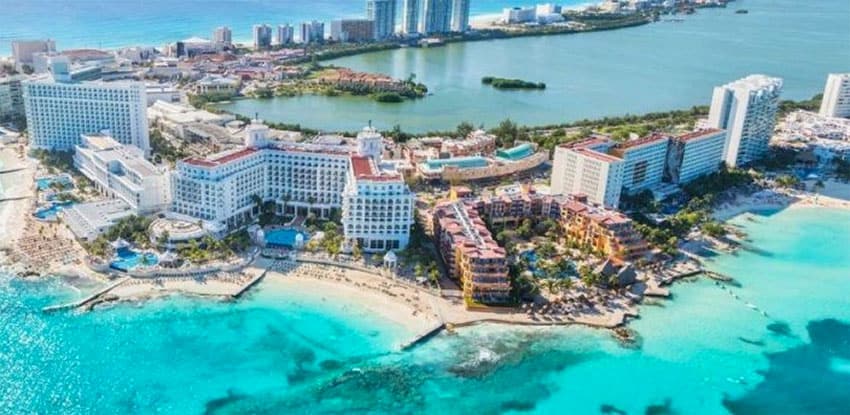
She said that a quarter of all homicides in 2018 occurred in just five cities: Tijuana, Ciudad Juárez, Cancún, Acapulco and Culiacán. Tourist areas in Cancún, however, “are fairly insulated from the city’s broader violence,” Malkin said.
Despite rising violence, Mexico City is fairly safe provided precautions are taken while Mérida, Yucatán, is considered as safe as Europe, she said.
Indeed, a business magazine recently ranked the Yucatán capital the second safest city in North America and the safest in Latin America.
Asked by a Times reader whether it is safe to travel to Mexico, Malkin responded:
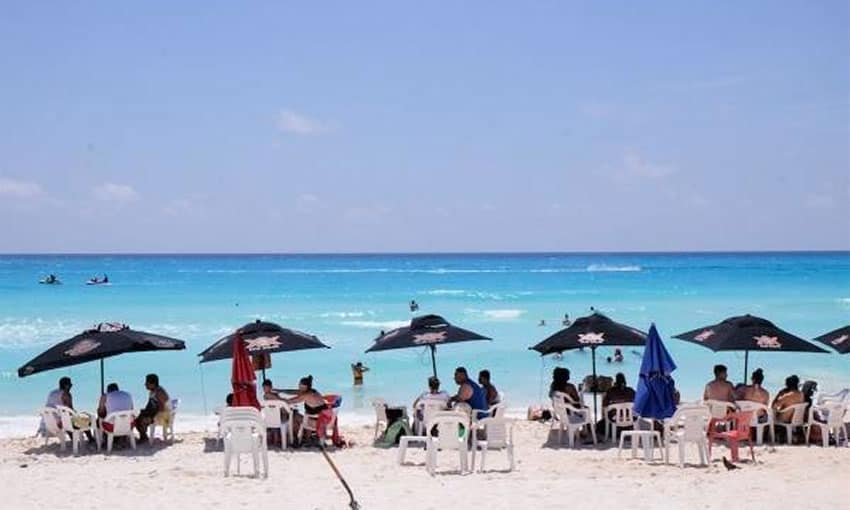
“Yes, it is safe for Americans to travel in most parts of Mexico, although tourists should exercise caution, just as they would in some parts of the United States.”
Adam St. John, CEO of travel risk management company Sitata, told Forbes that travelers need to be well-informed when choosing holiday destinations in Mexico.
He noted that Acapulco was once “a world-renowned tourist hotspot” but is now “one of the most dangerous cities in the world due to violent crime.”
Anyone visiting the faded resort city “would be prudent to keep a low profile,” St. John said.
He also advised tourists to “stick to your resort area, do not dress in flashy or expensive clothes, and leave your accessories at home – do not make yourself an easy target for theft.”
St. John added that “female travelers should remain very cautious as violence against women is very high in several parts of Mexico and [has been] known to have taken place in secluded resorts, too.”
However, the operations manager for the Americas at the global travel risk intelligence company Riskline believes that it’s safe for women to travel to Mexico provided they use common sense and keep safety precautions in mind.
“While Mexico does suffer from high crime and homicide rates — undoubtedly linked to the drug trade — many areas of the country are still safe to visit, even for women,” Suzanne Sangiovese said.
“The vast majority of cartel-related violence that occurs in Mexico is geographically limited in its intensity, with narco-traffickers targeting each other, Mexican authorities or entities that stand in their way. It is rare for such violence to specifically target a female traveler or tourist unless she’s caught in the wrong place, at the wrong time.”
Sangiovese advised tourists never to leave their drinks unattended or accept drinks from strangers or new acquaintances and only use official and registered taxis. “Avoid public transport, especially at night, to limit exposure to possible cases of harassment,” she said.
The Department of State’s Mexico Travel Advisory remains at “Level 2: Exercise increased caution” although “Level 3: Reconsider travel” and “Level 4: Do not travel” warnings apply to several states.
Level 4 warnings apply to Colima, Guerrero, Michoacán and Sinaloa due to crime and to Tamaulipas due to crime and kidnapping. Level 3 warnings apply to Chihuahua, Coahuila, Durango, México state, Jalisco, Morelos, Nayarit, Nuevo León, San Luis Potosí, Sonora and Zacatecas.
Will the security situation change for the better any time soon? Not likely, says The Times’ Kirk Semple.
“President Andrés Manuel López Obrador has said he would focus his crimefighting strategy on addressing the problem at its roots, by investing in social development programs and initiatives that alleviate poverty. But this approach could take years to work — if it works at all.”
Source: Forbes (en), The New York Times (en)