
President Claudia Sheinbaum announced Sunday the cancellation of the La Parota hydroelectric dam to instead double down on an alternative plan featuring radial wells, rehabilitated pumping systems and elevated tanks to supply water to the Acapulco area.
“Yesterday I informed the entire rural area of Acapulco that we are no longer going to do [the dam project] because it would have greatly affected the communities,” Sheinbaum said.
The Federal Electricity Commission’s (FCE) proposed 900-megawatt La Parota dam was expected to flood between 14,000 and 17,000 hectares of land, impacting the municipalities of Acapulco, Juan R. Escudero, San Marcos, Chilpancingo and Tecoanapa. However, concerns over the land expropriation process and a lack of agreements with local communities drove Sheinbaum to cancel the project.
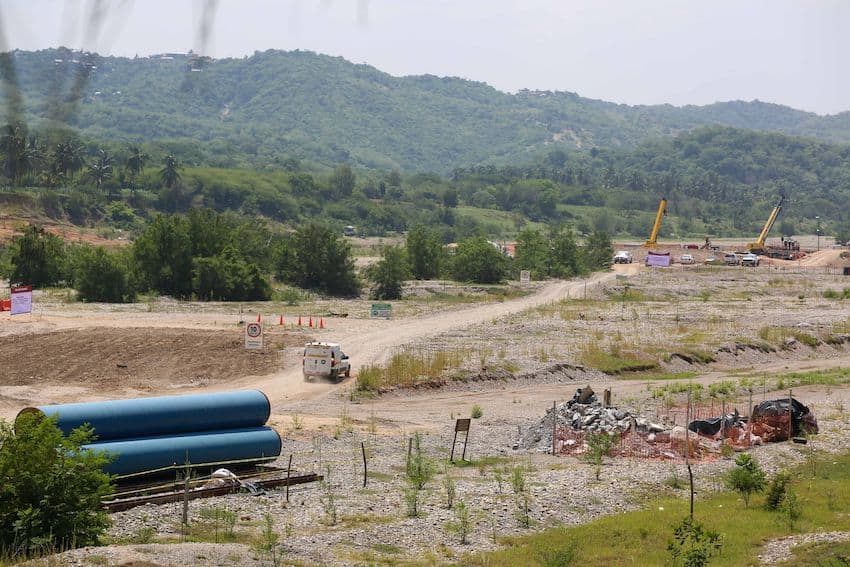
Sheinbaum’s water strategy for Acapulco includes three radial wells along the Papagayo River, the rehabilitation of aqueducts, the repair of the pumping system, the construction of elevated tanks and the replacement of leaking water lines.
The works were initially included in the January 2025 federal program “Acapulco Transforms with You,” established in response to the damage caused by Hurricanes Otis and John.
The radial wells are being built on tall towers — high enough to keep them safe from flood waters — and will draw from the Papagayo River through underground collection systems.
In addition, Sheinbaum said, the government will replace drinking water lines in the upper part of Acapulco, starting in the neighborhood of Renacimiento.

Cleanup work is now underway in the Papagayo River, and dredging is taking place to remove sediment and increase the capacity of the riverbeds.
The aim is to reduce obstructions and reduce the flood risk during heavy rainfall as part of Acapulco’s reconstruction and adaptation efforts following the two severe hurricanes.
Residents of towns bordering the river have voiced their concern that the water works will directly serve beachfront Acapulco, instead of increasing their supply.
With reports from El Imparcial, Expansión Política and Infobae