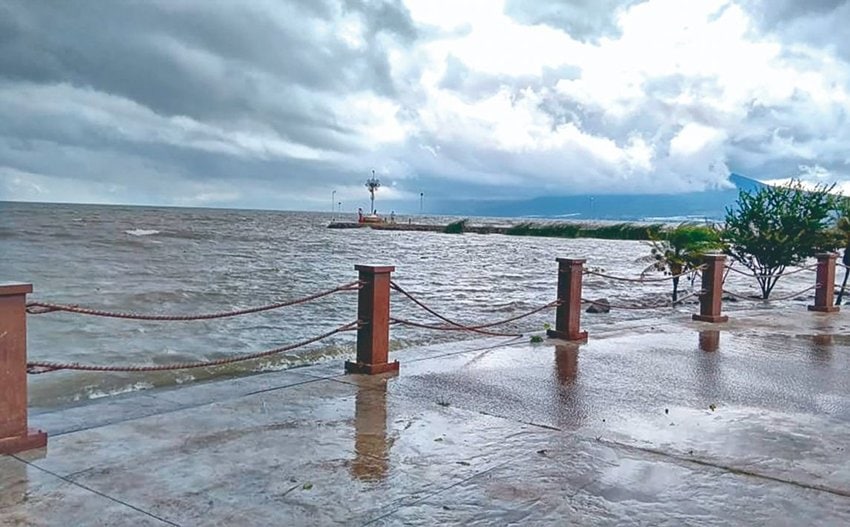
Lake Chapala at its highest level in years thanks to Willa

Water levels in Mexico’s largest lake have risen over two meters thanks to the rain brought by weather events, including Hurricane Willa.

In fact, the level of the water in Lake Chapala is the highest it has been in decades, according to water officials, who said on Sunday the lake is at 80.4% capacity. Two weeks ago it was at 77.5%; in July it was at just 51.1% capacity.

The Jalisco state water commission said the total volume of water in the lake is up to almost 6.4 billion cubic meters.

The replenishment surprised some in Jocotepec, where the water rose to the level of the San Cristóbal de Zapotitlán malecón, a rare occurrence.

Civil Protection officials said the promenade was closed as a preventative measure.

The late rainy season has been beneficial for the greater Lake Chapala basin, where the main reservoirs in the region report 100% capacity. The reservoirs release their surplus water into the lake, and as rains are expected to continue for several days, so will the recovery of Lake Chapala’s water level.

Source: Informador (sp), 20 minutos (sp)

Have something to say? Paid Subscribers get all access to make & read comments.
Massive absorption tower at ammonia plant in Sinaloa

Ohuira Bay communities weigh federal plan for Sinaloa ammonia plant

1
Ohuira Bay communities in Sinaloa are looking at the most recent environmental plan for the controversial and nearly completed ammonia plant they've been fighting for over a decade.
Chilangos stop at a snack stand near Paseo de la Reforma in Mexico City.

Mexico’s week in review: US suspends avocado certs, fracking studies continue and Peru rift ends

1
From a U.S. ban on Michoacán avocados to a diplomatic thaw with Peru, the first week of August covered a lot of ground — and a fracking decision still hanging in the balance.
Sargassum piles up on the shores of Puerto Morelos, Quintana Roo.

Seaweed diplomacy: Mexico and Japan to tackle sargassum crisis in new joint program

1
Mexico and Japan are teaming up to fight the sargassum invasion choking Caribbean beaches — deploying robotics, satellite monitoring and new tech to turn seaweed into opportunity.
BETA Version - Powered by Perplexity