In the face of ongoing death threats and the belief that those behind a brutal attack on their family in Sonora in November will never be prosecuted, members of the LeBaron family continue to campaign for peace and justice throughout Mexico.
On November 4 three members of the extended LeBaron family were traveling with their children when their three cars were attacked near La Mora, Sonora. Of the 17 women and children on the road that day, the three mothers and six of their children were killed in the attacks, including a pair of 8-month-old twins.
The LeBaron family still don’t know the reason for the November attack but believe it to have been carried out by the cartel known as La Línea. Local press reported that Mario “El Mayo” H., leader of the gang, was arrested in December for the attack. But the Attorney General’s Office would only confirm that as of January 7 three people had been arrested in the investigation. Their names were not released.
Because some members of the LeBaron family are joint Mexican-U.S. citizens, the U.S. media and government are watching the situation. President López Obrador has granted the family police protection during their peace and justice campaign. That is likely an attempt to shield Mexico from the negative attention that would be associated with any further attacks on the family, according to Bryan LeBaron, the cousin of Rhonita Maria Miller, one of the mothers slain in the November attack.
López Obrador is facing increasing pressure to demonstrate that his security policy — “hugs not bullets” — is working in the face of rising crime levels and recent security blunders such as the bungled attempt to capture Ovidio Guzmán, the son of Joaquín “El Chapo” Guzmán in October.
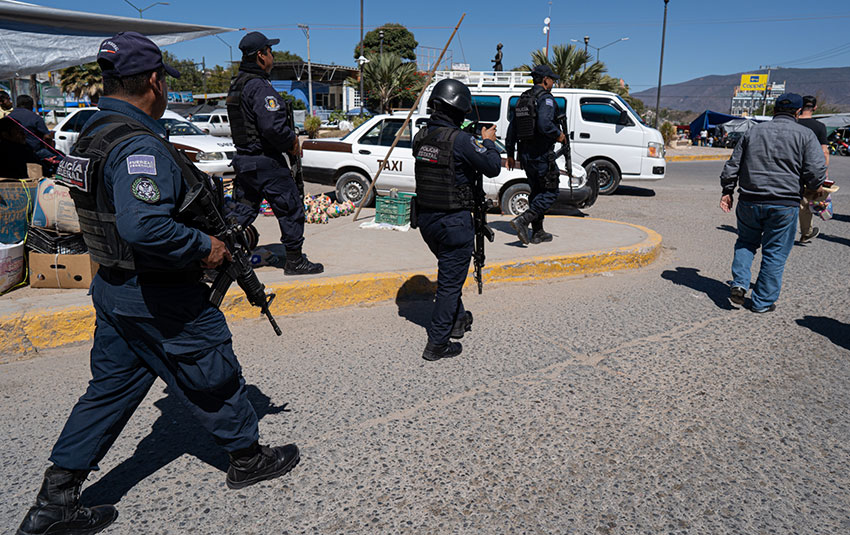
The executive secretary of the National Public Security System recorded 35,588 homicides and femicides in 2019, the highest annual murder rate on record. The Mexico Peace Index 2019 estimates that the cost of such violence amounted to US $268 billion in 2018, or 24% of GDP.
Bryan LeBaron acknowledged that it was unfair for his family to have federal protection when towns and villages also need it. However, he said, it gives the family an unprecedented opportunity to shine a light on the issue. To ignore this opportunity would be “cowardice,” explained LeBaron, who is considering moving his family closer to Mexico City to enable him to campaign on a full time basis.

Julian LeBaron’s decade-long fight against the cartels began in 2009 when he refused to pay a US $1-million ransom for the release of his brother Erik. Miraculously, Erik was released unharmed a few days later. But Julian’s brother Benjamin and brother-in-law, Luis Widmar, did not share the same good fortune and were brutally murdered two months later.
That ultimately led Julian LeBaron to join the poet and peace activist Javier Sicilia in the Movement for Peace with Justice and Dignity.
A little over a decade later, in January 2020, dozens of family representatives once again joined Sicilia in a peace march from Cuernavaca, Morelos, to Mexico City. Then in February, despite cartel threats and road blocks, four members of the LeBaron family joined activist José Díaz Navarro and 300 protesters in Chilapa, Guerrero, for the first peace march in five years.
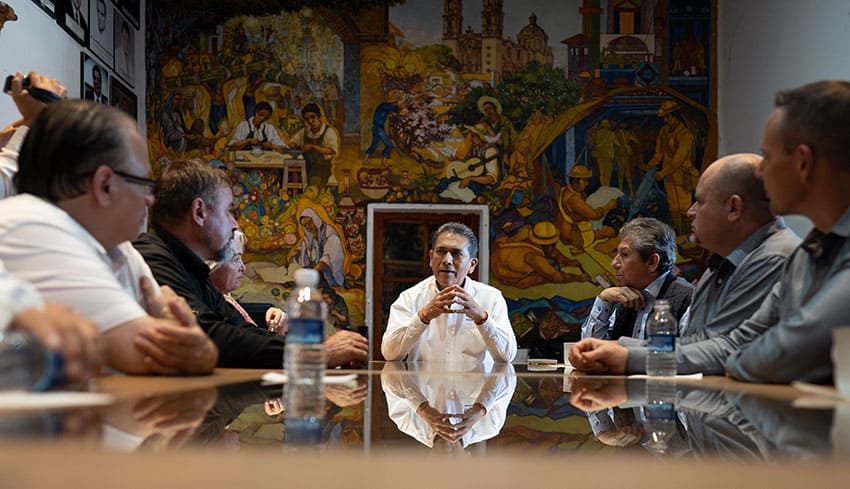
Díaz became an activist following the murder and decapitation of his brothers in Chilapa in November 2014. His five-year campaign for justice — during which several attempts on his life were made — has culminated in 12 arrest warrants, but so far no suspects have been detained. That detail is unsurprising given that almost 90% of murderers avoid arrest, according to the NGO Impunidad Cero (Zero Impunity).
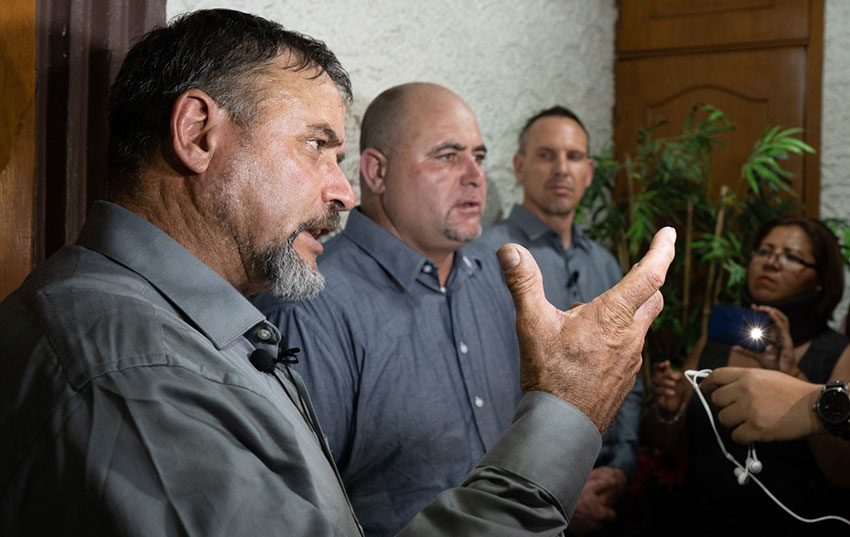
With that in mind, Adrian LeBaron predicts that his daughter’s killers will never be prosecuted for murder.
His concerns center around how municipal police chiefs are appointed. One of those arrested for his daughter’s murder, the director of public security in the municipality of Janos near the location of the attack, has held the position for 13 years through various municipal administrations, he explained. LeBaron’s concern is that police chiefs can only survive that long with cartel support.
Many local news outlets have proposed reasons for the attacks, including cartel involvement, a family history of violence and local water disputes. The initial reports from Security Secretary Alfonzo Durazo suggested that the victims were caught in the crossfire between two warring cartels. None of these theories have made any headway. What is clear, however, is that the LeBaron family and many other victims of violence in Mexico are subjected to a culture of victim-blaming rather than examining the criminals causing the violence.
Blame is also happening at the state and international levels. López Obrador blames the increasing violence in Mexico on the “corrupt conservatives” of the previous government. Christopher Landau, the U.S. ambassador to Mexico, addressed international blame in December when he said, “it’s easy to lose yourself, one country blaming another. … We will never beat [the criminals] if we are always fighting and blaming each other.”
Meanwhile, the LeBarons are aware that their lives continue to be in danger. What they are doing is unpopular with the cartels. Despite this, they are undeterred, confirmed Bryan LeBaron, who remains surprisingly positive and proactive. “We are not looking to show what is wrong,” he explained, “but instead ask what we can do.”
He explained that they plan to visit other areas of Mexico to better understand local issues. They are working with senior members of the judiciary to consider legal reforms that would combat corruption and the associated impunity rates.
Finally, they are looking at how technology could empower citizens, advance investigations and ultimately take back control of Mexico.
Mexico News Daily